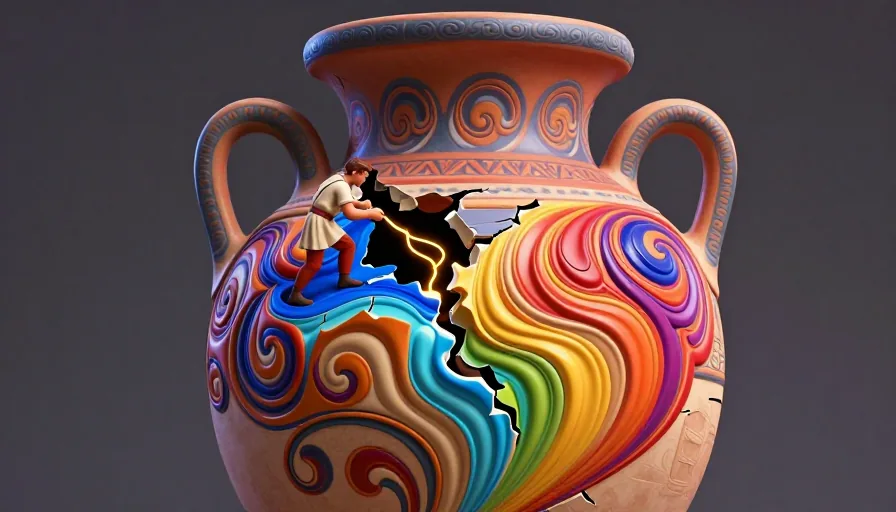
When learning a new language, understanding Greek colours is more than just memorizing vocabulary. It involves delving into the cultural and conceptual nuances of how ancient Greeks described and perceived color. This guide will take you beyond simple vocabulary lists, exploring the qualitative approach to color that defined ancient Greek language and thought.
The Ancient Greek Approach to Color: Qualities Over Hues
Ancient Greeks did not perceive color in the same way we do today. Instead of focusing on specific hues, they described colors based on qualities such as light, brightness, darkness, and saturation. This qualitative approach is deeply rooted in Greek philosophy and culture.
Key Differences from Modern Color Perception
-
Qualitative vs. Specific: Modern color perception often involves specific names for hues (e.g., red, blue, green). Ancient Greeks, however, described colors based on their qualities. For example, they might describe something as 'bright' or 'dark' rather than 'red' or 'blue'.
-
Contextual Descriptions: Greeks used contextual descriptions to convey color. For instance, the term 'chloros' (χλωρός) could mean 'green' but also 'pale' or 'sickly', depending on the context.
Essential Greek Color Vocabulary: Names and Descriptions
Basic Greek Colors
Here are some basic Greek color terms along with their descriptions:
- Melas (Μέλας): Black. Often used to describe darkness or the absence of light.
- Leukos (Λευκός): White. Associated with purity, light, and brightness.
- Erythros (Ερυθρός): Red. Often used to describe blood or passion.
- Kyanos (Κυανός): Blue. Associated with the sky and sea.
- Chloros (Χλωρός): Green. Can also mean 'pale' or 'sickly'.
Practical Examples
- Melas: Το βιβλίο είναι μέλας. (To vivlio ine melas.) The book is black.
- Leukos: Το χιόνι είναι λευκό. (To chioni ine lefko.) The snow is white.
- Erythros: Το αίμα είναι ερυθρό. (To aima ine erythro.) The blood is red.
- Kyanos: Ο ουρανός είναι κυανός. (O ouranos ine kyanos.) The sky is blue.
- Chloros: Το φυτό είναι χλωρό. (To fito ine chloros.) The plant is green.

Learn Languages with YouTube
Watch videos in your target language, auto-capture words into flashcards, and track your progress — all in one place.
See How It Works →Describing the World: Contextualizing Greek Color Terms
Contextual Usage in Daily Life
Greeks used color terms in various contexts to describe not just objects but also emotions and states of being. For example:
- Melas: Could describe a dark mood or a dark room.
- Leukos: Could describe a bright day or a pure heart.
- Erythros: Could describe a passionate love or a bloody wound.
- Kyanos: Could describe a clear sky or a calm sea.
- Chloros: Could describe a healthy plant or a sickly complexion.
Mini Drill: Practice Describing Colors
Try describing the following scenarios using the Greek color terms you've learned:
- A dark night.
- A bright day.
- A passionate love.
- A clear sky.
- A healthy plant.
Common Mistakes to Avoid
Avoiding Modern Color Bias
One common mistake learners make is applying modern color biases to ancient Greek descriptions. Remember that Greeks described colors based on qualities, not specific hues. For example, 'chloros' is not just 'green'; it can also mean 'pale' or 'sickly'.
Checklist for Mastering Greek Colors
- Understand the qualitative approach to color.
- Learn basic Greek color vocabulary.
- Practice using color terms in context.
- Avoid modern color biases.
- Engage with Greek culture and philosophy to deepen your understanding.
Practical Application: Using Descriptive Terms in Sentences
Simple Sentences
- Το φως είναι λευκό. (To fos ine lefko.) The light is white.
- Η νύχτα είναι μέλας. (I nychta ine melas.) The night is black.
- Το κρασί είναι ερυθρό. (To krasi ine erythro.) The wine is red.
- Το νερό είναι κυανό. (To nero ine kyanos.) The water is blue.
- Το χλορό φυτό είναι υγιές. (To chloros fito ine igies.) The green plant is healthy.
Complex Sentences
- Η νύχτα είναι μέλας και η αστραπή είναι λευκή. (I nychta ine melas ke i astrapi ine lefki.) The night is black and the lightning is white.
- Το κρασί είναι ερυθρό και το φως είναι κυανό. (To krasi ine erythro ke to fos ine kyanos.) The wine is red and the light is blue.
- Το χλορό φυτό είναι υγιές και το νερό είναι κυανό. (To chloros fito ine igies ke to nero ine kyanos.) The green plant is healthy and the water is blue.
By understanding and practicing these descriptive terms, you'll gain a deeper appreciation for how ancient Greeks perceived and described the world around them. This qualitative approach not only enriches your vocabulary but also provides a unique window into Greek culture and philosophy.
Conclusion
Learning Greek colours involves more than just memorizing vocabulary. It requires understanding the cultural and conceptual nuances of how ancient Greeks described and perceived color. By focusing on the qualitative approach to color, you can enrich your language learning experience and gain a deeper appreciation for Greek culture and philosophy.
FAQ
Why is the Greek approach to color different from modern color perception?
The ancient Greeks described colors based on qualities such as light, brightness, darkness, and saturation, rather than specific hues. This qualitative approach is deeply rooted in Greek philosophy and culture, focusing on the contextual and descriptive aspects of color.
How can I practice using Greek color terms effectively?
Practice using Greek color terms in various contexts to describe not just objects but also emotions and states of being. Engage with Greek culture and philosophy to deepen your understanding and avoid modern color biases.
What are some common mistakes to avoid when learning Greek colors?
Avoid applying modern color biases to ancient Greek descriptions. Remember that Greeks described colors based on qualities, not specific hues. For example, 'chloros' is not just 'green'; it can also mean 'pale' or 'sickly'.
Related phrases
Start with Metheus
Watch videos in your target language, auto-capture words into flashcards, and track your progress — all in one place.
Get Started →

