Greek for Good Evening: A Comprehensive Guide to Mastering Evening Greetings in Greek
Learning how to say greek for good evening is a fundamental step in mastering Greek greetings. This guide will walk you through the direct translation, pronunciation, and cultural nuances, ensuring you can confidently use this phrase in various social settings.
What is the Greek phrase for 'Good Evening'?
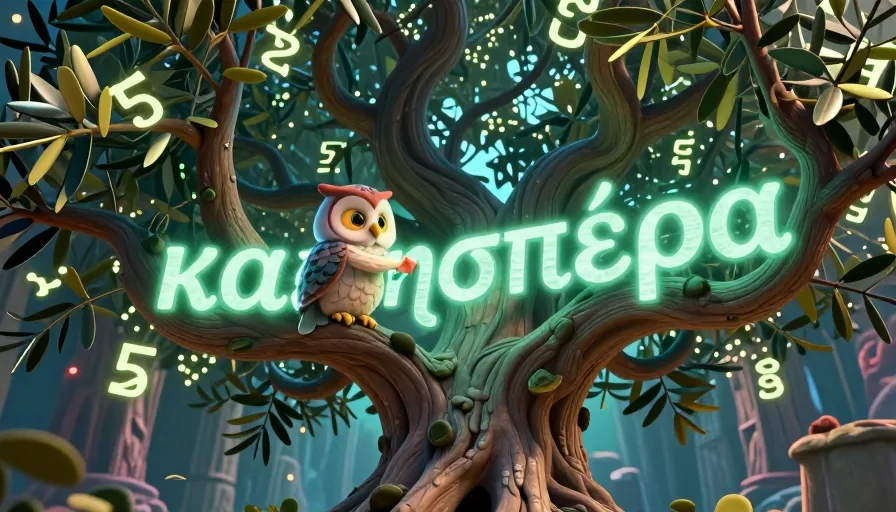
The direct translation of 'good evening' in Greek is 'Kalispera' (Καλησπέρα). This phrase is used to greet someone in the evening, typically from late afternoon to night. Understanding when and how to use 'Kalispera' is crucial for effective communication in Greek.
Pronunciation Guide: Mastering the Greek Greeting
Pronunciation is key to sounding natural and respectful. Here’s a step-by-step guide to pronouncing 'Kalispera' correctly:
- Ka-li-spé-ra
- Ka as in 'car'
- li as in 'lee'
- spé as in 'spay'
- ra as in 'rah'
Practice Drill:
Repeat the phrase aloud several times, focusing on the stress on the second syllable ('spé'). Listen to native speakers on language learning platforms like Metheus.app for accurate pronunciation.
When to Use 'Kalispera' vs. Other Greetings
Knowing when to use 'Kalispera' versus other greetings like 'Kaliméra' (good morning) or 'Geia sou' (hello) is essential. Here’s a quick guide:
- Kaliméra (Καλημέρα): Used from morning until late afternoon.
- Geia sou (Γεια σου): A casual 'hello' that can be used at any time of the day.
- Kalispera (Καλησπέρα): Used from late afternoon to night.
- Kalinichta (Καληνύχτα): Used specifically when saying goodnight.
Checklist for Greeting Appropriately:
- Morning: Kaliméra
- Afternoon: Kaliméra or Geia sou
- Evening: Kalispera
- Night: Kalinichta

Learn Languages with YouTube
Watch videos in your target language, auto-capture words into flashcards, and track your progress — all in one place.
See How It Works →Cultural Context: Greetings in Greek Social Settings
Greek culture places a high value on greetings and social etiquette. Here are some cultural nuances to keep in mind:
- Formal vs. Informal: Greeks use different greetings based on the level of formality. 'Geia sou' is informal, while 'Geia sas' (Γεια σας) is formal.
- Gestures: Greetings often come with a handshake or a kiss on both cheeks among friends and family.
- Context: In social settings, greetings are more than just words; they set the tone for the interaction.
Example Scenario:
Imagine you are visiting a Greek friend's home in the evening. You would greet them with 'Kalispera' and perhaps a kiss on both cheeks if you are close. This shows respect and warmth, aligning with Greek social norms.
Related Useful Phrases
Expanding your vocabulary beyond 'Kalispera' will make your interactions more fluid. Here are some related phrases:
- Hello: Geia sou (Γεια σου)
- Good morning: Kaliméra (Καλημέρα)
- Good night: Kalinichta (Καληνύχτα)
- Thank you: Efcharisto (Ευχαριστώ)
- Please: Parakalo (Παρακαλώ)
- Excuse me: Synchoro (Συγνώμη)
Mini Drill:
Practice these phrases in context. For example, say 'Geia sou, efcharisto, parakalo' in a single sentence: 'Hello, thank you, please.'
Practical Examples and Common Mistakes
Learning through examples and avoiding common mistakes can accelerate your language learning journey. Here are some practical examples and pitfalls to watch out for:
- Mistake: Using 'Kalispera' in the morning.
- Correct Usage: Use 'Kaliméra' in the morning.
- Mistake: Using 'Geia sou' in a formal setting.
- Correct Usage: Use 'Geia sas' in formal settings.
- Mistake: Forgetting to greet with a gesture.
- Correct Usage: Include a handshake or a kiss on both cheeks if appropriate.
Example Conversation:
- Morning: Kaliméra, geia sas. (Good morning, hello.)
- Afternoon: Geia sou, efcharisto. (Hello, thank you.)
- Evening: Kalispera, parakalo. (Good evening, please.)
- Night: Kalinichta, synchoro. (Good night, excuse me.)
By following this guide, you'll be well-equipped to use 'Kalispera' and other Greek greetings with confidence and cultural sensitivity. Happy learning with Metheus.app!
FAQ
Is 'Kalispera' used only in formal settings?
No, 'Kalispera' can be used in both formal and informal settings. The key difference is the level of formality in the greeting that follows. For example, 'Geia sou' is informal, while 'Geia sas' is formal.
Can I use 'Kalispera' at any time of the day?
No, 'Kalispera' is specifically used from late afternoon to night. For other times of the day, use 'Kaliméra' for morning and 'Kalinichta' for night.
Related phrases
Start with Metheus
Watch videos in your target language, auto-capture words into flashcards, and track your progress — all in one place.
Get Started →

