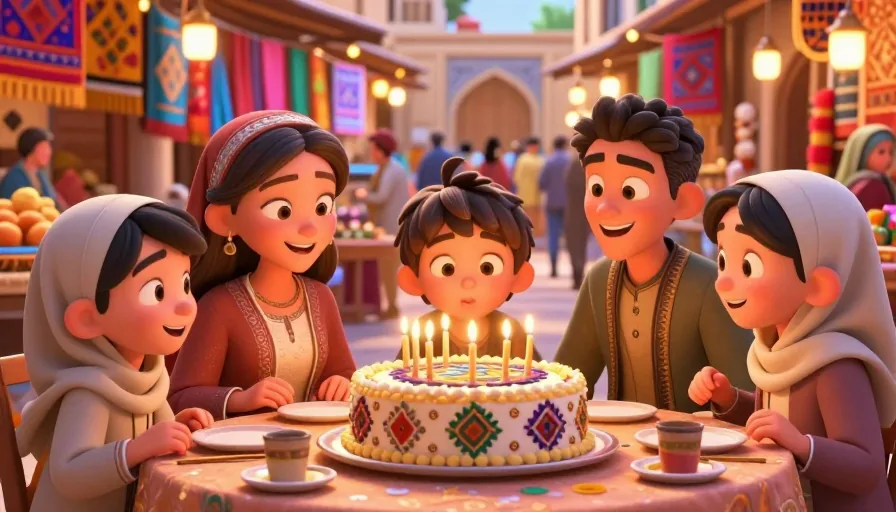
Happy Birthday in Iranian: A Comprehensive Guide to Mastering Farsi Birthday Wishes
Learning to say happy birthday in Iranian is a wonderful way to connect with Persian culture and show respect for Iranian friends and family. This guide will walk you through the most common and culturally appropriate ways to express birthday wishes in Farsi, along with pronunciation guides and cultural context.
The Standard Way: Saying 'Happy Birthday' in Farsi
The most common and standard way to say 'Happy Birthday' in Farsi is 'Tavalodet Mobarak'. This phrase is used universally and is appropriate for both formal and informal settings. Here’s how you can break it down:
- Tavalodet: Birthday
- Mobarak: Blessed
So, Tavalodet Mobarak literally translates to 'Blessed Birthday.'
Mini Drill: Pronunciation Practice
- Listen to a native speaker pronounce Tavalodet Mobarak.
- Repeat the phrase aloud, focusing on the correct pronunciation of each syllable.
- Practice saying the phrase in different contexts, such as wishing a friend or a family member a happy birthday.
Beyond the Basics: Formal vs. Informal Greetings
In Farsi, as in many languages, the level of formality can change based on the relationship between the speaker and the recipient. Here are some variations:
Informal Greetings
For friends and peers, you can use:
- Tavalodet Mobarak, Dostam (Happy Birthday, my friend)
Formal Greetings
For elders, superiors, or people you are not familiar with, you might say:
- Tavalodet Mobarak, Agha/Agha Jan (Happy Birthday, Sir/Madam)
Mini Drill: Contextual Practice
- Imagine you are at a birthday party with friends. Practice saying Tavalodet Mobarak, Dostam.
- Now, imagine you are at a formal event and need to wish an elder a happy birthday. Practice saying Tavalodet Mobarak, Agha Jan.

Learn Languages with YouTube
Watch videos in your target language, auto-capture words into flashcards, and track your progress — all in one place.
See How It Works →Pronunciation Deep Dive: Mastering the Sounds of Farsi Birthday Wishes
Pronunciation is key to sounding natural and respectful. Here’s a phonetic guide to help you master the sounds:
- Tavalodet: /tævæloːˈdet/
- Mobarak: /moːbæˈræk/
Checklist for Pronunciation
- T: Pronounced as in 'tall'
- æ: Pronounced as in 'cat'
- v: Pronounced as in 'victory'
- o: Pronounced as in 'open'
- l: Pronounced as in 'light'
- d: Pronounced as in 'dog'
- e: Pronounced as in 'bed'
- t: Pronounced as in 'tall'
- m: Pronounced as in 'mother'
- o: Pronounced as in 'open'
- b: Pronounced as in 'bat'
- æ: Pronounced as in 'cat'
- r: Pronounced as in 'run'
- æk: Pronounced as in 'back'
Interactive Pronunciation Practice
Use online tools or language learning apps to listen to native speakers and practice your pronunciation. Metheus.app offers interactive pronunciation practice tools to help you master the sounds of Farsi birthday wishes.
Cultural Context: When to Use Which Greeting
Understanding the cultural context is crucial for using the right greeting at the right time. Here are some guidelines:
Addressing Elders
When addressing elders, it’s important to use formal greetings. For example, Tavalodet Mobarak, Agha Jan is respectful and appropriate.
Addressing Peers
For friends and peers, informal greetings like Tavalodet Mobarak, Dostam are more suitable.
Addressing Superiors
In professional settings, use formal greetings to show respect. For example, Tavalodet Mobarak, Agha is appropriate for superiors or colleagues you are not familiar with.
Common Related Birthday Greetings or Phrases
In addition to Tavalodet Mobarak, there are other related birthday greetings and phrases you can use:
- Salamet Mobarak (Blessed Health): Used to wish good health on someone's birthday.
- Shoma Ra Mobarak (Blessed You): A more general blessing that can be used on birthdays or other special occasions.
- Tavalodet Shoma Mobarak (Your Birthday is Blessed): A more personal and heartfelt way to wish someone a happy birthday.
Mini Drill: Cultural Context Practice
- Imagine you are at a family gathering with elders. Practice saying Tavalodet Mobarak, Agha Jan.
- Now, imagine you are at a friend's birthday party. Practice saying Tavalodet Mobarak, Dostam.
- Finally, imagine you are at a work event and need to wish a colleague a happy birthday. Practice saying Tavalodet Mobarak, Agha.
Common Mistakes to Avoid
- Incorrect Pronunciation: Make sure to practice the phonetic guide to avoid mispronouncing the words.
- Inappropriate Formality: Use the correct level of formality based on the relationship and context.
- Overlooking Cultural Nuances: Understanding the cultural context will help you choose the right greeting and avoid faux pas.
By following this guide, you’ll be able to say happy birthday in Iranian with confidence and cultural sensitivity. Happy learning!
FAQ
Is it appropriate to use informal greetings with elders?
No, it is not appropriate to use informal greetings with elders. Always use formal greetings like **Tavalodet Mobarak, Agha Jan** to show respect.
Can I use 'Tavalodet Mobarak' in both formal and informal settings?
Yes, **Tavalodet Mobarak** is universally appropriate for both formal and informal settings. However, adding **Dostam** (my friend) or **Agha Jan** (Sir/Madam) can make it more contextually appropriate.
What if I make a mistake in pronunciation?
Mistakes happen, especially when learning a new language. If you make a mistake, simply correct yourself and continue. Practice makes perfect, so keep practicing your pronunciation.
Related phrases
Start with Metheus
Watch videos in your target language, auto-capture words into flashcards, and track your progress — all in one place.
Get Started →

