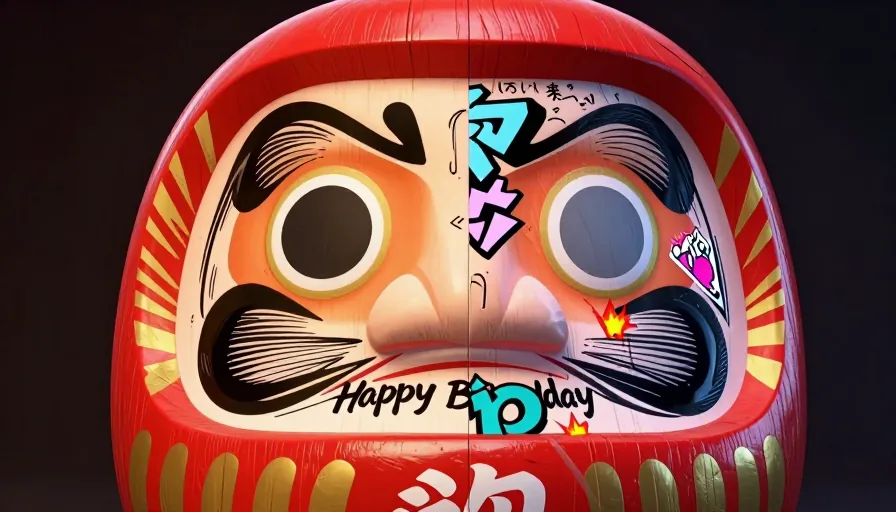
Celebrating a birthday in Japanese involves more than just knowing the phrase for 'birthday in Japanese.' It's about understanding the cultural nuances and choosing the right level of formality. This guide will help you master various ways to say 'Happy Birthday' in Japanese, from casual to formal settings, ensuring your wishes are both appropriate and heartfelt.
Choosing the Right Greeting: Formality Matters
In Japanese culture, formality is crucial. The level of formality in your greeting depends on your relationship with the person and the context of the celebration. Here’s a quick checklist to help you decide:
- Casual Greetings: Use with friends, family, or in informal settings.
- Formal Greetings: Use with elders, superiors, or in formal settings.
Mini Drill: Identify the Context
- You are wishing your best friend a happy birthday.
- Casual or Formal?
- You are sending a birthday card to your boss.
- Casual or Formal?
- You are at a family gathering celebrating your cousin's birthday.
- Casual or Formal?
Essential Phrases for Casual Birthday Wishes
When celebrating with friends or family, you can use more casual phrases. Here are some examples:
-
お誕生日おめでとう (O-tanjoubi omedetou)
- Pronunciation: Oh-tan-joh-bee oh-meh-deh-toh
- Meaning: Happy Birthday
- Usage: Casual settings with friends and family
-
ハッピーバースデー (Happii baasudee)
- Pronunciation: Hap-pee baa-su-deh
- Meaning: Happy Birthday
- Usage: Very casual, often used in younger or more informal contexts
Example Usage in a Conversation
Friend: 今日は誕生日だよ! (Kyou wa tanjoubi da yo!)
- Today is my birthday!
You: わぁ、お誕生日おめでとう! (Waa, o-tanjoubi omedetou!)
- Wow, Happy Birthday!
Formal Greetings for Respectful Occasions
For more formal occasions, such as wishing a superior or an elder a happy birthday, use these phrases:
-
お誕生日おめでとうございます (O-tanjoubi omedetou gozaimasu)
- Pronunciation: Oh-tan-joh-bee oh-meh-deh-toh goh-zah-ee-mahs
- Meaning: Happy Birthday (formal)
- Usage: Formal settings with elders, superiors, or in written communications
-
誕生日おめでとうございます (Tanjoubi omedetou gozaimasu)
- Pronunciation: Tan-joh-bee oh-meh-deh-toh goh-zah-ee-mahs
- Meaning: Happy Birthday (formal)
- Usage: Formal settings, often used in written communications
Example Usage in a Card
To your boss:
お誕生日おめでとうございます。 今年もどうぞお元気で。 (O-tanjoubi omedetou gozaimasu. Kotoshi mo douzo o-genki de.)
Happy Birthday. I hope you stay healthy this year.
Beyond 'Happy Birthday': Adding Extra Wishes
To make your birthday wishes more meaningful, consider adding extra phrases that convey your goodwill:
-
素敵な一日を (Sutekina ichinichi o)
- Pronunciation: Soo-teh-kee-nah ee-chee-nee-oh
- Meaning: Have a wonderful day
- Usage: Casual and formal settings
-
楽しんでください (Tanoshinde kudasai)
- Pronunciation: Tah-no-sheen-deh koo-dah-sah-ee
- Meaning: Please enjoy yourself
- Usage: Casual and formal settings
Example Usage in a Card
To a friend:
お誕生日おめでとう! 素敵な一日を。 (O-tanjoubi omedetou! Sutekina ichinichi o.)
Happy Birthday! Have a wonderful day.

Learn Languages with YouTube
Watch videos in your target language, auto-capture words into flashcards, and track your progress — all in one place.
See How It Works →Pronunciation Guides (Hiragana/Romaji)
Pronunciation is key to sounding natural. Here are the Hiragana and Romaji guides for the phrases:
-
お誕生日おめでとう (O-tanjoubi omedetou)
- Hiragana: おたんじょうびおめでとう
- Romaji: O-tanjoubi omedetou
-
お誕生日おめでとうございます (O-tanjoubi omedetou gozaimasu)
- Hiragana: おたんじょうびおめでとうございます
- Romaji: O-tanjoubi omedetou gozaimasu
-
ハッピーバースデー (Happii baasudee)
- Hiragana: はっぴーばーすでー
- Romaji: Happii baasudee
Mini Drill: Pronunciation Practice
- Listen to the audio examples and repeat the phrases.
- Practice writing the phrases in Hiragana and Romaji.
- Record yourself saying the phrases and compare with native speakers.
Cultural Context for Choosing the Right Phrase
Understanding the cultural context is essential for choosing the right phrase. In Japan, respect and formality are highly valued. Here are some tips:
- Age and Hierarchy: Always use formal greetings when addressing elders or superiors.
- Relationship: Use casual greetings with friends and family.
- Occasion: Formal settings like corporate events or traditional ceremonies require formal greetings.
Checklist for Choosing the Right Phrase
- Identify the relationship with the person (friend, family, superior, etc.).
- Determine the setting (casual, formal, or semi-formal).
- Choose the appropriate phrase based on the above factors.
- Practice the pronunciation to ensure clarity.
- Add extra wishes to make your greeting more meaningful.
Example Usage in Different Scenarios
Birthday Card
For a friend:
お誕生日おめでとう! 楽しんでください。 (O-tanjoubi omedetou! Tanoshinde kudasai.)
Happy Birthday! Please enjoy yourself.
For a superior:
お誕生日おめでとうございます。 今年もどうぞお元気で。 (O-tanjoubi omedetou gozaimasu. Kotoshi mo douzo o-genki de.)
Happy Birthday. I hope you stay healthy this year.
Conversation
Friend: 今日は誕生日だよ! (Kyou wa tanjoubi da yo!)
- Today is my birthday!
You: わぁ、お誕生日おめでとう! (Waa, o-tanjoubi omedetou!)
- Wow, Happy Birthday!
Group Celebration
To a group of colleagues:
皆さん、お誕生日おめでとうございます。 今年もどうぞお元気で。 (Minasan, o-tanjoubi omedetou gozaimasu. Kotoshi mo douzo o-genki de.)
Everyone, Happy Birthday. I hope you all stay healthy this year.
Common Mistakes to Avoid
- Using Casual Greetings in Formal Settings: This can be seen as disrespectful.
- Incorrect Pronunciation: Mispronouncing phrases can lead to misunderstandings.
- Ignoring Cultural Nuances: Not considering the relationship and setting can make your greeting inappropriate.
Mini Drill: Avoiding Mistakes
- Identify a scenario where you might make a mistake (e.g., using a casual greeting for a superior).
- Practice the correct formal greeting.
- Reflect on the cultural context to ensure appropriateness.
By following this guide, you'll be able to master the art of saying 'birthday in Japanese' with confidence and cultural sensitivity. Whether you're celebrating with friends, family, or colleagues, your wishes will be both heartfelt and appropriate.
FAQ
What if I'm not sure about the level of formality?
If you're unsure, it's always better to err on the side of formality. Using a formal greeting is generally acceptable in most settings, and it shows respect. You can always add a casual touch with extra wishes.
Can I use 'Happy Birthday' in English for a Japanese person?
While it's acceptable to use 'Happy Birthday' in English, especially in international settings or with younger generations, learning the Japanese phrases shows effort and respect for the culture. It's a great way to make the celebration more meaningful.
Are there any cultural taboos related to birthday celebrations in Japan?
In Japan, birthdays are generally celebrated with joy and enthusiasm. However, it's important to avoid any phrases or actions that might be seen as disrespectful, especially in formal settings. Always consider the relationship and context when choosing your greetings.
Related phrases
Start with Metheus
Watch videos in your target language, auto-capture words into flashcards, and track your progress — all in one place.
Get Started →

