How Do You Write Happy Birthday in Portuguese: A Comprehensive Guide
Do you know how to write happy birthday in Portuguese? Whether you're planning to surprise a friend or family member with a heartfelt message, or simply want to expand your Portuguese vocabulary, this guide will help you master the essentials. We'll cover the most common ways to say 'Happy Birthday' in Portuguese, pronunciation guides, cultural nuances, and practical applications.
The Essential Ways to Say 'Happy Birthday' in Portuguese
There are several ways to say 'Happy Birthday' in Portuguese, depending on the formality of the situation and the region you're in. Here are the most common phrases:
- Feliz aniversário! (Formal and informal, used in both Brazil and Portugal)
- Parabéns pelo seu aniversário! (Formal, used in both Brazil and Portugal)
- Muitos anos! (Informal, used in Brazil)
Checklist for Greeting in Portuguese
- Choose the appropriate phrase based on the formality of the situation.
- Practice the pronunciation to ensure clarity.
- Consider adding a personal touch to make the greeting more meaningful.
Understanding Portuguese Birthday Culture: What to Expect at a Celebration
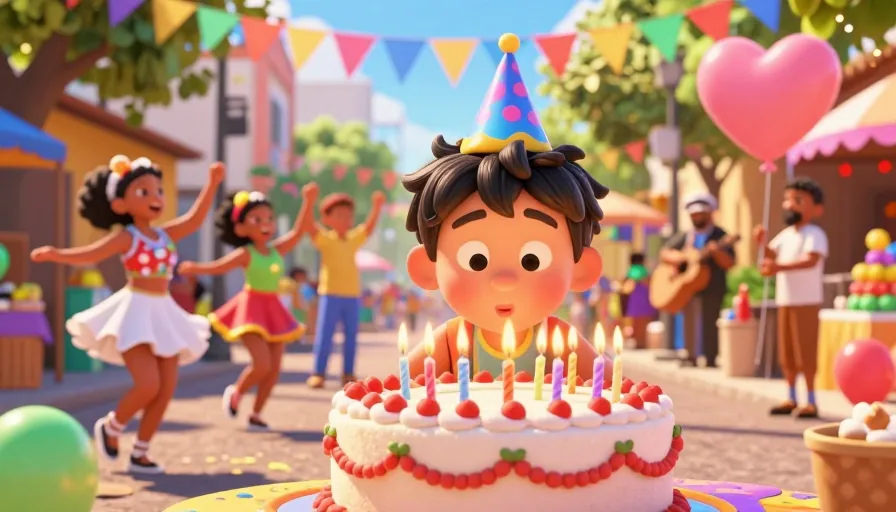
Portuguese-speaking countries have unique birthday traditions. In Brazil, for example, birthday parties often involve a lot of singing, dancing, and traditional foods like brigadeiros (chocolate fudge balls) and bolo de rolo (cake rolls). In Portugal, celebrations might be more subdued, with a focus on family gatherings and traditional dishes like pastel de nata (custard tarts).
Mini Drill: Cultural Nuances
- Imagine you're at a birthday party in Brazil. What kind of food and activities would you expect?
- How might a birthday celebration in Portugal differ from one in Brazil?
- What are some traditional Portuguese dishes you might encounter at a birthday party?
Learning the Birthday Song: Lyrics and Pronunciation Tips
The birthday song in Portuguese is a fun and essential part of any celebration. Here are the lyrics and pronunciation tips:
Lyrics:
Parabéns pra você Nesta data querida Muitas felicidades Muitos anos de vida
Pronunciation Tips:
- Parabéns (pah-rah-BEHNSS)
- pra você (prah voh-SHEH)
- nesta data querida (NEHS-tah DAH-tah keh-REE-dah)
- muitas felicidades (MOO-eetahs feh-lee-see-DAH-dees)
- muitos anos de vida (MOO-eetohs AH-nohs jeh VEE-dah)
Common Mistakes to Avoid
- Avoid pronouncing 'pra você' as 'para você' (pah-RAH voh-SHEH), which is incorrect.
- Ensure you pronounce 'muitas' correctly, as it is often mispronounced as 'muitas' (MOO-eetahs).
Beyond the Basics: Useful Birthday Phrases and Vocabulary
To make your birthday greetings more meaningful, learn these additional phrases and vocabulary:
- Quantos anos você tem? (How old are you?)
- Eu desejo que você tenha um aniversário incrível! (I wish you an incredible birthday!)
- Vamos cantar parabéns? (Shall we sing 'Happy Birthday'?)
- Ano novo, vida nova! (New year, new life!)
Checklist for Expanding Your Vocabulary
- Learn and practice the additional phrases and vocabulary.
- Use these phrases in context to reinforce your learning.
- Consider writing a short birthday message using the new vocabulary.

Learn Languages with YouTube
Watch videos in your target language, auto-capture words into flashcards, and track your progress — all in one place.
See How It Works →Practical Application: Making Your Greeting Personal
To make your birthday greeting more personal, consider the following tips:
- Add a personal touch: Mention a shared memory or inside joke.
- Use local customs: Incorporate regional traditions or foods into your message.
- Practice your pronunciation: Ensure you can clearly and confidently say the phrases.
Example Greeting:
Feliz aniversário, Maria! Espero que você tenha um dia incrível cheio de alegria e amor. Lembre-se daquela vez que fomos à praia e rimos tanto? Espero que seu aniversário seja tão divertido quanto aquele dia. Parabéns!
Mini Drill: Personalizing Your Greeting
- Think of a friend or family member whose birthday is coming up.
- Write a personalized birthday message using the phrases and vocabulary you've learned.
- Practice saying the message aloud to improve your pronunciation.
Conclusion
Learning how to write happy birthday in Portuguese is a great way to connect with Portuguese-speaking friends and family. By understanding the cultural nuances, mastering the essential phrases, and adding a personal touch, you can make any birthday celebration truly special.
FAQ
How do you pronounce 'Feliz aniversário'?
'Feliz aniversário' is pronounced as 'feh-LEEZ ah-nee-ver-SAH-ree-oh'. Make sure to emphasize the 'z' sound in 'feliz' and the 'ah' sound in 'aniversário'.
What are some common mistakes to avoid when saying 'Happy Birthday' in Portuguese?
Some common mistakes include mispronouncing 'pra você' as 'para você' and incorrectly pronouncing 'muitas' as 'muitas'. Additionally, be mindful of regional differences in vocabulary and pronunciation.
How can I make my birthday greeting more personal?
To make your birthday greeting more personal, add a personal touch by mentioning a shared memory or inside joke. Incorporate local customs and traditions, and practice your pronunciation to ensure clarity and confidence.
What are some traditional Brazilian birthday foods?
Traditional Brazilian birthday foods include brigadeiros (chocolate fudge balls), bolo de rolo (cake rolls), and pastel de nata (custard tarts). These treats are often served at birthday celebrations and are a delicious way to celebrate the occasion.
How do Brazilian birthday celebrations differ from Portuguese celebrations?
Brazilian birthday celebrations are often more lively and festive, with a lot of singing, dancing, and traditional foods. In contrast, Portuguese celebrations might be more subdued, with a focus on family gatherings and traditional dishes. Understanding these differences can help you tailor your greeting to the specific cultural context.
FAQ
How do you pronounce 'Feliz aniversário'?
'Feliz aniversário' is pronounced as 'feh-LEEZ ah-nee-ver-SAH-ree-oh'. Make sure to emphasize the 'z' sound in 'feliz' and the 'ah' sound in 'aniversário'.
What are some common mistakes to avoid when saying 'Happy Birthday' in Portuguese?
Some common mistakes include mispronouncing 'pra você' as 'para você' and incorrectly pronouncing 'muitas' as 'muitas'. Additionally, be mindful of regional differences in vocabulary and pronunciation.
How can I make my birthday greeting more personal?
To make your birthday greeting more personal, add a personal touch by mentioning a shared memory or inside joke. Incorporate local customs and traditions, and practice your pronunciation to ensure clarity and confidence.
What are some traditional Brazilian birthday foods?
Traditional Brazilian birthday foods include brigadeiros (chocolate fudge balls), bolo de rolo (cake rolls), and pastel de nata (custard tarts). These treats are often served at birthday celebrations and are a delicious way to celebrate the occasion.
How do Brazilian birthday celebrations differ from Portuguese celebrations?
Brazilian birthday celebrations are often more lively and festive, with a lot of singing, dancing, and traditional foods. In contrast, Portuguese celebrations might be more subdued, with a focus on family gatherings and traditional dishes. Understanding these differences can help you tailor your greeting to the specific cultural context.
Related phrases
Start with Metheus
Watch videos in your target language, auto-capture words into flashcards, and track your progress — all in one place.
Get Started →

