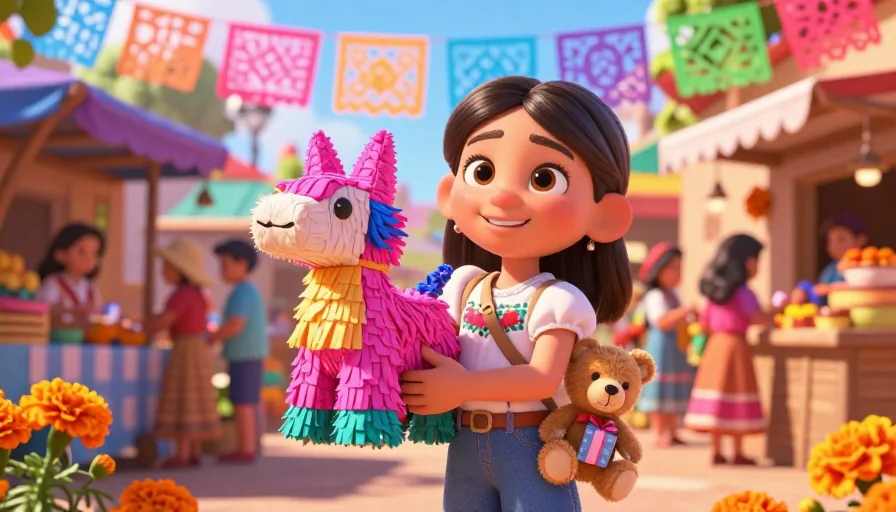
Understanding the hermanita meaning is essential for anyone learning Spanish, as it is a term deeply rooted in familial relationships and cultural nuances. This guide will help you master the usage of 'hermanita' in various contexts, ensuring you can communicate naturally and idiomatically.
What is 'Hermanita'? The Core Meaning
The term 'hermanita' is a diminutive form of 'hermana,' which means 'sister' in Spanish. The suffix '-ita' is used to convey affection, familiarity, or to indicate something small or little. Therefore, 'hermanita' directly translates to 'little sister.' This term is a feminine noun and is almost always used with feminine articles and adjectives, such as 'la' and 'pequeña.'
Mini Drill: Gender Agreement
To ensure you understand the grammatical gender and usage, complete the following sentences with the correct form of the adjective:
- Mi ______ hermanita es muy inteligente. (bright)
- La ______ hermanita de mi amigo es muy simpática. (little)
Understanding the Nuances: Context and Usage
Formal vs. Informal Contexts
The use of 'hermanita' is typically informal and affectionate. It is commonly used within the family or among close friends. In more formal settings, you might use 'hermana' or 'hermana pequeña' instead. For example:
- Informal: Mi hermanita y yo siempre jugamos juntos. (My little sister and I always play together.)
- Formal: Mi hermana pequeña y yo siempre jugamos juntos. (My younger sister and I always play together.)
Common Mistakes
A common mistake among learners is using 'hermanita' in formal contexts or with masculine subjects. Remember that 'hermanita' is always feminine and should be used in informal, affectionate settings.
Hermanita in Action: Example Sentences
To better understand the hermanita meaning and its usage, let's look at some practical examples:
- Family Interaction: Mi hermanita me ayuda a hacer la tarea. (My little sister helps me with my homework.)
- Affectionate Address: ¡Hola, hermanita! ¿Cómo estás? (Hi, little sister! How are you?)
- Descriptive Context: Mi hermanita es la más pequeña de la familia. (My little sister is the youngest in the family.)
- Comparative Context: Mi hermanita es más alta que mi prima. (My little sister is taller than my cousin.)
- Emotional Context: Mi hermanita siempre me hace reír. (My little sister always makes me laugh.)

Learn Languages with YouTube
Watch videos in your target language, auto-capture words into flashcards, and track your progress — all in one place.
See How It Works →Hermanita vs. Other Terms: A Quick Comparison
Hermanita vs. Hermana Pequeña
While 'hermanita' and 'hermana pequeña' both mean 'little sister,' there are subtle differences in usage:
- Hermanita: More affectionate and informal. Used in close, familial contexts.
- Hermana Pequeña: More formal and descriptive. Used when specifying the age difference or in less intimate settings.
Checklist: When to Use 'Hermanita'
- You are addressing a younger sister in an informal, affectionate manner.
- You are speaking within the family or among close friends.
- You want to convey a sense of familiarity and affection.
Mini Drill: Contextual Usage
Choose the correct term for each sentence:
- ______ siempre me ayuda con mis deberes. (Hermanita/Hermana Pequeña)
- Mi ______ es la más pequeña de la familia. (Hermanita/Hermana Pequeña)
- ¡Hola, ______! ¿Cómo estás? (Hermanita/Hermana Pequeña)
Cultural Context of Familial Terms
In Spanish-speaking cultures, familial terms like 'hermanita' carry a deep sense of affection and closeness. Understanding these terms helps you connect more authentically with native speakers. For example, in many Latin American countries, it is common to use diminutives like '-ita' to show endearment and closeness. This cultural nuance is essential for mastering natural, idiomatic Spanish.
Practical Example: Family Gatherings
Imagine a family gathering where you want to introduce your little sister to your friends. You would say:
- Informal: Esta es mi hermanita, María. (This is my little sister, María.)
- Formal: Esta es mi hermana pequeña, María. (This is my younger sister, María.)
Conclusion
Mastering the hermanita meaning and its usage is crucial for anyone learning Spanish. By understanding the contextual nuances, avoiding common mistakes, and using practical examples, you can communicate more naturally and idiomatically. Remember to use 'hermanita' in informal, affectionate contexts and to always ensure gender agreement. With practice and attention to detail, you'll be able to use 'hermanita' with confidence and authenticity.
FAQ
Is 'hermanita' always used for younger sisters?
While 'hermanita' is often used for younger sisters, it can also be used affectionately for any sister, regardless of age, in informal contexts. The key is the sense of familiarity and affection.
Can 'hermanita' be used in formal settings?
No, 'hermanita' is typically reserved for informal, affectionate contexts. In formal settings, it is more appropriate to use 'hermana' or 'hermana pequeña.'
What if I make a mistake with gender agreement?
Mistakes with gender agreement are common among learners. If you make a mistake, correct yourself and continue. Native speakers will appreciate your effort to communicate in Spanish.
Related phrases
Start with Metheus
Watch videos in your target language, auto-capture words into flashcards, and track your progress — all in one place.
Get Started →

