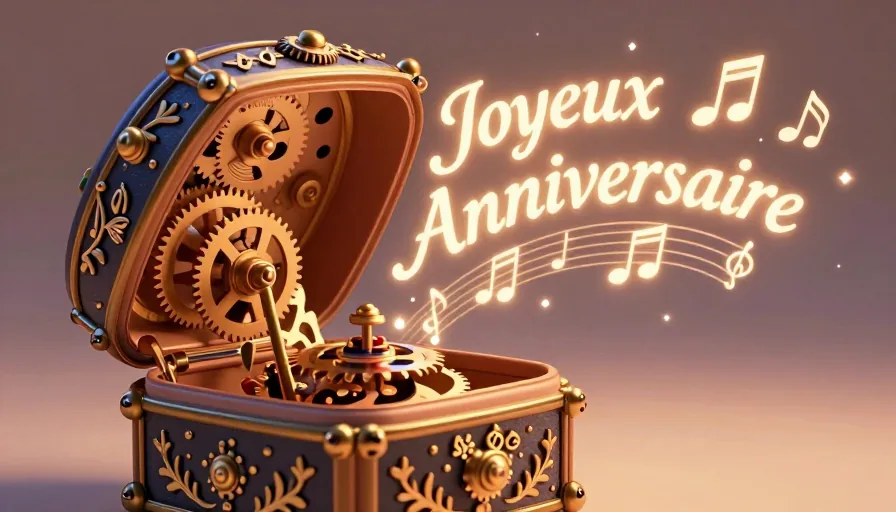
Mastering 'Happy Birthday in French': A Comprehensive Guide to Pronouncing 'Joyeux Anniversaire'
Learning to say happy birthday in French correctly can be a delightful way to connect with French-speaking friends and family. The phrase 'Joyeux Anniversaire' is not only a sweet greeting but also a cultural marker of friendship and goodwill. This guide will walk you through the correct pronunciation, cultural context, and common mistakes to avoid.
Understanding the Components: Joyeux and Anniversaire
Before diving into the pronunciation, let's break down the two words that make up 'Joyeux Anniversaire':
- Joyeux: This word means 'joyful' or 'happy.' It is an adjective that describes the state of being happy.
- Anniversaire: This word means 'anniversary' or 'birthday.' It is a noun that refers to the special day.
Step-by-Step Pronunciation Guide
Phonetic Breakdown
To pronounce 'Joyeux Anniversaire' correctly, follow this phonetic breakdown:
-
Joyeux: /ʒwa.jø/
- /ʒ/ is a voiced palatal fricative, similar to the 's' in 'measure' but softer.
- /wa/ is like the 'wa' in 'water.'
- /jø/ is a nasal vowel, similar to the 'u' in 'but' but with a nasal sound.
-
Anniversaire: /a.ni.vɛʁ.sɛʁ/
- /a/ is like the 'a' in 'father.'
- /ni/ is like the 'nee' in 'knee.'
- /vɛʁ/ is like the 'ver' in 'very' but with a softer 'r' sound.
- /sɛʁ/ is like the 'sir' in 'sir' but with a softer 'r' sound.
Interactive Audio Examples
Listen to the following audio examples to practice your pronunciation:
Audio Example 1: Joyeux Audio Example 2: Anniversaire Audio Example 3: Joyeux Anniversaire
Comparison Chart for Tricky Sounds
| Sound | Example Word | Pronunciation Guide |
|---|---|---|
| /ʒ/ | Joyeux | Voiced palatal fricative, similar to the 's' in 'measure' but softer. |
| /wa/ | Water | Similar to the 'wa' in 'water.' |
| /jø/ | Unique | Nasal vowel, similar to the 'u' in 'but' but with a nasal sound. |
| /a/ | Anniversaire | Like the 'a' in 'father.' |
| /ni/ | Nee | Like the 'nee' in 'knee.' |
| /vɛʁ/ | Very | Like the 'ver' in 'very' but with a softer 'r' sound. |
| /sɛʁ/ | Sir | Like the 'sir' in 'sir' but with a softer 'r' sound. |

Learn Languages with YouTube
Watch videos in your target language, auto-capture words into flashcards, and track your progress — all in one place.
See How It Works →Cultural Nuances: When to Use 'Joyeux Anniversaire'
In French culture, 'Joyeux Anniversaire' is used to wish someone a happy birthday. It is a versatile phrase that can be used in various social settings, from casual gatherings to formal events. Here are some contextual examples:
- Casual Setting: 'Joyeux Anniversaire, Marie! J'espère que tu passes une journée fantastique.' (Happy Birthday, Marie! I hope you have a fantastic day.)
- Formal Setting: 'Bonjour Monsieur Dupont, Joyeux Anniversaire. Nous sommes ravis de célébrer ce jour spécial avec vous.' (Good morning, Mr. Dupont, Happy Birthday. We are delighted to celebrate this special day with you.)
Mini Drill: Practice Sentences
- Joyeux Anniversaire, [Name]! J'espère que tu passes une journée incroyable. (Happy Birthday, [Name]! I hope you have an incredible day.)
- Joyeux Anniversaire! Je suis tellement heureux de célébrer ce jour avec toi. (Happy Birthday! I am so happy to celebrate this day with you.)
- Joyeux Anniversaire, [Name]! Profite bien de ta journée spéciale. (Happy Birthday, [Name]! Enjoy your special day.)
Common Mispronunciations and How to Avoid Them
Mispronunciation 1: 'Joyeux' as 'Joy-oh'
A common mistake is to pronounce 'Joyeux' as 'Joy-oh,' which is incorrect. Remember that 'Joyeux' has a nasal sound at the end, similar to the 'u' in 'but' but with a nasal sound.
Mispronunciation 2: 'Anniversaire' as 'An-ni-vers-air'
Another common mistake is to pronounce 'Anniversaire' as 'An-ni-vers-air.' The correct pronunciation involves a softer 'r' sound and a nasal vowel. Practice the phonetic breakdown to get it right.
Checklist for Correct Pronunciation
- Ensure the 'J' in 'Joyeux' is pronounced as a voiced palatal fricative.
- Practice the nasal vowel sound in 'Joyeux' and 'Anniversaire.'
- Use the correct 'r' sound in 'Anniversaire.'
- Listen to native speakers and practice regularly.
Conclusion
Mastering the pronunciation of 'Joyeux Anniversaire' is a great way to show respect and appreciation for French culture. By following this guide, you'll be able to wish someone a happy birthday in French with confidence and accuracy. Happy practicing!
FAQ
What does 'Joyeux Anniversaire' mean in English?
'Joyeux Anniversaire' translates to 'Happy Birthday' in English. It is a common greeting used to wish someone a happy birthday in French.
Is 'Joyeux Anniversaire' used in all French-speaking countries?
Yes, 'Joyeux Anniversaire' is used in all French-speaking countries. It is a universal phrase for wishing someone a happy birthday, similar to how 'Happy Birthday' is used in English-speaking countries.
Can I use 'Joyeux Anniversaire' in formal settings?
Absolutely! 'Joyeux Anniversaire' is versatile and can be used in both casual and formal settings. The key is to adjust the tone and context of your greeting to match the occasion.
Related phrases
Start with Metheus
Watch videos in your target language, auto-capture words into flashcards, and track your progress — all in one place.
Get Started →

