How to Say Good Evening in German Language: A Comprehensive Guide
Learning how to say good evening in German language is a fundamental step in mastering German greetings. This guide will walk you through the direct translation, contextual usage, formality levels, and common variations. We'll also provide practical examples, pronunciation guides, and social etiquette tips to help you navigate German social settings with confidence.
The Essential Phrase: How to Say 'Good Evening' in German
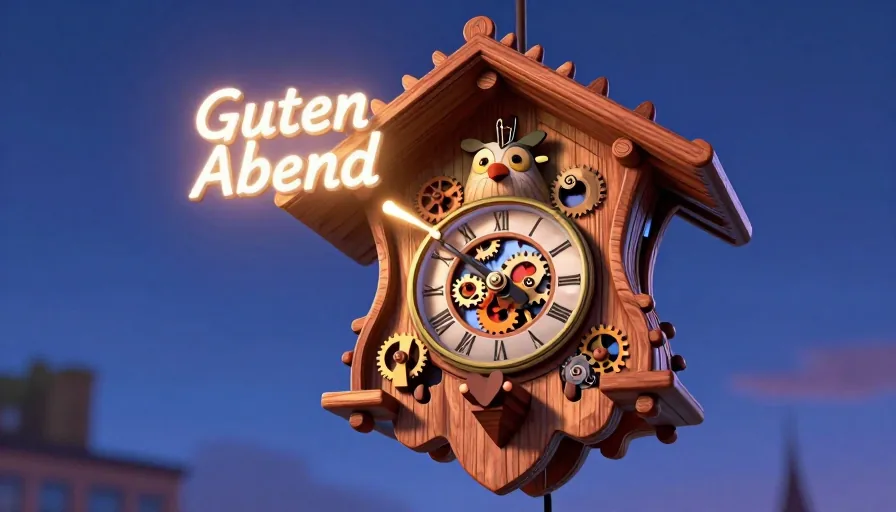
The direct translation of 'good evening' in German is 'Guten Abend.' This phrase is used to greet someone in the evening, typically from late afternoon until bedtime. It's a versatile greeting that can be used in both formal and informal settings.
Pronunciation Guide
To pronounce 'Guten Abend' correctly, follow these steps:
- Guten - Pronounced as 'GOO-ten,' with the stress on the first syllable.
- Abend - Pronounced as 'AH-bent,' with the stress on the first syllable.
Listen to the audio example below to perfect your pronunciation:
[Audio Example: Guten Abend]
Mini Drill
Practice the pronunciation by repeating the phrase aloud five times. Focus on the stress and intonation to sound more natural.
Understanding the Nuances: Formality Matters (Sie vs. Du)
In German, formality is crucial when addressing someone. The choice between 'Sie' (formal) and 'du' (informal) can significantly impact your interaction.
Formal vs. Informal Usage
- Formal (Sie): Use 'Guten Abend' with 'Sie' when addressing someone you don't know well, someone older, or in a professional setting.
- Example: 'Guten Abend, Frau Müller.'
- Informal (du): Use 'Guten Abend' with 'du' when addressing friends, family, or people your own age in a casual setting.
- Example: 'Guten Abend, Max.'
Checklist for Formality
- Determine the relationship with the person you're greeting.
- Choose 'Sie' for formal settings and 'du' for informal settings.
- Practice both forms to build confidence in different social contexts.

Learn Languages with YouTube
Watch videos in your target language, auto-capture words into flashcards, and track your progress — all in one place.
See How It Works →Pronunciation Guide: Mastering 'Guten Abend'
Mastering the pronunciation of 'Guten Abend' is essential for clear communication. Here are some tips to help you:
- Listen and Repeat: Use audio and video resources to listen to native speakers and repeat after them.
- Break it Down: Practice each syllable separately before combining them.
- Record Yourself: Record your pronunciation and compare it with native speakers to identify areas for improvement.
Interactive Pronunciation Exercise
Watch the video below to see the mouth and tongue positions for pronouncing 'Guten Abend' correctly:
[Video Example: Pronunciation of Guten Abend]
Beyond the Basics: Related German Evening Greetings
While 'Guten Abend' is the standard greeting for the evening, there are other related greetings you might encounter:
- Guten Tag: Used during the day, from morning until late afternoon.
- Example: 'Guten Tag, Herr Schmidt.'
- Guten Morgen: Used in the morning, from waking up until late morning.
- Example: 'Guten Morgen, Frau Schmidt.'
- Gute Nacht: Used at night, when going to bed or saying goodbye for the night.
- Example: 'Gute Nacht, Max.'
Comparison Chart: Evening Greetings in Different Languages
| Language | Good Evening | Contextual Usage | Formality Level |
|---|---|---|---|
| English | Good Evening | Evening | Neutral |
| German | Guten Abend | Evening | Neutral |
| Spanish | Buenas Noches | Evening/Night | Neutral |
| French | Bonsoir | Evening/Night | Neutral |
| Italian | Buona Sera | Evening | Neutral |
Social Etiquette: Using 'Guten Abend' in Different Settings
Understanding the social etiquette behind using 'Guten Abend' can help you navigate German social settings with ease. Here are some tips:
- At Home: Use 'Guten Abend' when greeting family members or close friends in the evening.
- At Work: Use 'Guten Abend' with colleagues in a professional setting, especially when addressing someone you don't know well.
- In Public: Use 'Guten Abend' when greeting strangers or acquaintances in public places like shops, restaurants, or on the street.
Practical Examples
- At a Restaurant: 'Guten Abend, Herr Ober. Können Sie uns die Speisekarte geben?' (Good evening, waiter. Can you give us the menu?)
- At a Friend's House: 'Guten Abend, Anna. Schön, dich zu sehen.' (Good evening, Anna. Nice to see you.)
- At a Professional Event: 'Guten Abend, Frau Schmidt. Es ist mir eine Freude, Sie kennenzulernen.' (Good evening, Mrs. Schmidt. It's a pleasure to meet you.)
Common Mistakes to Avoid
- Incorrect Pronunciation: Avoid mispronouncing 'Guten Abend' by practicing regularly and using audio resources.
- Incorrect Formality: Avoid using 'du' with someone you should address with 'Sie' and vice versa.
- Incorrect Context: Avoid using 'Guten Abend' at the wrong time of day. Use 'Guten Tag' during the day and 'Gute Nacht' at night.
Checklist for Avoiding Mistakes
- Practice pronunciation regularly.
- Determine the appropriate formality level before greeting someone.
- Use the correct greeting for the time of day.
By following this comprehensive guide, you'll be able to confidently say 'good evening' in German language and navigate various social settings with ease. Happy learning!
FAQ
Is 'Guten Abend' used only in the evening?
Yes, 'Guten Abend' is specifically used in the evening, typically from late afternoon until bedtime. For other times of the day, use 'Guten Morgen' (good morning) or 'Guten Tag' (good day).
Can I use 'Guten Abend' with anyone?
While 'Guten Abend' is a versatile greeting, it's important to consider the formality level. Use 'Guten Abend, Sie' for formal settings and 'Guten Abend, du' for informal settings.
How do I pronounce 'Guten Abend' correctly?
To pronounce 'Guten Abend' correctly, follow these steps: 'Guten' as 'GOO-ten' and 'Abend' as 'AH-bent.' Listen to audio examples and practice regularly to master the pronunciation.
Related phrases
Start with Metheus
Watch videos in your target language, auto-capture words into flashcards, and track your progress — all in one place.
Get Started →

