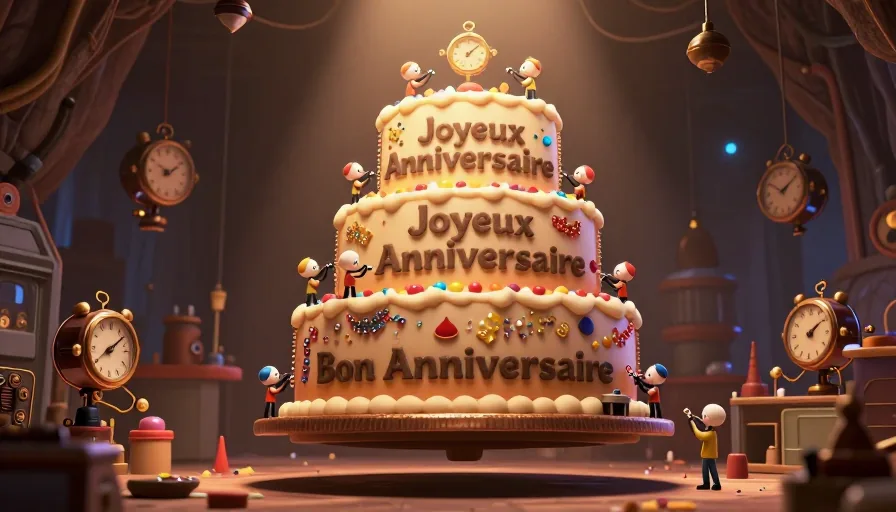
How to Write Happy Birthday in French: A Comprehensive Guide
Writing 'Happy Birthday' in French is a great way to connect with French-speaking friends, family, or colleagues. This guide will teach you how to write happy birthday in French, covering various contexts, idiomatic expressions, and cultural nuances.
The Essential: How to Say 'Happy Birthday' (The Basics)
The most common way to say 'Happy Birthday' in French is Joyeux anniversaire. This phrase is versatile and can be used in both formal and informal settings. Here’s how you can write it:
- Joyeux anniversaire! (Happy Birthday!)
Pronunciation Tips
- Joyeux: /ʒwa.jø/ (zhwah-yuh)
- anniversaire: /an.ivɛʁ.sɛʁ/ (ahn-ee-veh-seh)
Practice saying it aloud to get the pronunciation right. Listen to native speakers or use language learning apps for guidance.
Choosing the Right Greeting: Formal vs. Informal
Depending on your relationship with the birthday person, you might want to adjust the formality of your greeting.
Informal Greetings
For friends and family, you can use more casual expressions:
- Bon anniversaire! (Happy Birthday!)
- Joyeux anniversaire, [Name]! (Happy Birthday, [Name]!)
Formal Greetings
For colleagues or acquaintances, stick to more formal phrases:
- Je vous souhaite un joyeux anniversaire. (I wish you a happy birthday.)
- Tous nos vœux pour votre anniversaire. (All our best wishes for your birthday.)
Comparison Chart
| Formality Level | Greeting | Context | Pronunciation |
|---|---|---|---|
| Informal | Bon anniversaire! | Friends, Family | /bɔ̃ an.ivɛʁ.sɛʁ/ |
| Informal | Joyeux anniversaire, [Name]! | Friends, Family | /ʒwa.jø an.ivɛʁ.sɛʁ/ |
| Formal | Je vous souhaite un joyeux anniversaire. | Colleagues, Acquaintances | /ʒə vu ʃwi.ʃə ɛ̃ ʒwa.jø an.ivɛʁ.sɛʁ/ |
| Formal | Tous nos vœux pour votre anniversaire. | Colleagues, Acquaintances | /tu nu vø pɔʁ vɔtʁ an.ivɛʁ.sɛʁ/ |

Learn Languages with YouTube
Watch videos in your target language, auto-capture words into flashcards, and track your progress — all in one place.
See How It Works →Beyond the Basics: French Birthday Idioms and Expressions
To make your greeting more personal and authentic, consider using idiomatic expressions. Here are a few examples:
- Passe une excellente journée! (Have an excellent day!)
- Que tous tes vœux se réalisent! (May all your wishes come true!)
- Profite bien de ta journée spéciale! (Enjoy your special day!)
Mini Drill
Try combining these expressions with the basic greetings. For example:
- Joyeux anniversaire, Marie! Passe une excellente journée! (Happy Birthday, Marie! Have an excellent day!)
French Birthday Traditions You Should Know
Understanding French birthday traditions can enhance your greeting. Here are a few key traditions:
- Le Gâteau d'Anniversaire: The birthday cake is a central part of the celebration. It’s often decorated with candles, and the birthday person makes a wish before blowing them out.
- Les Chansons: Singing 'Joyeux Anniversaire' is a must. The melody is similar to 'Happy Birthday' in English.
- Les Cadeaux: Gifts are usually opened during the celebration. It’s customary to bring a small gift or card.
Checklist for a French Birthday Celebration
- Learn and practice the basic greeting: Joyeux anniversaire.
- Choose the appropriate formality level for your greeting.
- Incorporate idiomatic expressions to personalize your message.
- Understand and participate in French birthday traditions.
- Practice pronunciation to ensure clarity and authenticity.
Cultural Nuances and Mistakes to Avoid
- Avoid Direct Translations: Phrases like 'Have a great day' or 'Enjoy your special day' are direct translations but lack the cultural nuance of French expressions.
- Be Mindful of Formality: Using overly informal greetings in formal settings can be seen as disrespectful.
- Pronunciation Matters: Mispronouncing key phrases can diminish the impact of your greeting.
Common Mistakes
- Incorrect Pronunciation: Ensure you pronounce Joyeux and anniversaire correctly.
- Overly Casual Greetings: Avoid using informal greetings in professional settings.
- Ignoring Cultural Traditions: Participating in traditions like singing 'Joyeux Anniversaire' shows respect for the culture.
Conclusion
Learning how to write happy birthday in French involves more than just translating the phrase. By understanding the nuances of formality, incorporating idiomatic expressions, and participating in cultural traditions, you can make your greeting truly special. Practice your pronunciation, choose the right greeting for the context, and enjoy the celebration!
FAQ
Is 'Bon anniversaire' the same as 'Joyeux anniversaire'?
'Bon anniversaire' is more informal and casual, while 'Joyeux anniversaire' is more formal and versatile. Use 'Bon anniversaire' for friends and family, and 'Joyeux anniversaire' for a wider range of contexts.
Can I use English phrases in a French birthday greeting?
While it's possible, using English phrases can dilute the authenticity of your greeting. Stick to French expressions to show respect for the language and culture.
What if I'm not sure about the formality level?
If you're unsure, it's better to err on the side of formality. Using a more formal greeting can be appreciated in various settings, while an overly casual greeting might be seen as disrespectful in professional contexts.
Related phrases
Start with Metheus
Watch videos in your target language, auto-capture words into flashcards, and track your progress — all in one place.
Get Started →

