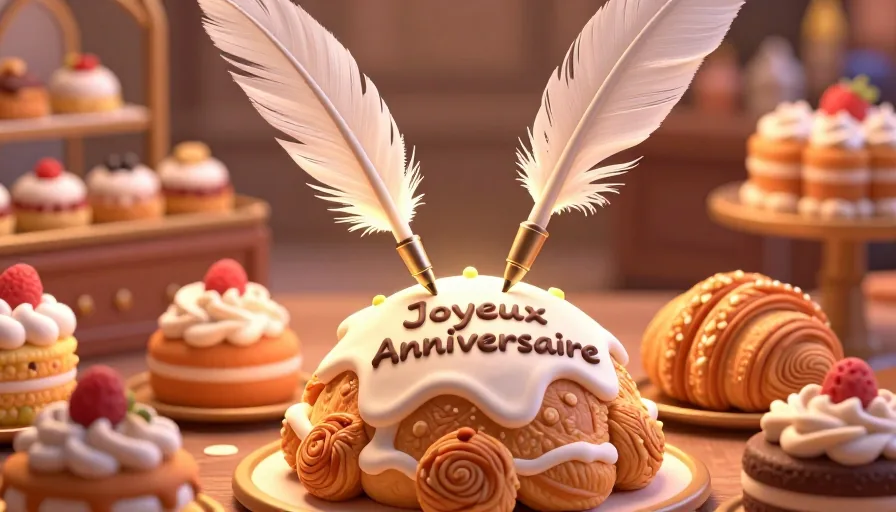
How Do I Write Happy Birthday in French: A Comprehensive Guide
Writing 'Happy Birthday' in French is a great way to connect with French-speaking friends, family, or colleagues. This guide will help you understand the most common phrases, variations for different social contexts, and cultural nuances.
The Essential Way: Joyeux Anniversaire
The most common way to say 'Happy Birthday' in French is Joyeux anniversaire. This phrase is versatile and can be used in both formal and informal settings. Here’s how you can use it:
- Informal (Friends and Family): Joyeux anniversaire, [Name]!
- Formal (Colleagues or Acquaintances): Joyeux anniversaire, Monsieur/Madame [Last Name].
Pronunciation Tips
- Joyeux: /ʒwa.jø/ (similar to 'zhwa-yo')
- Anniversaire: /a.ni.vɛʁ.sɛʁ/ (similar to 'a-nee-veh-sair')
Choosing the Right Greeting: Formal vs. Informal
Depending on your relationship with the person, you might want to adjust the formality of your greeting. Here’s a comparison chart to help you choose the right phrase:
| Formality Level | Phrase | Example Usage |
|---|---|---|
| Informal | Joyeux anniversaire | For friends and family |
| Semi-Formal | Bon anniversaire | For close colleagues or acquaintances |
| Formal | Joyeux anniversaire, Monsieur/Madame [Last Name] | For supervisors or elders |
Mini Drill: Match the Phrase
Match the following phrases with the appropriate context:
- Joyeux anniversaire, Marie
- Bon anniversaire, Monsieur Dupont
- Joyeux anniversaire, Monsieur Dupont
A. Informal (Friend) B. Semi-Formal (Colleague) C. Formal (Supervisor)

Learn Languages with YouTube
Watch videos in your target language, auto-capture words into flashcards, and track your progress — all in one place.
See How It Works →Beyond the Basics: 10 Fun & Idiomatic Birthday Wishes
To make your greeting more personal and engaging, consider using these idiomatic expressions:
- Passe une excellente journée - Have an excellent day
- Que tous tes vœux se réalisent - May all your wishes come true
- Joyeux anniversaire et que cette année soit pleine de bonheur - Happy Birthday and may this year be full of happiness
- Profite bien de ta journée spéciale - Enjoy your special day
- Que cette année soit remplie de joie et de succès - May this year be filled with joy and success
- Joyeux anniversaire et que cette année soit pleine de surprises agréables - Happy Birthday and may this year be full of pleasant surprises
- Que cette année soit pleine de bonheur et de santé - May this year be full of happiness and health
- Joyeux anniversaire et que cette année soit pleine de rires et de bonheur - Happy Birthday and may this year be full of laughter and happiness
- Que cette année soit pleine de moments inoubliables - May this year be full of unforgettable moments
- Joyeux anniversaire et que cette année soit pleine de succès et de bonheur - Happy Birthday and may this year be full of success and happiness
Practical Examples
- To a Friend: Joyeux anniversaire, Marie! Passe une excellente journée et que tous tes vœux se réalisent!
- To a Colleague: Bon anniversaire, Monsieur Dupont! Profite bien de ta journée spéciale.
- To a Supervisor: Joyeux anniversaire, Monsieur Dupont. Que cette année soit pleine de succès et de bonheur.
French Birthday Traditions You Should Know
Understanding French birthday traditions can enhance your cultural awareness and make your greetings more meaningful. Here are a few key traditions:
- Birthday Cake (Gâteau d'anniversaire): French birthday cakes are often simple and elegant, with a focus on fresh ingredients. The cake is usually served with a candle for each year of the celebrant's age.
- Birthday Song (Chanson d'anniversaire): The French version of the birthday song is Joyeux Anniversaire, which is similar to the English version but with French lyrics.
- Gifts (Cadeaux): Gifts are typically opened after the cake is served. It's customary to bring a small gift, even if it's just a card or a small token.
- Birthday Dinner (Dîner d'anniversaire): A special dinner is often prepared for the birthday person, featuring their favorite dishes. This can be a family affair or a gathering with close friends.
- Birthday Surprises (Surprises d'anniversaire): French birthdays often include surprises, such as a surprise party or a special outing planned by friends or family.
Checklist for a Perfect French Birthday Greeting
- Choose the appropriate phrase based on the formality of the relationship.
- Personalize your message with an idiomatic expression.
- Include a cultural reference or tradition to show your understanding of French customs.
- Practice the pronunciation to ensure clarity and respect.
- Consider the recipient's preferences and interests when choosing a gift or planning a surprise.
Cultural Context: French Birthday Traditions
French birthday traditions are rich and varied, reflecting the country's love for celebration and community. Here are some additional traditions to enhance your understanding:
- Birthday Crown (Couronne d'anniversaire): In some regions, the birthday person wears a special crown or hat to mark the occasion.
- Birthday Wishes (Vœux d'anniversaire): It's customary to write heartfelt wishes in a birthday card or on social media.
- Birthday Games (Jeux d'anniversaire): Games like Pin the Tail on the Donkey or Musical Chairs are popular at French birthday parties.
- Birthday Photos (Photos d'anniversaire): Taking and sharing photos is a big part of French birthday celebrations. Make sure to capture the special moments!
- Birthday Toasts (Toasts d'anniversaire): Raising a glass and making a toast to the birthday person is a common tradition. The toast often includes well-wishes for the coming year.
Mini Drill: Cultural Traditions
Match the following traditions with their descriptions:
- Birthday Crown
- Birthday Wishes
- Birthday Games
- Birthday Photos
- Birthday Toasts
A. Wearing a special crown or hat B. Writing heartfelt wishes C. Playing games like Pin the Tail on the Donkey D. Taking and sharing photos E. Raising a glass and making a toast
Conclusion
Learning how to write 'Happy Birthday' in French is more than just knowing a phrase; it's about understanding the cultural context and choosing the right words for the occasion. By following this guide, you'll be able to craft meaningful greetings that resonate with French speakers. Happy learning!
FAQ
What is the most common way to say 'Happy Birthday' in French?
The most common way to say 'Happy Birthday' in French is **Joyeux anniversaire**. This phrase is versatile and can be used in both formal and informal settings.
How do I address a colleague on their birthday in French?
For a colleague, you can use **Bon anniversaire** or **Joyeux anniversaire, Monsieur/Madame [Last Name]** depending on the level of formality. For example, *Bon anniversaire, Monsieur Dupont!*
Are there any specific French birthday traditions I should know about?
Yes, French birthday traditions include serving a special cake, singing the birthday song *Joyeux Anniversaire*, and exchanging gifts. A birthday dinner or surprise is also common.
Related phrases
Start with Metheus
Watch videos in your target language, auto-capture words into flashcards, and track your progress — all in one place.
Get Started →

