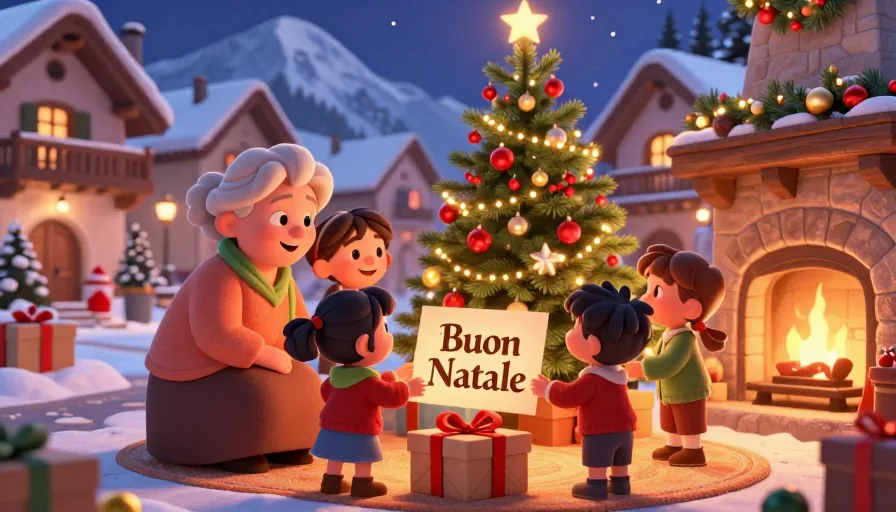
Learning how to say 'Happy Christmas in Italian' is a wonderful way to connect with Italian culture during the holiday season. Whether you're planning a trip to Italy or simply want to impress Italian-speaking friends, mastering these phrases will enhance your language skills and cultural understanding.
The Essential Italian Greeting: Merry Christmas
The most common way to say 'Merry Christmas' in Italian is 'Buon Natale.' This phrase is used widely across Italy and is appropriate for both formal and informal settings. Here's how to pronounce it:
- Buon Natale
- Pronunciation: /bwɔn naˈtaːle/
- Phonetic breakdown: BWO-n na-TAH-leh
Mini Drill: Practice Pronunciation
Try saying 'Buon Natale' aloud a few times. Focus on the stress on the second syllable of 'Natale.'
Beyond 'Merry Christmas': Other Festive Italian Greetings
While 'Buon Natale' is the most common greeting, there are other festive phrases you can use to add variety to your holiday vocabulary.
Buone Feste
- Buone Feste
- Pronunciation: /ˈbwɔːne ˈfeste/
- Phonetic breakdown: BWOH-neh FES-teh
- Meaning: Happy Holidays
This phrase is a bit more general and can be used to wish someone a happy holiday season, not just Christmas. It's perfect for greeting someone during the entire holiday period, from Christmas to New Year's.
Natale con i tuoi, Pasqua con chi vuoi
- Natale con i tuoi, Pasqua con chi vuoi
- Pronunciation: /naˈtaːle kon i ˈtwoi ˈpaːskwa kon ki ˈvwɔj/
- Phonetic breakdown: na-TAH-leh kon ee TWOY pah-SKWAH kon kee VWOY
- Meaning: Christmas with your family, Easter with whoever you want
This is a traditional Italian saying that reflects the importance of family during the Christmas season. It's a fun phrase to use with friends and family, especially if you're discussing holiday plans.
Auguri di Buon Natale
- Auguri di Buon Natale
- Pronunciation: /awˈɡuːri di bwɔn naˈtaːle/
- Phonetic breakdown: aw-GOO-ree dee BWO-n na-TAH-leh
- Meaning: Best wishes for a Merry Christmas
This phrase is more formal and is often used in written communications, such as Christmas cards or formal greetings.

Learn Languages with YouTube
Watch videos in your target language, auto-capture words into flashcards, and track your progress — all in one place.
See How It Works →Pronunciation Guide: Mastering Italian Holiday Phrases
Pronunciation is key to sounding natural in any language. Here are some tips to help you master the pronunciation of Italian holiday phrases:
Tips for Accurate Pronunciation
- Listen to Native Speakers: Use online resources or language learning apps to listen to native speakers pronounce these phrases. Websites like Forvo or language learning apps like Duolingo can be very helpful.
- Practice Tongue Twisters: Italian has a rhythmic quality that can be captured through tongue twisters. Try practicing phrases like 'Tre tigri contro tre tigri' to improve your pronunciation.
- Focus on Stress: Italian words often have a stressed syllable. Pay attention to where the stress falls in each word to sound more natural.
Contextual Usage: When to Use Which Phrase
Knowing when to use each phrase can help you sound more fluent and appropriate in different situations.
Formal vs. Informal Settings
- Formal Settings: Use 'Auguri di Buon Natale' when writing Christmas cards or greeting someone in a formal setting.
- Informal Settings: Use 'Buon Natale' or 'Buone Feste' in casual conversations with friends and family.
Seasonal Appropriateness
- Christmas Day: 'Buon Natale' is the go-to phrase for Christmas Day.
- Holiday Season: 'Buone Feste' can be used throughout the holiday season, from Christmas to New Year's.
Related Holiday Vocabulary: Greetings for New Year and Beyond
Expanding your holiday vocabulary can help you connect more deeply with Italian culture. Here are some additional phrases to learn:
Happy New Year
- Buon Anno
- Pronunciation: /bwɔn ˈanno/
- Phonetic breakdown: BWO-n AHN-noh
- Meaning: Happy New Year
This phrase is used to wish someone a happy New Year. It's a simple and essential phrase to know during the holiday season.
Happy Holidays
- Buone Feste
- Pronunciation: /ˈbwɔːne ˈfeste/
- Phonetic breakdown: BWOH-neh FES-teh
- Meaning: Happy Holidays
As mentioned earlier, this phrase is versatile and can be used throughout the holiday season.
Checklist for Holiday Greetings
- Buon Natale - Merry Christmas
- Buone Feste - Happy Holidays
- Auguri di Buon Natale - Best wishes for a Merry Christmas
- Buon Anno - Happy New Year
- Natale con i tuoi, Pasqua con chi vuoi - Christmas with your family, Easter with whoever you want
Mini Drill: Practice Conversations
- Imagine you are greeting an Italian friend on Christmas Day. What would you say?
- Write a short Christmas card in Italian using the phrases you've learned.
- Practice a conversation with a friend about your holiday plans, using the phrase 'Natale con i tuoi, Pasqua con chi vuoi.'
By mastering these phrases and understanding their contextual usage, you'll be well on your way to celebrating 'Happy Christmas in Italian' like a native speaker.
FAQ
Is 'Buon Natale' the only way to say 'Happy Christmas' in Italian?
No, while 'Buon Natale' is the most common way, you can also use 'Auguri di Buon Natale' for a more formal greeting or 'Buone Feste' for a general holiday greeting.
How do I pronounce 'Buon Natale' correctly?
Pronounce 'Buon Natale' as /bwɔn naˈtaːle/. Focus on the stress on the second syllable of 'Natale.' Listening to native speakers can also help improve your pronunciation.
Can I use 'Buone Feste' for New Year's greetings?
Yes, 'Buone Feste' is a versatile phrase that can be used throughout the holiday season, including for New Year's greetings. For a more specific New Year's greeting, you can use 'Buon Anno.'
Related phrases
Start with Metheus
Watch videos in your target language, auto-capture words into flashcards, and track your progress — all in one place.
Get Started →

