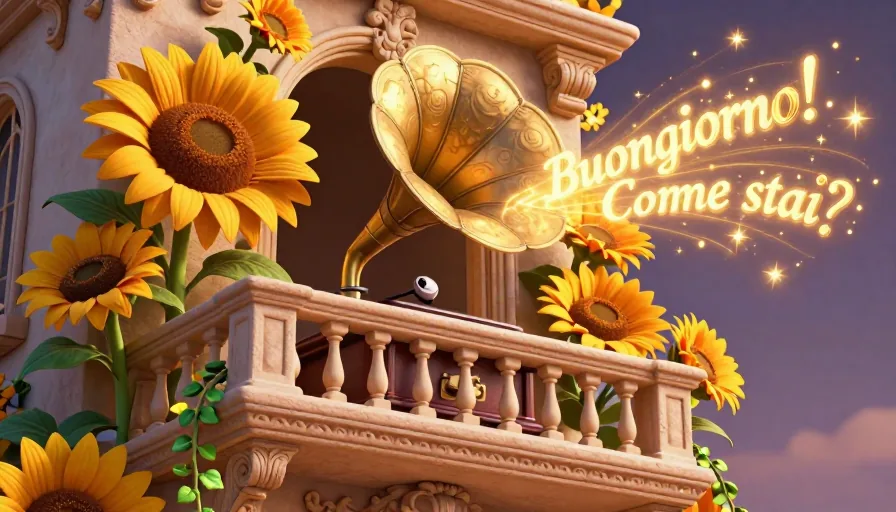
Learning how to say 'good day in Italian language' is a fundamental skill for anyone looking to communicate effectively in Italian. Whether you're traveling to Italy or simply want to expand your language skills, understanding the nuances of this phrase and its appropriate responses will enhance your conversational abilities.
The Standard Way: Saying 'Buona Giornata' and Beyond
The most common way to say 'Have a Good Day' in Italian is 'Buona Giornata.' This phrase is versatile and can be used in both formal and informal settings. Here’s how you can use it:
- Formal Setting: Buona Giornata, Signor Rossi. (Good day, Mr. Rossi.)
- Informal Setting: Buona Giornata, Marco! (Good day, Marco!)
Pronunciation Tips
- Buona: /ˈbwɔːna/
- Giornata: /dʒorˈnaːta/
Practice saying these words aloud to get the pronunciation right. Remember, Italian is a phonetic language, so each letter is pronounced as it is written.
Navigating Conversations: How to Respond to 'Have a Good Day'
When someone wishes you a good day, it's polite to respond appropriately. Here are some common responses:
- Grazie, anche a te. (Thank you, you too.)
- Grazie, e a te buona giornata. (Thank you, and have a good day to you too.)
- Grazie, buona giornata anche a te. (Thank you, have a good day to you too.)
Mini Drill: Practice Responses
- Someone says, Buona Giornata! How do you respond?
- Grazie, anche a te.
- Someone says, Buona Giornata, Marco! How do you respond?
- Grazie, e a te buona giornata.
- Someone says, Buona Giornata, Signor Rossi. How do you respond?
- Grazie, buona giornata anche a te.
Cultural Context: When to Use Formal vs. Informal Greetings
Understanding when to use formal vs. informal greetings is crucial in Italian culture. Here’s a quick guide:
- Formal: Use when addressing elders, superiors, or people you don’t know well. Examples include Buongiorno (Good morning) and Buona Sera (Good evening).
- Informal: Use with friends, family, and people you are familiar with. Examples include Ciao (Hi) and Buona Giornata (Good day).
Checklist for Formal vs. Informal Greetings
- Use Buongiorno in the morning with elders or superiors.
- Use Ciao with friends and family.
- Use Buona Sera in the evening with elders or superiors.
- Use Buona Giornata with friends and family.

Learn Languages with YouTube
Watch videos in your target language, auto-capture words into flashcards, and track your progress — all in one place.
See How It Works →Alternative, More Casual, or Regional Ways to Express the Sentiment
While 'Buona Giornata' is the standard, there are other ways to express the same sentiment, especially in more casual or regional contexts.
- Buona Giornata, amico mio. (Good day, my friend.)
- Buona Giornata, cara. (Good day, dear.)
- Buona Giornata, ragazzi. (Good day, guys.)
Regional Variations
In some regions, you might hear variations like:
- Buona Giornata, amico. (Good day, friend.) in Southern Italy.
- Buona Giornata, compagno. (Good day, comrade.) in Northern Italy.
Contextual Usage: Formal vs. Informal Settings
Understanding the context in which to use these phrases is essential. Here are some examples:
- Formal Setting: Buona Giornata, Signor Rossi. (Good day, Mr. Rossi.)
- Informal Setting: Buona Giornata, Marco! (Good day, Marco!)
Conversational Flow Examples
- Formal:
- Person A: Buongiorno, Signor Rossi. (Good morning, Mr. Rossi.)
- Person B: Buongiorno, Signora Maria. (Good morning, Mrs. Maria.)
- Person A: Buona Giornata, Signor Rossi. (Good day, Mr. Rossi.)
- Person B: Grazie, buona giornata anche a te. (Thank you, have a good day to you too.)
- Informal:
- Person A: Ciao, Marco! (Hi, Marco!)
- Person B: Ciao, Giulia! (Hi, Giulia!)
- Person A: Buona Giornata, Marco! (Good day, Marco!)
- Person B: Grazie, anche a te. (Thank you, you too.)
Quick Reference Guide: Learn it in 2 Minutes
- Standard Phrase: Buona Giornata
- Formal Response: Grazie, buona giornata anche a te.
- Informal Response: Grazie, anche a te.
- Casual Alternatives: Buona Giornata, amico mio.
- Regional Variations: Buona Giornata, compagno.
By mastering these phrases and responses, you'll be well-equipped to navigate Italian conversations with confidence and cultural sensitivity.
Common Mistakes to Avoid
- Mistake 1: Using informal greetings with elders or superiors.
- Mistake 2: Not responding to a greeting.
- Mistake 3: Mispronouncing key phrases.
Mini Drill: Avoiding Mistakes
- You are in a formal setting. What do you say?
- Buongiorno, Signor Rossi.
- Someone says, Buona Giornata! How do you respond?
- Grazie, anche a te.
- You are in a casual setting. What do you say?
- Ciao, Marco!
Conclusion
Mastering how to say 'good day in Italian language' and responding appropriately is a key skill for effective communication. By understanding the nuances of formal and informal settings, and practicing common responses, you'll be able to navigate Italian conversations with ease. Buona Giornata!
FAQ
What is the most common way to say 'Have a Good Day' in Italian?
The most common way to say 'Have a Good Day' in Italian is 'Buona Giornata.' This phrase can be used in both formal and informal settings.
How do I respond when someone wishes me a good day in Italian?
You can respond with phrases like 'Grazie, anche a te' (Thank you, you too) or 'Grazie, e a te buona giornata' (Thank you, and have a good day to you too).
Are there any regional variations for saying 'Have a Good Day' in Italian?
Yes, in some regions, you might hear variations like 'Buona Giornata, amico' (Good day, friend) in Southern Italy or 'Buona Giornata, compagno' (Good day, comrade) in Northern Italy.
Related phrases
Start with Metheus
Watch videos in your target language, auto-capture words into flashcards, and track your progress — all in one place.
Get Started →

