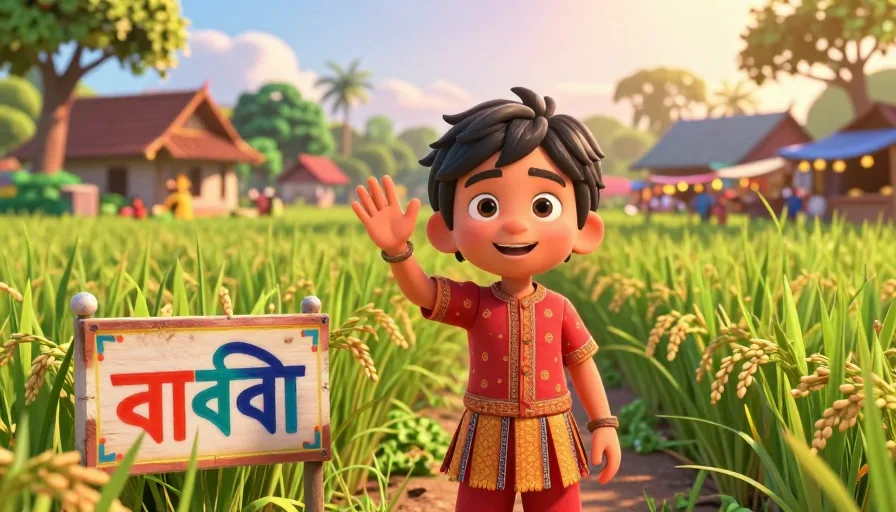
Learning how to say hello in Bangladesh is your first step to connecting with the local culture. Bangladesh, with its rich heritage and warm people, offers a unique experience for travelers and language learners alike. This guide will equip you with essential Bengali greetings, pronunciation tips, and cultural insights to help you navigate various social situations with confidence.
The Essential Bengali Greetings: Saying Hello
Bengali, the official language of Bangladesh, has several ways to say hello, each suited to different contexts. Here are some of the most common greetings:
- Shuvo Shokal (শুভ সকাল): This means 'Good Morning' and is used from sunrise until around 12 PM.
- Assalamu Alaikum (আসসালামু আলাইকুম): A formal greeting meaning 'Peace be upon you,' commonly used among Muslims.
- Nomoskar (নমস্কার): A respectful greeting used throughout the day, similar to 'Hello' or 'Namaste.'
- Shuvo Din (শুভ দিন): This means 'Good Day' and can be used from noon until evening.
- Shuvo Ratri (শুভ রাত্রি): This means 'Good Night' and is used from evening until sunrise.
Mini Drill: Practice Your Greetings
Try saying these greetings aloud to get comfortable with the pronunciation. Here's a quick checklist to help you practice:
- Shuvo Shokal
- Assalamu Alaikum
- Nomoskar
- Shuvo Din
- Shuvo Ratri
Greetings for Different Situations (Formal vs. Informal)
Understanding when to use formal or informal greetings is crucial in Bengali culture. Here’s a breakdown:
Formal Greetings
- Nomoskar: Use this when greeting elders, teachers, or people in positions of authority. It shows respect and is appropriate in formal settings.
- Assalamu Alaikum: This is a formal greeting often used among Muslims and in religious contexts. The response is 'Wa Alaikum Assalam (ও আলাইকুম আসসালাম).'
Informal Greetings
- Shuvo Shokal/Din/Ratri: These are more casual and can be used with friends, family, and peers.
Practical Examples
- Greeting a Shopkeeper: You might say 'Nomoskar' or 'Shuvo Din' depending on the time of day and your relationship with the shopkeeper.
- Greeting a Friend: 'Shuvo Shokal' or 'Shuvo Din' would be appropriate.

Learn Languages with YouTube
Watch videos in your target language, auto-capture words into flashcards, and track your progress — all in one place.
See How It Works →Pronunciation Guide: Mastering Bengali Greetings
Pronunciation is key to effective communication. Here are some tips to help you master Bengali greetings:
- Shuvo Shokal: Pronounced as 'SHOO-vo SHO-kal.' Emphasize the 'SHOO' sound and keep the 'kal' soft.
- Assalamu Alaikum: Pronounced as 'AH-sa-la-mu AH-lai-kum.' Focus on the 'AH' sounds and keep the 'kum' soft.
- Nomoskar: Pronounced as 'NO-mos-kar.' The 'NO' sound is similar to 'no' in English, and 'kar' is pronounced like 'car' without the 'c'.
- Shuvo Din: Pronounced as 'SHOO-vo din.' Similar to 'Shuvo Shokal,' but with a softer 'din' sound.
- Shuvo Ratri: Pronounced as 'SHOO-vo RA-tri.' The 'RA' sound is like 'rah' in English.
Audio and Video Resources
For a more immersive learning experience, consider using audio and video resources. Websites like Forvo and YouTube have native speakers pronouncing these phrases, which can be incredibly helpful.
Essential Follow-Up Phrases After Greeting
After greeting someone, it's polite to follow up with a question or comment. Here are some essential follow-up phrases:
- Aapni ke mon kotha? (আপনি কেমন কথা?): How are you? (Formal)
- Tumi ke mon kotha? (তুমি কেমন কথা?): How are you? (Informal)
- Ami theke eshechi (আমি থেকে এসেছি): I have come from there.
- Ami theke eshechi (আমি থেকে এসেছি): I have come from there.
- Ami theke eshechi (আমি থেকে এসেছি): I have come from there.
Cultural Context Notes
- Greeting Elders: Always use formal greetings when addressing elders. It shows respect and is deeply valued in Bengali culture.
- Greeting in Religious Settings: Use 'Assalamu Alaikum' in religious or formal settings, especially among Muslims.
- Greeting in Casual Settings: Feel free to use informal greetings with friends and family.
Common Mistakes to Avoid
- Mispronunciation: Pay close attention to pronunciation. Mispronouncing a greeting can lead to misunderstandings.
- Using the Wrong Greeting: Be mindful of the context. Using a formal greeting in an informal setting can come across as stiff or awkward.
- Not Following Up: After greeting, always follow up with a question or comment to keep the conversation flowing.
Checklist for Effective Greetings
- Choose the appropriate greeting based on the time of day and context.
- Practice pronunciation to ensure clarity.
- Follow up with a question or comment after greeting.
- Be mindful of cultural norms and use formal greetings when necessary.
Conclusion
Mastering how to say hello in Bangladesh is more than just learning a few phrases; it's about understanding the cultural nuances and using the right greeting in the right context. With practice and attention to detail, you'll be able to navigate Bengali social settings with ease. Happy learning!
FAQ
What is the most common way to say hello in Bangladesh?
The most common ways to say hello in Bangladesh are 'Nomoskar' (নমস্কার) and 'Shuvo Shokal' (শুভ সকাল) for good morning. 'Assalamu Alaikum' (আসসালামু আলাইকুম) is also widely used, especially among Muslims.
Is it important to use formal greetings in Bangladesh?
Yes, using formal greetings is important, especially when addressing elders, teachers, or people in positions of authority. It shows respect and is deeply valued in Bengali culture.
What should I do if I mispronounce a greeting?
If you mispronounce a greeting, don't worry too much. Bengali people are generally understanding and appreciative of your effort to speak their language. Just correct yourself and continue the conversation.
Related phrases
Start with Metheus
Watch videos in your target language, auto-capture words into flashcards, and track your progress — all in one place.
Get Started →

