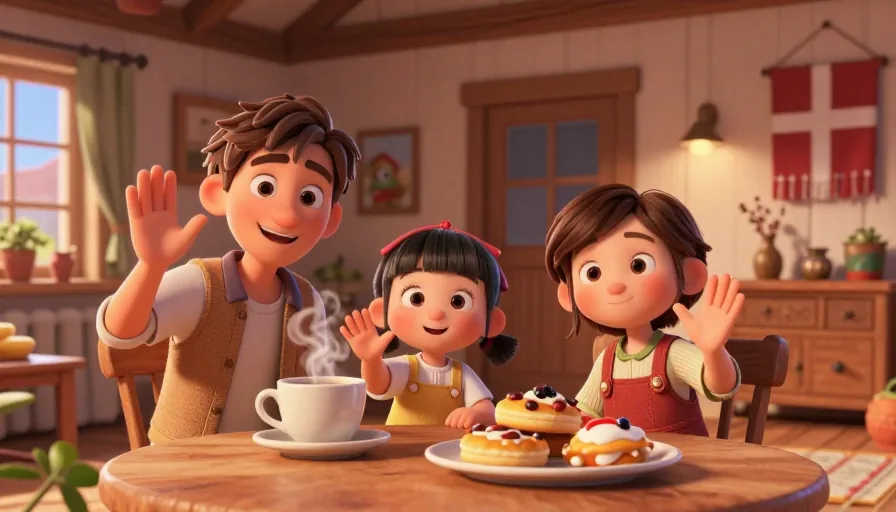
Learning how to say hello in Denmark language is your first step to connecting with Danish speakers. This guide will equip you with the essential greetings, pronunciation tips, and cultural insights to help you navigate Danish social interactions with confidence.
The Essential Danish Greetings: What You Need to Know
Understanding the most common ways to say 'hello' in Danish is crucial. Here are the basics:
-
Hej (pronounced 'hi'): This is the most informal way to say hello, similar to 'hi' in English. Use it with friends, family, and in casual settings.
-
Goddag (pronounced 'go-day'): This is a more formal greeting, equivalent to 'good day' in English. It's appropriate for professional settings or when addressing someone you've just met.
-
Godmorgen (pronounced 'go-mor-gen'): Meaning 'good morning,' this greeting is used until around noon.
-
Godaften (pronounced 'go-af-ten'): Meaning 'good evening,' this greeting is used from late afternoon onwards.
-
Godnat (pronounced 'go-nat'): This means 'goodnight' and is used when saying goodbye in the evening or at night.
Pronunciation Deep Dive: Mastering 'Hej' and Beyond
Pronunciation is key to sounding natural. Here's a breakdown of the greetings:
-
Hej: Pronounce it like the English word 'hi'. It's short and casual.
-
Goddag: Break it down: 'go' as in 'goose' and 'dag' as in 'daguerreotype'.
-
Godmorgen: 'Go' as in 'goose', 'mor' as in 'more', and 'gen' as in 'genuine'.
-
Godaften: 'Go' as in 'goose', 'af' as in 'affirm', and 'ten' as in 'ten'.
-
Godnat: 'Go' as in 'goose' and 'nat' as in 'nat'.
Pronunciation Drill: Practice these greetings out loud. Record yourself and compare with native speakers on language learning apps like Metheus.app.
Danish Greetings in Context: Formal vs. Informal Situations
Knowing when to use formal or informal greetings is essential. Here's a comparison chart:
| Situation | Informal Greeting | Formal Greeting |
|---|---|---|
| Friends/ Family | Hej | - |
| Casual Acquaintances | Hej | Goddag |
| Professional Settings | - | Goddag |
| Morning Greetings | - | Godmorgen |
| Evening Greetings | - | Godaften |
Checklist for Greeting Appropriately:
- Are you greeting a friend or family member? Use 'Hej'.
- Are you in a professional setting? Use 'Goddag'.
- Is it morning? Use 'Godmorgen'.
- Is it evening? Use 'Godaften'.

Learn Languages with YouTube
Watch videos in your target language, auto-capture words into flashcards, and track your progress — all in one place.
See How It Works →Beyond 'Hello': Essential Danish Social Phrases
Expanding your vocabulary with essential social phrases will enhance your interactions. Here are some useful phrases:
-
Farvel (pronounced 'far-vell'): Meaning 'goodbye', use this when leaving.
-
Tak (pronounced 'tahk'): Meaning 'thank you', use this to express gratitude.
-
Undskyld (pronounced 'oon-skoold'): Meaning 'sorry' or 'excuse me', use this to apologize or get someone's attention.
-
Ja (pronounced 'yah'): Meaning 'yes', use this to agree.
-
Nej (pronounced 'nigh'): Meaning 'no', use this to disagree.
Mini Drill: Practice these phrases in sentences. For example, 'Hej, tak for i dag' (Hi, thank you for today).
Cultural Nuances Related to Greetings
Danish culture values directness and equality. Here are some tips:
-
Danes appreciate sincerity and straightforwardness. Avoid overly formal language in casual settings.
-
Handshakes are common in both formal and informal settings. Maintain eye contact and use a firm grip.
-
Danes may use first names quickly, even in professional settings. This reflects their egalitarian culture.
-
Punctuality is valued. Arrive on time for meetings and social engagements.
Cultural Tip: When in doubt, observe how others greet each other and follow their lead.
Interactive Practice: Enhance Your Learning
To truly master Danish greetings, interactive practice is essential. Here are some resources:
-
Metheus.app: Use the app's audio and video examples to practice pronunciation.
-
Language Exchange Partners: Find a Danish language exchange partner to practice greetings in real-time.
-
Danish Movies and TV Shows: Watch with subtitles to hear natural greetings in context.
Action Plan:
- Practice the greetings daily using Metheus.app.
- Find a language exchange partner and schedule regular practice sessions.
- Watch Danish media to immerse yourself in the language and culture.
By following this guide, you'll be well on your way to mastering how to say hello in Denmark language and navigating Danish social interactions with ease.
FAQ
Is 'Hej' the only way to say hello in Danish?
No, 'Hej' is the most informal way. For more formal settings, use 'Goddag'. For morning greetings, use 'Godmorgen', and for evening greetings, use 'Godaften'.
Do Danes use first names in professional settings?
Yes, Danes often use first names quickly, even in professional settings. This reflects their egalitarian culture and direct communication style.
What if I make a mistake in pronunciation?
Don't worry about making mistakes. Danes appreciate effort and sincerity. Keep practicing, and use resources like Metheus.app to improve your pronunciation.
Related phrases
Start with Metheus
Watch videos in your target language, auto-capture words into flashcards, and track your progress — all in one place.
Get Started →

