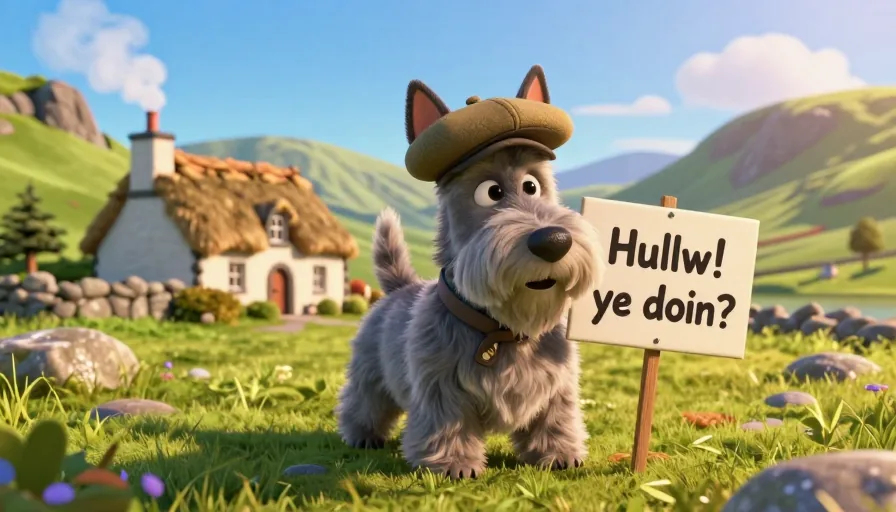
Learning how to say hi in Scotland is more than just picking up a few phrases; it's about immersing yourself in the rich cultural tapestry of Scotland. Whether you're planning a visit or simply curious about the language, understanding Scottish greetings will enhance your experience and help you connect with locals. This guide will cover everything from basic greetings to idiomatic expressions, ensuring you sound like a true Scot.
The Essence of Scots: Understanding the Language
Scots is a Germanic language variety spoken in Scotland and parts of Northern Ireland. It's distinct from Scottish Gaelic and has its own unique vocabulary, grammar, and pronunciation. Scots is often considered a dialect of English, but it has a rich history and cultural significance that sets it apart. Understanding the essence of Scots will help you appreciate the nuances of Scottish greetings.
Key Differences Between Scots and Standard English
- Vocabulary: Scots has many unique words and phrases that are not found in standard English.
- Grammar: Scots grammar can differ significantly from English grammar, with variations in verb conjugations and sentence structure.
- Pronunciation: Scots has a distinct phonetic system, with sounds that may be unfamiliar to English speakers.
Essential Greetings: From Casual to Formal
Basic Greetings
In Scotland, basic greetings are similar to those in standard English, but with some regional variations. Here are a few examples:
- Hi: Pronounced as /haɪ/ in standard English, but in Scots, it might be pronounced as /hiː/.
- Hello: In Scots, you might hear /hɛləʊ/ or /hɛlə/.
Regional Variations
Scots has several regional variations, each with its own unique greetings. For example:
- Glaswegian: In Glasgow, you might hear 'Hiya' or 'Alreet' (pronounced /əˈriːt/), which means 'all right'.
- Doric: In the Northeast of Scotland, you might hear 'Hullo' or 'Hae ye been weel?' (pronounced /heː ʤiː biːn wiːl/), which means 'have you been well?'
Formal Greetings
In formal settings, Scots greetings are similar to standard English, but with a few differences. For example:
- Good morning: In Scots, you might hear 'Guid mornin' (pronounced /ɡɪd ˈmɔːrnɪŋ/).
- Good afternoon: In Scots, you might hear 'Guid efternoon' (pronounced /ɡɪd ˈɛftərnuːn/).
Idioms and Expressions: Sounding Like a True Scot
Common Idiomatic Greetings
Scots is rich in idiomatic expressions that can add color and authenticity to your greetings. Here are a few examples:
- How are ye doin'?: This is a casual way to ask 'how are you?' in Scots. The response might be 'No bad, thanks' (pronounced /noʊ bæd θæŋks/), which means 'not bad, thanks'.
- Haud yer wheesht: This means 'be quiet' or 'shut up' in Scots. It's a strong expression, so use it with caution!
Traditional Greetings
Traditional Scottish greetings often have a poetic or lyrical quality. Here are a few examples:
- Haste ye back: This means 'come back soon' in Scots. It's a warm and friendly way to say goodbye.
- Lang may yer lum reek: This means 'long may your chimney smoke', which is a traditional Scottish blessing wishing someone a long and happy life.

Learn Languages with YouTube
Watch videos in your target language, auto-capture words into flashcards, and track your progress — all in one place.
See How It Works →Contextual Usage: Formal vs. Informal
Informal Greetings
Informal greetings are used in casual settings, such as with friends, family, or acquaintances. Examples include:
- Alreet: This is a casual way to say 'hello' or 'how are you?' in Scots.
- Y'alright?: This is a casual way to ask 'are you alright?' in Scots.
Formal Greetings
Formal greetings are used in professional or polite settings, such as with strangers, elders, or in business contexts. Examples include:
- Guid mornin': This is a formal way to say 'good morning' in Scots.
- Guid efternoon: This is a formal way to say 'good afternoon' in Scots.
Phonetic Guidance for Pronunciation
Pronunciation is a crucial aspect of learning how to say hi in Scotland. Here are some tips to help you master the phonetics of Scots:
- Listen to native speakers: Watch Scottish TV shows, listen to Scottish music, or talk to native speakers to get a feel for the rhythm and intonation of the language.
- Practice with a language exchange partner: Find a language exchange partner who speaks Scots and practice conversing with them.
- Use online resources: There are many online resources, such as language learning apps and YouTube videos, that can help you improve your pronunciation.
Common Pronunciation Mistakes to Avoid
- Mispronouncing 'ch': In Scots, the 'ch' sound is often pronounced as /x/, as in 'loch' (pronounced /lɔx/).
- Mispronouncing 'wh': In Scots, the 'wh' sound is often pronounced as /f/, as in 'wha' (pronounced /fɑː/), which means 'who'.
Checklist: Mastering Scottish Greetings
- Learn the basic greetings in Scots, such as 'hi', 'hello', and 'guid mornin'.
- Practice the pronunciation of common Scots words and phrases.
- Familiarize yourself with regional variations in Scottish greetings.
- Learn idiomatic and traditional greetings, such as 'how are ye doin'?' and 'haud yer wheesht'.
- Understand the contextual usage of formal and informal greetings.
- Practice with a language exchange partner or native speaker.
Mini Drills: Practice Makes Perfect
Drill 1: Basic Greetings
Practice saying the following greetings aloud:
- Hi
- Hello
- Guid mornin'
- Guid efternoon
Drill 2: Idiomatic Greetings
Practice saying the following idiomatic greetings aloud:
- How are ye doin'?
- Haud yer wheesht
- Haste ye back
- Lang may yer lum reek
Drill 3: Contextual Usage
Practice using the following greetings in context:
- Informal: Alreet, y'alright?
- Formal: Guid mornin', guid efternoon
Conclusion
Learning how to say hi in Scotland is a rewarding experience that will enrich your understanding of Scottish culture and help you connect with locals. By mastering the essential greetings, regional variations, and idiomatic expressions, you'll be well on your way to sounding like a true Scot. So, go ahead and give it a try – and remember, practice makes perfect!
FAQ
Is Scots the same as Scottish Gaelic?
No, Scots and Scottish Gaelic are distinct languages. Scots is a Germanic language variety spoken in Scotland and parts of Northern Ireland, while Scottish Gaelic is a Celtic language. Scots has a rich history and cultural significance that sets it apart from Scottish Gaelic.
Are Scottish greetings difficult to learn?
Scottish greetings can be challenging due to the unique vocabulary, grammar, and pronunciation of Scots. However, with practice and immersion, you can master the essential greetings and sound like a true Scot. Start with basic greetings and gradually move on to idiomatic and traditional expressions.
How can I improve my pronunciation of Scots?
Improving your pronunciation of Scots involves listening to native speakers, practicing with a language exchange partner, and using online resources. Pay attention to common pronunciation mistakes, such as mispronouncing 'ch' and 'wh', and practice regularly to improve your skills.
Related phrases
Start with Metheus
Watch videos in your target language, auto-capture words into flashcards, and track your progress — all in one place.
Get Started →

