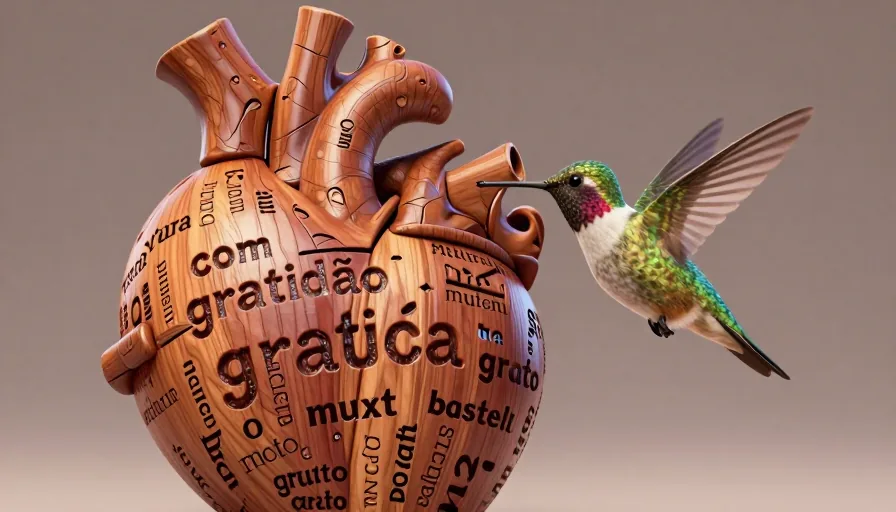
Learning how to say thank you in Portuguese is a fundamental aspect of mastering the language. While 'obrigado' is the most common translation, there are numerous other ways to express gratitude that can enhance your conversational fluency and cultural understanding. This guide will explore the basics, alternative phrases, and the contextual usage of thank you expressions in Portuguese.
The Basics: Obrigada vs. Obrigado
The basic way to say thank you in Portuguese is 'obrigado' for males and 'obrigada' for females. These words are derived from the verb 'obrigar,' which means 'to oblige.' Here's a quick breakdown:
- Obrigado (oh-bree-GAH-doh) - Used by males to say thank you.
- Obrigada (oh-bree-GAH-dah) - Used by females to say thank you.
Mini Drill: Gendered Forms
- Imagine you are a male and someone helps you with directions. What do you say?
- Imagine you are a female and a friend gives you a gift. What do you say?
9 Ways to Say Thank You in Brazilian Portuguese (Beyond 'Obrigado')
While 'obrigado' is the go-to phrase, there are many other ways to express gratitude in Brazilian Portuguese. Here are nine alternatives that can help you sound more natural and fluent:
- Brigado/Brigada (BREE-gah-doh/BREE-gah-dah) - A casual way to say thanks. It's similar to saying 'cheers' in English.
- Brigadão/Brigadona (BREE-gah-DAWN/BREE-gah-DOH-nah) - An even more casual and enthusiastic way to say 'thanks a lot.'
- Valeu (VAH-leh-oo) - A very informal way to say thanks, often used among friends.
- Gratidão (grah-tee-DAWN) - This means 'gratitude' and is used to express deep appreciation.
- Muito obrigado/muito obrigada (MOO-eh-toh oh-bree-GAH-doh/MOO-eh-toh oh-bree-GAH-dah) - Literally 'very thankful,' it's a step up from the basic 'obrigado.'
- Agradecido/Agradecida (ah-grah-DEE-see-doh/ah-grah-DEE-see-dah) - Means 'grateful' and is often used in more formal contexts.
- De nada (deh NAH-dah) - Literally 'it's nothing,' it's used to respond to 'thank you' and means 'you're welcome.'
- Fico feliz (FEE-koh FLEE-z) - Means 'I'm happy' and can be used to express gratitude in a friendly way.
- Muito obrigado pela ajuda (MOO-eh-toh oh-bree-GAH-doh peh-LAH AH-ZEE-dah) - Means 'thank you very much for the help' and is useful in situations where someone has gone out of their way to assist you.
Interactive Examples
- Brigado/Brigada: Imagine you're at a party and someone offers you a drink. You can casually say 'brigado' or 'brigada' to show your appreciation.
- Brigadão/Brigadona: If a friend helps you move to a new apartment, you might say 'brigadão' or 'brigadona' to express your gratitude.
- Valeu: Among friends, if someone shares their notes with you, a simple 'valeu' will do.
- Gratidão: If a colleague goes above and beyond to help you with a project, you might express your deep appreciation with 'gratidão.'
- Muito obrigado/muito obrigada: If a teacher spends extra time explaining a difficult concept, you can say 'muito obrigado' or 'muito obrigada' to show your thanks.
- Agradecido/Agradecida: In a formal setting, such as a job interview, you might say 'agradecido' or 'agradecida' to express your gratitude for the opportunity.
- De nada: If someone thanks you for holding the door open, you can respond with 'de nada.'
- Fico feliz: If a friend gives you a small gift, you might say 'fico feliz' to show your happiness and gratitude.
- Muito obrigado pela ajuda: If a neighbor helps you fix your car, you can express your thanks with 'muito obrigado pela ajuda.'

Learn Languages with YouTube
Watch videos in your target language, auto-capture words into flashcards, and track your progress — all in one place.
See How It Works →Choosing the Right Thank You: Context Matters
Knowing when to use formal vs. informal expressions is crucial for effective communication. Here's a comparison chart to help you choose the right phrase:
| Formal | Informal |
|---|---|
| Obrigado/Obrigada | Brigado/Brigada |
| Muito obrigado/Muito obrigada | Valeu |
| Agradecido/Agradecida | Brigadão/Brigadona |
| De nada (in response to thanks) | Fico feliz |
| Gratidão |
Checklist: When to Use Formal vs. Informal Expressions
- Formal: Use in professional settings, with elders, or when addressing someone you don't know well.
- Informal: Use with friends, family, or in casual settings.
Cultural Nuance: Why 'Obrigado' Might Not Always Be the Best Choice
In Brazilian culture, using 'obrigado' can sometimes come across as too formal or stiff, especially in casual settings. Opting for more informal expressions like 'valeu' or 'brigado' can make you sound more natural and friendly. Additionally, using a variety of thank you expressions shows that you are making an effort to connect with the local culture, which is always appreciated.
Common Mistakes to Avoid
- Overusing 'Obrigado': While it's the most common way to say thank you, using it in every situation can make your speech sound monotonous.
- Using Formal Expressions in Casual Settings: This can make you seem stiff or out of touch with the local culture.
- Not Responding to 'Thank You': In Portuguese, it's customary to respond to 'obrigado' or 'obrigada' with 'de nada.'
Mastering Conversational Fluency
To truly master how to say thank you in Portuguese, it's essential to practice using these phrases in context. Here are some tips to help you improve your conversational fluency:
- Practice with a Language Exchange Partner: Find someone who speaks Portuguese and practice using these phrases in real-life conversations.
- Watch Brazilian Movies and TV Shows: Pay attention to how characters express gratitude and try to mimic their usage.
- Use Language Learning Apps: Apps like Metheus can help you practice these phrases in a structured and interactive way.
- Join Language Learning Communities: Engage with other learners and native speakers to get feedback and improve your skills.
By expanding your vocabulary and understanding the cultural nuances of expressing gratitude in Portuguese, you'll be well on your way to mastering the language and connecting with native speakers on a deeper level.
FAQ
Is 'obrigado' always the best way to say thank you in Portuguese?
While 'obrigado' is the most common way to say thank you, it might not always be the best choice, especially in casual settings. Using more informal expressions like 'valeu' or 'brigado' can make you sound more natural and friendly.
Do I need to use different phrases for males and females?
Yes, Portuguese has gendered forms for many words, including 'obrigado' (for males) and 'obrigada' (for females). Using the correct form shows respect for the language and its speakers.
How can I respond to someone who says 'obrigado' or 'obrigada' to me?
In Portuguese, it's customary to respond to 'obrigado' or 'obrigada' with 'de nada,' which means 'you're welcome.'
Are there any cultural nuances I should be aware of when saying thank you in Portuguese?
Yes, using a variety of thank you expressions shows that you are making an effort to connect with the local culture. Additionally, using more informal expressions in casual settings can make you sound more natural and friendly.
Related phrases
Start with Metheus
Watch videos in your target language, auto-capture words into flashcards, and track your progress — all in one place.
Get Started →

