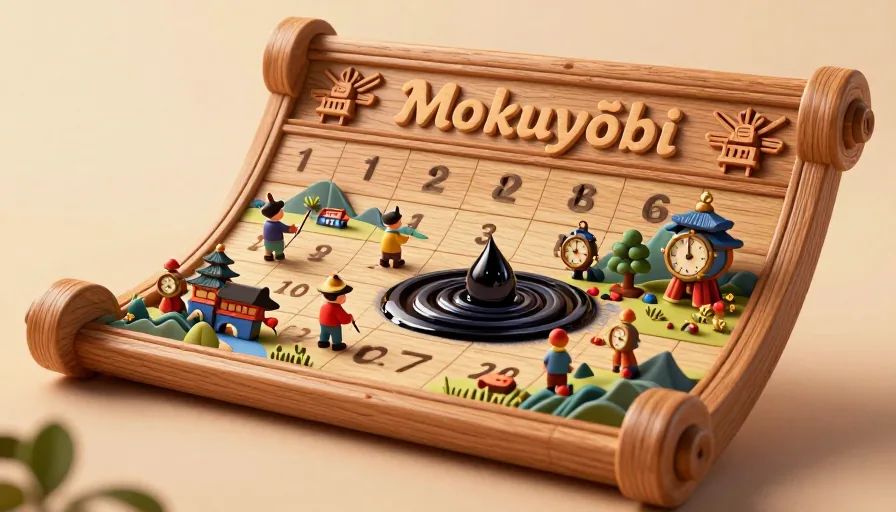
Learning the days of the week in a new language can be challenging, but mastering Thursday in Japanese is a great place to start. This guide will walk you through the correct phrase, pronunciation, and practical usage, along with a memory aid to help you retain the information.
How to Say Thursday in Japanese: The Basics
The Japanese word for Thursday is 木曜日 (Mokuyōbi). This term is composed of two parts: 木 (Moku) which means 'tree,' and 曜日 (Yōbi) which means 'day of the week.' Understanding this breakdown can help you remember the term more easily.
Understanding the Kanji for Thursday (木曜日)
The Kanji for Thursday, 木曜日, combines two characters:
- 木 (Moku): This Kanji represents a tree and is used in various contexts related to wood or trees.
- 曜日 (Yōbi): This Kanji is a general term for 'day of the week' and is used in combination with other characters to denote specific days.
Together, 木曜日 (Mokuyōbi) literally translates to 'tree day,' which is a unique way to remember the day.
Pronunciation Guide
To pronounce 木曜日 (Mokuyōbi) correctly, follow these steps:
- Moku: Pronounced as 'moh-koo,' with the stress on the first syllable.
- Yōbi: Pronounced as 'yoh-bee,' with the stress on the first syllable.
In Romaji, it is written as Mokuyōbi. The IPA pronunciation is /mokɯjoːbi/.
Practical Uses: When to Use 'Thursday' in Japanese Conversation
Knowing how to use 木曜日 (Mokuyōbi) in context is crucial for effective communication. Here are some practical examples:
-
Scheduling a Meeting:
- English: Let's schedule the meeting for Thursday.
- Japanese: 会議を木曜日にスケジュールしましょう。 (Kaigi o Mokuyōbi ni sukejūru shimashō.)
-
Making Plans:
- English: I have plans for Thursday.
- Japanese: 木曜日に予定があります。 (Mokuyōbi ni yotei ga arimasu.)
-
Asking About a Day:
- English: What day is Thursday in Japanese?
- Japanese: 木曜日は日本語で何ですか? (Mokuyōbi wa nihongo de nan desu ka?)

Learn Languages with YouTube
Watch videos in your target language, auto-capture words into flashcards, and track your progress — all in one place.
See How It Works →Memory Aid: Creating a Mnemonic Device
To remember 木曜日 (Mokuyōbi), create a visual or verbal mnemonic. For example, imagine a tree (木) with a calendar (曜日) hanging from its branches. This visual can help you recall the term more easily.
Another method is to associate the day with a specific activity or event that occurs on Thursdays, such as a weekly meeting or a favorite TV show. This contextual association can reinforce your memory.
Cultural Context: The Importance of Days in Japanese Routines
In Japanese culture, days of the week often have specific connotations and routines. For example, Thursday is often seen as a mid-week day, a time to catch up on tasks before the weekend. Understanding these cultural nuances can help you use 木曜日 (Mokuyōbi) more naturally in conversation.
Checklist for Mastering Thursday in Japanese
To ensure you have a solid grasp of 木曜日 (Mokuyōbi), follow this checklist:
- Write down the Kanji and practice writing it multiple times.
- Practice the pronunciation aloud several times a day.
- Use the term in sentences and practice with a language partner or tutor.
- Create a mnemonic device and review it regularly.
- Incorporate the term into your daily routines and conversations.
Mini Drills for Practice
- Writing Practice: Write 木曜日 (Mokuyōbi) in Kanji 10 times.
- Pronunciation Practice: Record yourself saying Mokuyōbi and compare it to a native speaker's pronunciation.
- Sentence Construction: Create 5 sentences using 木曜日 (Mokuyōbi) and share them with a language exchange partner.
- Memory Test: Cover the Kanji and try to write it from memory. Repeat until you can do it accurately.
- Cultural Integration: Research a Japanese tradition or event that occurs on Thursdays and write a short paragraph about it.
By following these steps and practicing regularly, you'll be able to master Thursday in Japanese with ease.
Common Mistakes to Avoid
- Incorrect Kanji: Ensure you use the correct Kanji 木曜日 and not a similar-looking character.
- Pronunciation Errors: Pay attention to the stress and intonation in Mokuyōbi.
- Contextual Misuse: Use 木曜日 (Mokuyōbi) in the correct context to avoid confusion.
Conclusion
Mastering Thursday in Japanese involves understanding the Kanji, pronunciation, and practical usage. By creating a mnemonic device and practicing regularly, you can retain this information effectively. Incorporate 木曜日 (Mokuyōbi) into your daily routines and conversations to enhance your language skills and cultural understanding.
FAQ
Is there a quick way to remember the Kanji for Thursday in Japanese?
Yes, you can use a mnemonic device. Imagine a tree (木) with a calendar (曜日) hanging from its branches. This visual can help you recall the term more easily.
How do I pronounce 'Thursday' in Japanese correctly?
Pronounce **木曜日 (Mokuyōbi)** as 'moh-koo-yoh-bee,' with the stress on the first syllable of each part. In Romaji, it is written as **Mokuyōbi**. The IPA pronunciation is /mokɯjoːbi/.
What are some practical ways to use 'Thursday' in Japanese conversation?
You can use **木曜日 (Mokuyōbi)** in various contexts, such as scheduling a meeting, making plans, or asking about a day. For example, 'Let's schedule the meeting for Thursday' translates to '会議を木曜日にスケジュールしましょう。' (Kaigi o Mokuyōbi ni sukejūru shimashō.)
Related phrases
Start with Metheus
Watch videos in your target language, auto-capture words into flashcards, and track your progress — all in one place.
Get Started →

