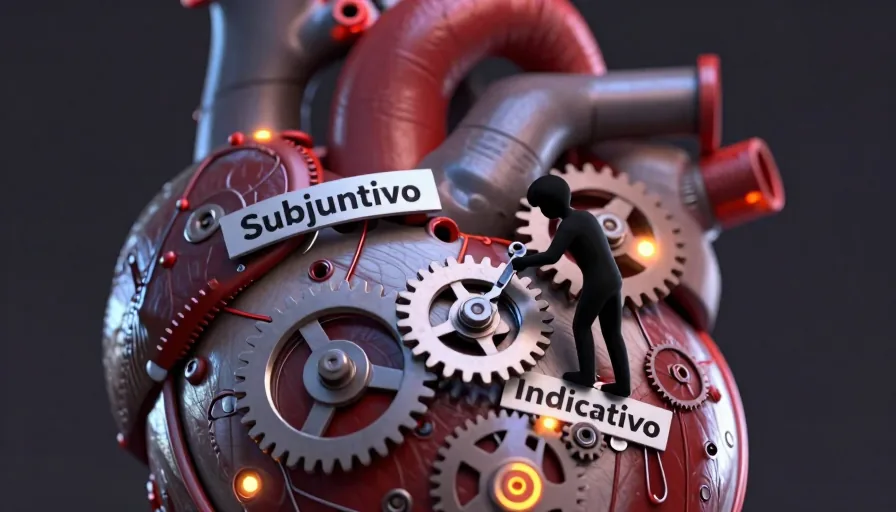
Mastering the indicative or subjunctive moods in Spanish is crucial for expressing different shades of meaning. This guide focuses on the function and context of these moods, helping you understand when and why to use each one.
Indicative vs. Subjunctive: The Core Difference (Fact vs. Desire)
The indicative mood is used to state facts, certainties, or objective information. In contrast, the subjunctive mood expresses doubts, desires, emotions, or uncertainties. Understanding this core difference is key to using these moods correctly.
Indicative Mood Examples
- Fact: El sol sale por el este. (The sun rises in the east.)
- Certainty: Ella es mi hermana. (She is my sister.)
Subjunctive Mood Examples
- Doubt: No sé si él viene. (I don't know if he is coming.)
- Desire: Espero que llueva. (I hope it rains.)
When to Use the Indicative Mood (Facts and Certainties)
The indicative mood is your go-to for stating facts, asking questions, and expressing certainties. Here are some key contexts:
- Statements of fact: La Tierra es redonda. (The Earth is round.)
- Questions: ¿Dónde está el baño? (Where is the bathroom?)
- Certainties: Estoy seguro de que vendrá. (I am sure he will come.)
Checklist for Using the Indicative Mood
- Am I stating a fact?
- Am I asking a question?
- Am I expressing a certainty?
When to Use the Subjunctive Mood (Doubt, Emotion, Uncertainty)
The subjunctive mood comes into play when you want to express doubt, emotion, or uncertainty. Here are some common triggers:
- Doubt or uncertainty: No estoy seguro de que venga. (I am not sure if he will come.)
- Emotions: Me alegra que estés aquí. (I am glad you are here.)
- Desires or hopes: Espero que llueva. (I hope it rains.)
Quick-Reference Chart for Subjunctive Triggers
| Trigger Phrase/Clause | Example | Translation |
|---|---|---|
| dudar que | Dudo que venga. | I doubt he will come. |
| esperar que | Espero que llueva. | I hope it rains. |
| alegrarse de que | Me alegra que estés aquí. | I am glad you are here. |

Learn Languages with YouTube
Watch videos in your target language, auto-capture words into flashcards, and track your progress — all in one place.
See How It Works →Spotting the Subjunctive Triggers: Common Phrases and Clauses
Certain phrases and clauses almost always trigger the subjunctive mood. Here are some common ones to watch out for:
- Impersonal expressions: Es importante que... (It is important that...)
- Emotional expressions: Me alegra que... (I am glad that...)
- Doubt or denial: No creo que... (I don't believe that...)
Mini Drill: Identify the Mood
Choose the correct mood for each sentence:
- Ella ______ que él viene. (She thinks that he is coming.)
- a) cree (indicative)
- b) crea (subjunctive)
- Es posible que ______ mañana. (It is possible that it rains tomorrow.)
- a) llueva (subjunctive)
- b) llueve (indicative)
Specific Structural Differences
While the function is key, there are also structural differences between the indicative and subjunctive moods. Here are some notable ones:
- Subject-verb agreement: The subjunctive often requires changes in verb endings based on the subject.
- Use with relative pronouns: The subjunctive is often used with relative pronouns like que when expressing doubt or uncertainty.
Common Mistakes to Avoid
- Overusing the indicative: Remember, the subjunctive is essential for expressing doubts, desires, and emotions.
- Ignoring trigger phrases: Always pay attention to phrases that signal the need for the subjunctive.
Practical Examples Illustrating the Difference in Meaning
Let's look at some practical examples to see how the indicative and subjunctive moods change the meaning of a sentence.
- Indicative: Sé que él viene. (I know that he is coming.)
- Subjunctive: No sé si él viene. (I don't know if he is coming.)
In the first sentence, you are certain about his arrival. In the second sentence, you are uncertain.
- Indicative: Ella dice que viene. (She says that she is coming.)
- Subjunctive: Espero que ella venga. (I hope that she comes.)
In the first sentence, she has stated her intention to come. In the second sentence, you are expressing your hope that she comes.
Addressing Common Learner Confusion Points
When to Use the Subjunctive: A Quick Guide
- Use the subjunctive when expressing doubt, desire, emotion, or uncertainty.
- Use the indicative when stating facts, asking questions, or expressing certainties.
Common Trigger Phrases for the Subjunctive
- dudar que (to doubt that)
- esperar que (to hope that)
- alegrarse de que (to be glad that)
- es posible que (it is possible that)
- es importante que (it is important that)
Common Trigger Phrases for the Indicative
- saber que (to know that)
- decir que (to say that)
- creer que (to believe that)
- pensar que (to think that)
By focusing on the function and context of the indicative and subjunctive moods, you can express yourself more accurately and confidently in Spanish. Practice with the examples and checklists provided, and you'll be well on your way to mastering these essential aspects of Spanish grammar.
FAQ
When should I use the indicative mood?
Use the indicative mood when stating facts, asking questions, or expressing certainties. For example, 'El sol sale por el este' (The sun rises in the east) or '¿Dónde está el baño?' (Where is the bathroom?).
When should I use the subjunctive mood?
Use the subjunctive mood when expressing doubt, desire, emotion, or uncertainty. For example, 'No sé si él viene' (I don't know if he is coming) or 'Espero que llueva' (I hope it rains).
What are some common trigger phrases for the subjunctive?
Common trigger phrases for the subjunctive include 'dudar que' (to doubt that), 'esperar que' (to hope that), 'alegrarse de que' (to be glad that), 'es posible que' (it is possible that), and 'es importante que' (it is important that).
What are some common trigger phrases for the indicative?
Common trigger phrases for the indicative include 'saber que' (to know that), 'decir que' (to say that), 'creer que' (to believe that), and 'pensar que' (to think that).
How do I know if I should use the indicative or subjunctive mood?
Consider the function of your sentence. If you are stating a fact, asking a question, or expressing a certainty, use the indicative mood. If you are expressing doubt, desire, emotion, or uncertainty, use the subjunctive mood.
Related phrases
Start with Metheus
Watch videos in your target language, auto-capture words into flashcards, and track your progress — all in one place.
Get Started →

