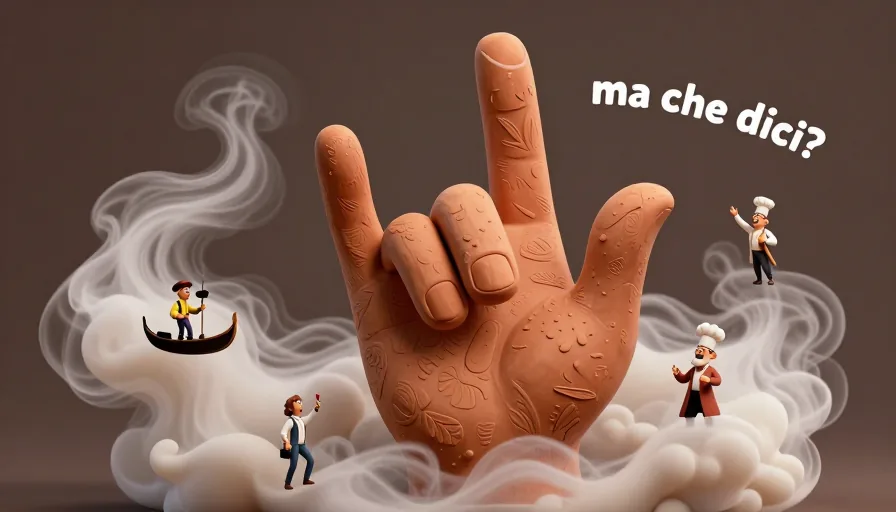
Italian gesture hand communication is a vibrant and essential part of the Italian language and culture. Understanding and using these gestures can greatly enhance your ability to communicate effectively and connect with native speakers. This guide will provide you with a comprehensive overview of common Italian hand gestures, their meanings, and the cultural context in which they are used.
Decoding Common Italian Hand Gestures
Italian hand gestures are not just about literal translation; they convey emotions, intentions, and cultural nuances. Here are some of the most common gestures you'll encounter:
- The Purse (La Borsa): This gesture involves touching the fingertips of one hand to the fingertips of the other, creating a purse-like shape. It is often used to ask, "What do you want?" or to express disbelief.
- The Horns (Le Corna): Made by extending the index and little fingers while keeping the middle and ring fingers bent, this gesture is used to ward off bad luck or the "malocchio" (evil eye).
- The Chin Flick (Il Cincinno): This gesture involves flicking the fingers under the chin. It is used to say, "I don't care" or "I don't believe you."
- The Ear Tug (Il Tirarsi l'Orecchio): Pulling on the earlobe is a way to say, "I don't believe you" or to express skepticism.
- The Nose Touch (Il Toccarsi il Naso): Touching the tip of the nose with the index finger means, "I'm watching you" or "I'm keeping an eye on you."
Context is Key: When to Use These Gestures in Conversation
Understanding when and how to use Italian hand gestures is crucial. Here are some tips to help you integrate these gestures into your conversations:
- Formal vs. Informal Settings: Some gestures are more appropriate in informal settings. For example, the "Horns" gesture is generally used in casual conversations among friends.
- Cultural Sensitivity: Be mindful of the cultural context. Some gestures may have different meanings in different regions of Italy.
- Body Language: Gestures are often accompanied by facial expressions and tone of voice. Pay attention to the overall body language to convey the right message.
Deep Dive: Understanding Specific Gestures (e.g., 'Che vuoi?')
Let's take a closer look at the 'Che vuoi?' gesture, which translates to "What do you want?" This gesture is made by extending the palm upwards with the fingers slightly spread. It is often used to express curiosity, impatience, or disbelief.
Practical Examples
- Scenario 1: You are in a café, and the waiter asks if you want anything else. You can use the 'Che vuoi?' gesture to ask, "What do you want?" in a playful manner.
- Scenario 2: You are in a conversation with a friend, and they are being vague about their plans. You can use this gesture to ask, "What do you want to do?" or to express your impatience.
Common Mistakes to Avoid
- Overuse: Be careful not to overuse gestures, as it can make you seem insincere or overly dramatic.
- Misinterpretation: Ensure you understand the context before using a gesture. Misinterpretation can lead to misunderstandings or offense.

Learn Languages with YouTube
Watch videos in your target language, auto-capture words into flashcards, and track your progress — all in one place.
See How It Works →Body Language Beyond Words: Mastering Italian Non-Verbal Communication
Italian non-verbal communication is rich and expressive. Here are some additional tips to help you master it:
- Eye Contact: Maintain eye contact to show engagement and interest.
- Posture: Stand or sit upright to convey confidence and attentiveness.
- Facial Expressions: Use facial expressions to complement your gestures and words.
Checklist for Effective Italian Gesture Hand Communication
- Learn the basic gestures and their meanings.
- Practice using gestures in different contexts.
- Pay attention to body language and facial expressions.
- Be mindful of cultural sensitivity and appropriateness.
- Avoid overuse and misinterpretation of gestures.
Mini Drills for Practice
- Gesture Matching: Practice matching gestures to their meanings. For example, show the 'Che vuoi?' gesture and ask a friend to guess its meaning.
- Role-Playing: Engage in role-playing scenarios where you use gestures to convey different emotions and intentions.
- Observation: Watch Italian movies or TV shows and observe how gestures are used in conversations.
Integrating Gestures into Conversational Scripts
Here are some practical examples of how to integrate Italian hand gestures into conversational scripts:
Example 1: Asking for Directions
You: (Using the 'Che vuoi?' gesture) "Scusa, dove si trova la stazione?" (Excuse me, where is the station?) Native Speaker: (Points in the direction) You: (Nodding and using the 'Che vuoi?' gesture again) "Grazie mille!" (Thank you very much!)
Example 2: Expressing Disbelief
Friend: "Ho vinto alla lotteria!" (I won the lottery!) You: (Using the 'Che vuoi?' gesture) "Davvero? Non ci credo!" (Really? I don't believe it!)
Example 3: Showing Impatience
Friend: "Arrivo tra cinque minuti." (I'll be there in five minutes.) You: (Using the 'Che vuoi?' gesture) "Sbrigati!" (Hurry up!)
By mastering these gestures and understanding their cultural context, you'll be able to communicate more effectively and authentically in Italian. Buona fortuna!
FAQ
Are Italian hand gestures universally understood in Italy?
While many Italian hand gestures are widely recognized, there can be regional variations and nuances. It's important to observe and adapt to the specific context and audience you are communicating with.
Can I use Italian hand gestures in formal settings?
Some gestures are more appropriate for informal settings. In formal situations, it's best to rely more on verbal communication and use gestures sparingly and appropriately.
How can I avoid misinterpreting Italian hand gestures?
Pay close attention to the context, body language, and facial expressions. If you're unsure, it's always better to ask for clarification rather than assuming the meaning of a gesture.
Related phrases
Start with Metheus
Watch videos in your target language, auto-capture words into flashcards, and track your progress — all in one place.
Get Started →

