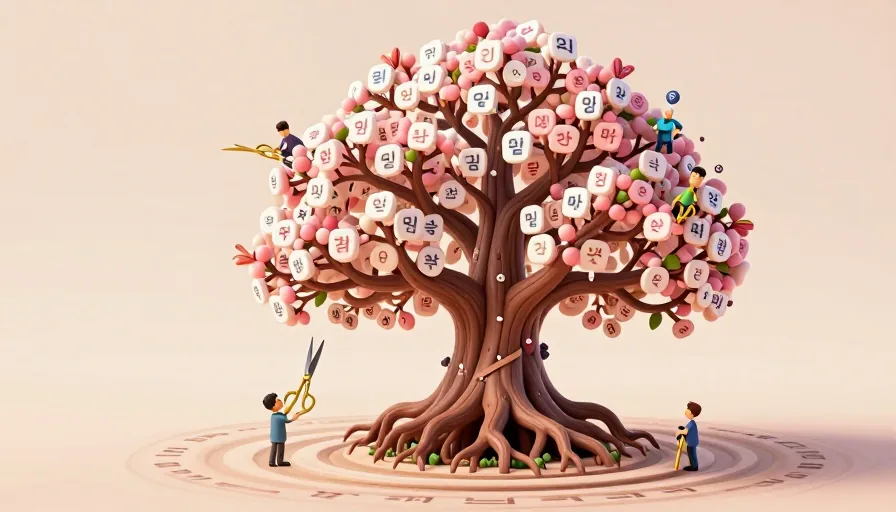
Korean verb conjugation is a crucial aspect of learning the Korean language. Understanding how to conjugate verbs correctly is essential for effective communication. This guide will walk you through the fundamentals of conjugation Korean, focusing on practical application and common patterns.
Understanding the Basics: Korean Verb Structure
Korean verbs are relatively straightforward in terms of structure. They typically consist of a stem and an ending. The stem is the base form of the verb, while the ending indicates tense, mood, and politeness level. For example, the verb '하다' (to do) has the stem '하-' and various endings like '-습니다' for polite present tense.
Key Components of Korean Verbs
- Stem: The base form of the verb (e.g., '하-' in '하다')
- Ending: Indicates tense, mood, and politeness level (e.g., '-습니다' for polite present tense)
Mastering Tense and Politeness Levels (Speech Levels)
Korean has a complex system of politeness levels, which are indicated by different verb endings. The three main levels are:
- Polite (존댓말): Used with strangers, elders, and in formal situations.
- Informal (반말): Used with friends, family, and in casual situations.
- Intimate (하오체): Rarely used in modern Korean, but historically used by royalty and nobles.
Tense Markers
- Present Tense: '-습니다' (polite), '-아/어' (informal)
- Past Tense: '-었습니다' (polite), '-았/었' (informal)
- Future Tense: '-겠습니다' (polite), '-을/을' (informal)
Example Sentences
- Present Tense: 저는 책을 읽습니다. (I read a book.)
- Past Tense: 저는 책을 읽었습니다. (I read a book.)
- Future Tense: 저는 책을 읽겠습니다. (I will read a book.)
Conjugating Common Verbs: A Practical Guide
Let's look at some common verbs and their conjugations.
하다 (to do)
- Polite Present: 합니다
- Informal Present: 해
- Polite Past: 했습니다
- Informal Past: 했어
- Polite Future: 할 것입니다
- Informal Future: 할 거야
가다 (to go)
- Polite Present: 갑니다
- Informal Present: 가
- Polite Past: 갔습니다
- Informal Past: 갔어
- Polite Future: 갈 것입니다
- Informal Future: 갈 거야
먹다 (to eat)
- Polite Present: 먹습니다
- Informal Present: 먹어
- Polite Past: 먹었습니다
- Informal Past: 먹었어
- Polite Future: 먹을 것입니다
- Informal Future: 먹을 거야
Handling Irregular Verb Patterns
Some Korean verbs have irregular patterns that can be challenging to learn. These verbs often change their stems in certain tenses or politeness levels.
Common Irregular Verbs
- 오다 (to come): Changes to '와-' in the stem for certain tenses.
- 가다 (to go): Changes to '가-' in the stem for certain tenses.
- 하다 (to do): Changes to '하-' in the stem for certain tenses.
Example: 오다 (to come)
- Polite Present: 옵니다
- Informal Present: 와
- Polite Past: 왔습니다
- Informal Past: 왔어
- Polite Future: 올 것입니다
- Informal Future: 올 거야

Learn Languages with YouTube
Watch videos in your target language, auto-capture words into flashcards, and track your progress — all in one place.
See How It Works →Tips for Memorizing Complex Conjugation Patterns
Memorizing Korean verb conjugations can be challenging, but with the right strategies, it becomes manageable.
Checklist for Effective Memorization
- Practice Regularly: Use flashcards or apps to practice daily.
- Use Context: Learn verbs in sentences rather than in isolation.
- Focus on Patterns: Identify and practice common patterns.
- Interactive Tools: Use online tools and charts to visualize conjugations.
- Speak Aloud: Practice speaking the conjugations aloud to improve pronunciation.
Mini Drill: Conjugate the Verb '하다'
- Polite Present: __________
- Informal Present: __________
- Polite Past: __________
- Informal Past: __________
- Polite Future: __________
- Informal Future: __________
Interactive Conjugation Charts
To help you visualize and practice Korean verb conjugations, consider using interactive charts and tools. These resources can provide a hands-on approach to learning, making it easier to understand and remember the patterns.
Example: Interactive Conjugation Chart for '하다'
| Tense/Politeness | Polite | Informal |
|---|---|---|
| Present | 합니다 | 해 |
| Past | 했습니다 | 했어 |
| Future | 할 것입니다 | 할 거야 |
By using these charts and tools, you can reinforce your understanding of Korean verb conjugation and improve your language skills.
The Role of Particles and Endings in Verb Forms
Particles and endings play a crucial role in Korean verb forms. They indicate the subject, object, and various grammatical functions. Understanding these components is essential for accurate conjugation.
Common Particles
- 은/는 (은/는): Topic marker
- 을/를 (을/를): Object marker
- 이/가 (이/가): Subject marker
Example Sentences with Particles
- 은/는: 저는 학생입니다. (I am a student.)
- 을/를: 책을 읽습니다. (I read a book.)
- 이/가: 학생이 책을 읽습니다. (The student reads a book.)
Common Mistakes to Avoid
When learning Korean verb conjugation, it's easy to make mistakes. Here are some common errors to avoid:
- Incorrect Endings: Ensure you use the correct endings for tense and politeness levels.
- Irregular Verbs: Be mindful of irregular verbs and their unique patterns.
- Particles: Use the correct particles to indicate grammatical functions.
Checklist for Avoiding Mistakes
- Double-Check Endings: Always verify the correct ending for the tense and politeness level.
- Practice Irregular Verbs: Spend extra time practicing irregular verbs.
- Use Particles Correctly: Ensure you use the correct particles in your sentences.
Conclusion
Mastering Korean verb conjugation is a key step in becoming proficient in the Korean language. By understanding the basics, practicing common verbs, and using effective memorization techniques, you can improve your language skills and communicate more effectively.
Final Tips
- Practice Daily: Consistency is key to mastering verb conjugation.
- Use Context: Learn verbs in sentences to understand their usage better.
- Interactive Tools: Utilize online tools and charts for a hands-on learning experience.
By following this guide and practicing regularly, you'll be well on your way to mastering Korean verb conjugation.
FAQ
Why is it important to learn Korean verb conjugation?
Learning Korean verb conjugation is crucial because it affects how you communicate in Korean. Correct verb forms indicate tense, mood, and politeness levels, which are essential for effective communication. Mastering conjugation helps you express your thoughts accurately and respectfully.
How can I remember all the different verb endings?
Remembering verb endings can be challenging, but using flashcards, practicing in context, and focusing on common patterns can help. Interactive tools and charts can also provide a visual aid to reinforce your memory. Regular practice and speaking aloud can improve retention.
What are the most common mistakes to avoid in Korean verb conjugation?
Common mistakes include using incorrect endings, overlooking irregular verbs, and misusing particles. Double-check your endings, spend extra time on irregular verbs, and ensure you use the correct particles in your sentences to avoid these errors.
Related phrases
Start with Metheus
Watch videos in your target language, auto-capture words into flashcards, and track your progress — all in one place.
Get Started →

