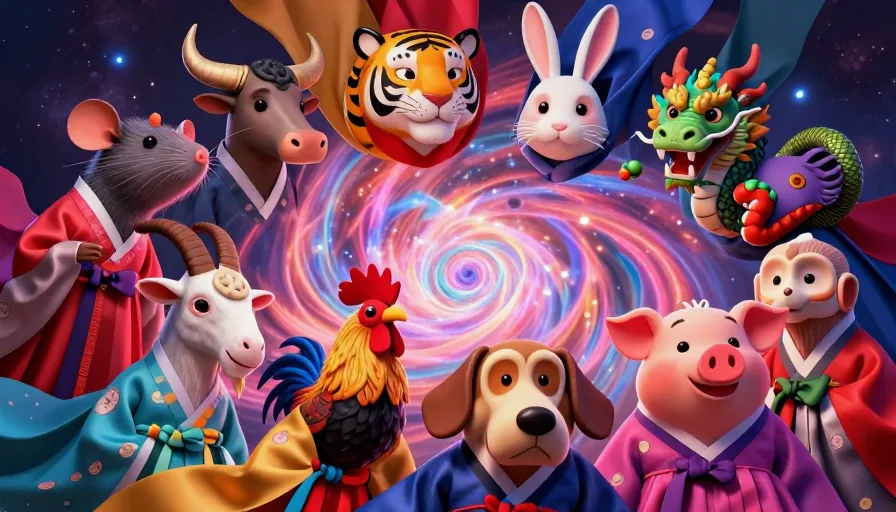
The korean zodiac sign system, like its Chinese and Western counterparts, is deeply ingrained in Korean culture. It's more than just a fun fact; it's a lens through which Koreans often view personality, compatibility, and even predict future events. Knowing the basics of the Korean zodiac can significantly enhance your understanding of Korean social dynamics and provide a valuable springboard for learning practical Korean vocabulary and conversational phrases. This guide will break down the 12 animals, their associated years, pronunciation tips, key personality traits, and how to discuss them naturally in Korean. We'll also compare it to other zodiac systems to provide a broader cultural context.
Understanding the 12 Korean Zodiac Animals
The Korean zodiac, known as Sarangeul (십이지), follows a 12-year cycle, with each year represented by an animal. The order is consistent with the Chinese zodiac, reflecting shared cultural roots. Here's a breakdown:
- Rat (쥐 - Jwi): 1924, 1936, 1948, 1960, 1972, 1984, 1996, 2008, 2026
- Ox (소 - So): 1925, 1937, 1949, 1961, 1973, 1985, 1997, 2009, 2026
- Tiger (호랑이 - Horangi): 1926, 1938, 1950, 1962, 1974, 1986, 1998, 2010, 2026
- Rabbit (토끼 - Tokki): 1927, 1939, 1951, 1963, 1975, 1987, 1999, 2011, 2026
- Dragon (용 - Yong): 1928, 1940, 1952, 1964, 1976, 1988, 2000, 2012, 2026
- Snake (뱀 - Baem): 1929, 1941, 1953, 1965, 1977, 1989, 2001, 2013, 2026
- Horse (말 - Mal): 1930, 1942, 1954, 1966, 1978, 1990, 2002, 2014, 2026
- Goat/Sheep (양 - Yang): 1931, 1943, 1955, 1967, 1979, 1991, 2003, 2015, 2027
- Monkey (원숭이 - Wonsungi): 1932, 1944, 1956, 1968, 1980, 1992, 2004, 2016, 2028
- Rooster (닭 - Dak): 1933, 1945, 1957, 1969, 1981, 1993, 2005, 2017, 2029
- Dog (개 - Gae): 1934, 1946, 1958, 1970, 1982, 1994, 2006, 2018, 2030
- Pig (돼지 - Dwaeji): 1935, 1947, 1959, 1971, 1983, 1995, 2007, 2019, 2031
Pronunciation Mini-Drill: Try saying each animal name aloud. Pay attention to the vowel sounds and consonant clusters. Record yourself and compare it to a native speaker online.
How to Speak About Your Korean Zodiac Sign in Korean
Here's some essential vocabulary and phrases:
- 십이지 (Sip-i-ji): Zodiac
- 띠 (Tti): Sign (as in zodiac sign)
- ~띠예요 (~Tti-yeyo): I am ~ (zodiac sign). Example: Jeo-neun Jwi-tti-yeyo. (저는 쥐띠예요) - I am a Rat.
- ~띠예요? (~Tti-yeyo?): What's your zodiac sign?
- 생년월일 (Saeng-nyeon-wol-il): Birthdate
- 몇 년생이에요? (Myeot nyeon-saeng-ieyo?): What year were you born?
Example Conversation:
A: Myeot nyeon-saeng-ieyo? (What year were you born?) B: 1990-nyeon-saeng-ieyo. (I was born in 1990.) A: Ah, Mal-tti-yeyo! (Ah, you're a Horse!)

Learn Languages with YouTube
Watch videos in your target language, auto-capture words into flashcards, and track your progress — all in one place.
See How It Works →Personality Traits: What Does Your Zodiac Sign Say About You?
Each animal is associated with specific personality traits. While these are generalizations, they offer a glimpse into Korean perspectives on character.
- Rat (Jwi): Clever, resourceful, adaptable, quick-witted.
- Ox (So): Diligent, dependable, strong, patient.
- Tiger (Horangi): Courageous, ambitious, competitive, passionate.
- Rabbit (Tokki): Gentle, kind, elegant, compassionate.
- Dragon (Yong): Confident, charismatic, powerful, lucky.
- Snake (Baem): Wise, mysterious, intuitive, sophisticated.
- Horse (Mal): Energetic, independent, adventurous, enthusiastic.
- Goat/Sheep (Yang): Creative, empathetic, peaceful, gentle.
- Monkey (Wonsungi): Playful, intelligent, curious, mischievous.
- Rooster (Dak): Honest, hardworking, observant, confident.
- Dog (Gae): Loyal, trustworthy, protective, honest.
- Pig (Dwaeji): Generous, compassionate, honest, diligent.
Vocabulary Expansion:
- 똑똑하다 (Ttokttokhada): To be clever (Rat)
- 성실하다 (Seongshilhada): To be diligent (Ox)
- 용감하다 (Yonggamhada): To be courageous (Tiger)
- 착하다 (Chakhada): To be kind (Rabbit)
Cultural Context: Why People Ask About the Korean Zodiac
Asking someone's zodiac sign is a common icebreaker in Korea. It's often used to assess compatibility in relationships (romantic or otherwise) and to understand someone's general character. While not as strictly adhered to as in some other cultures, it remains a significant social custom. It's also used in fortune-telling and astrology, though this is less prevalent than the simple personality assessments.
Comparison to Western and Chinese Zodiacs:
- Similarities: All three systems use a 12-year cycle with animal representations. The order of the animals is largely the same between the Korean and Chinese zodiacs.
- Differences: The Western zodiac is based on constellations and emphasizes personality traits and compatibility based on sun signs, moon signs, and rising signs. The Korean zodiac focuses primarily on the year of birth and associated personality traits, with less emphasis on complex astrological charts.
Checklist for Mastering the Korean Zodiac
☐ Memorize the 12 animals and their corresponding years. ☐ Practice pronouncing each animal name aloud. ☐ Learn the key phrases for asking and answering about zodiac signs. ☐ Familiarize yourself with the personality traits associated with each sign. ☐ Observe how Koreans use the zodiac in everyday conversations.
By understanding the Korean zodiac sign, you'll gain a deeper appreciation for Korean culture and expand your Korean language skills in a practical and engaging way. Don't be afraid to ask people about their tti – it's a great way to start a conversation and learn more about Korean customs!
FAQ
Is the Korean zodiac the same as the Chinese zodiac?
The Korean and Chinese zodiacs share the same 12 animals and the same order of years. They have a shared historical and cultural origin. However, the emphasis and interpretations of the signs can differ slightly.
Will knowing my Korean zodiac sign help me understand Korean culture better?
Absolutely! Asking about someone’s zodiac sign is a common social interaction in Korea. Understanding the basics will help you navigate conversations and gain insights into Korean perspectives on personality and compatibility.
Is it rude to ask someone their Korean zodiac sign?
No, it's generally not rude. It's a common icebreaker and a way to show interest in someone. However, as with any cultural custom, be mindful of the context and the person's comfort level.
Related phrases
Start with Metheus
Watch videos in your target language, auto-capture words into flashcards, and track your progress — all in one place.
Get Started →

