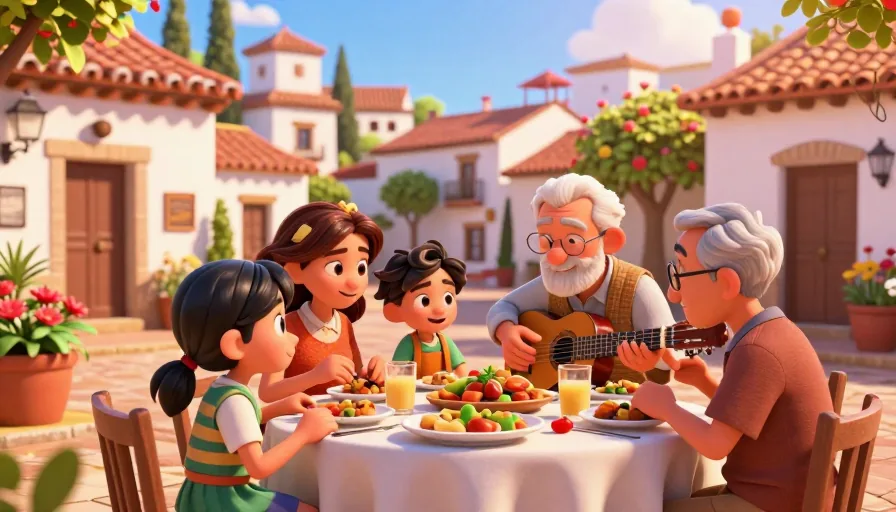
Understanding the lafamilia meaning in Spanish goes beyond a simple translation. 'La familia' is a fundamental concept that encompasses not just immediate relatives but also a broader social network. This guide will delve into the literal and cultural meanings, grammatical nuances, and practical usage of 'la familia' to help you grasp its true significance.
What is 'La Familia' Literally Translated to?
The literal translation of 'la familia' is 'the family.' In Spanish, 'la' is the feminine definite article, and 'familia' is a feminine noun. This basic translation is straightforward, but the concept of 'familia' in Spanish culture is much richer and more complex.
Beyond Blood Relations: The Broader Meaning of 'La Familia'
In Spanish-speaking cultures, 'la familia' often extends beyond immediate family members to include close friends, neighbors, and even community members. This broader definition reflects the strong sense of community and interconnectedness that is prevalent in many Hispanic cultures. For example, in Mexico, it is common to refer to close friends as 'mi familia' (my family), emphasizing the deep bonds and mutual support that exist within these relationships.
Cultural Anecdotes and Real-World Scenarios
Imagine you are in a Spanish-speaking country and you meet someone who asks, '¿Cómo está tu familia?' (How is your family?). They might be referring to your immediate family, but they could also be asking about your close friends or community members. Understanding this broader context can help you navigate social interactions more effectively.
Checklist for Understanding the Broader Meaning
- Recognize that 'la familia' can include close friends and community members.
- Understand that the concept of family is often more inclusive in Spanish-speaking cultures.
- Be prepared to discuss your 'familia' in a broader context during social interactions.
Grammar Spotlight: Understanding the Feminine Noun 'La Familia'
As mentioned earlier, 'familia' is a feminine noun. This means it is always used with feminine articles and adjectives. Here are some key grammatical points to remember:
- Articles: Use 'la' (the) or 'una' (a) before 'familia.'
- Adjectives: Use feminine adjectives to describe 'familia.' For example, 'una familia grande' (a big family) or 'la familia feliz' (the happy family).
Mini Drill: Gender Agreement
Complete the following sentences with the correct form of the adjective:
- Mi familia es ________. (happy)
- Una familia ________ vive en esa casa. (small)
- La familia ________ siempre se ayuda. (united)

Learn Languages with YouTube
Watch videos in your target language, auto-capture words into flashcards, and track your progress — all in one place.
See How It Works →Real-World Usage: How to Use 'La Familia' in Conversation
To use 'la familia' effectively in conversation, it's important to understand the context and the relationships being discussed. Here are some practical examples:
- Introducing Family Members: 'Esta es mi familia.' (This is my family.)
- Talking About Family Activities: 'Mi familia y yo vamos a la playa este fin de semana.' (My family and I are going to the beach this weekend.)
- Including Friends in the Concept of Family: 'Mis amigos son como mi familia.' (My friends are like my family.)
Common Mistakes to Avoid
- Overlooking the Broader Context: Remember that 'la familia' can include more than just immediate relatives.
- Incorrect Gender Agreement: Always use feminine articles and adjectives with 'familia.'
- Lack of Cultural Awareness: Be mindful of the cultural nuances and the importance of family and community in Spanish-speaking cultures.
Cultural Variations in How 'Familia' is Perceived
The perception of 'la familia' can vary across different Spanish-speaking regions. For example, in Latin America, the concept of 'familia' often includes extended family members and close friends. In Spain, the term might be used more narrowly to refer to immediate family members. Understanding these regional differences can help you communicate more effectively with Spanish speakers from different backgrounds.
Regional Examples
- Mexico: 'La familia' often includes close friends and community members, reflecting the strong sense of community and mutual support.
- Spain: The term might be used more narrowly to refer to immediate family members, but it can still include close friends and extended family.
- Argentina: The concept of 'la familia' is often very inclusive, encompassing a wide network of relatives, friends, and community members.
Pronunciation Guide for 'La Familia'
To pronounce 'la familia' correctly, follow these steps:
- La: Pronounced as 'lah' (rhymes with 'ah' in 'ah-ha').
- Familia: Pronounced as 'fah-meel-yah' (emphasis on the second syllable).
Practice Pronunciation
- Listen to native speakers and repeat the phrase 'la familia' until you feel comfortable with the pronunciation.
- Use language learning apps or online resources to practice and improve your pronunciation.
Conclusion
Understanding the lafamilia meaning in Spanish involves more than just knowing the literal translation. It requires a deep appreciation of the cultural context, grammatical nuances, and practical usage. By exploring the broader meaning of 'la familia' and practicing its usage in real-world scenarios, you can enhance your language learning journey and connect more deeply with Spanish-speaking cultures.
Final Checklist for Mastering 'La Familia'
- Understand the literal and broader meanings of 'la familia.'
- Practice using 'la familia' in various contexts and conversations.
- Be mindful of cultural nuances and regional variations.
- Ensure correct gender agreement in grammar.
- Practice pronunciation regularly to improve fluency.
By following this comprehensive guide, you'll be well on your way to mastering the meaning and usage of 'la familia' in Spanish.
FAQ
Is 'la familia' always used to refer to immediate family members?
No, 'la familia' can also include close friends, neighbors, and community members, reflecting the broader sense of family and community in many Spanish-speaking cultures.
How do I know when to use 'la familia' in a broader context?
Pay attention to the context and the relationships being discussed. If the conversation includes close friends or community members, it's appropriate to use 'la familia' in a broader sense.
What are some common mistakes to avoid when using 'la familia'?
Common mistakes include overlooking the broader context, incorrect gender agreement, and lack of cultural awareness. Always use feminine articles and adjectives with 'familia' and be mindful of the cultural nuances.
Related phrases
Start with Metheus
Watch videos in your target language, auto-capture words into flashcards, and track your progress — all in one place.
Get Started →

