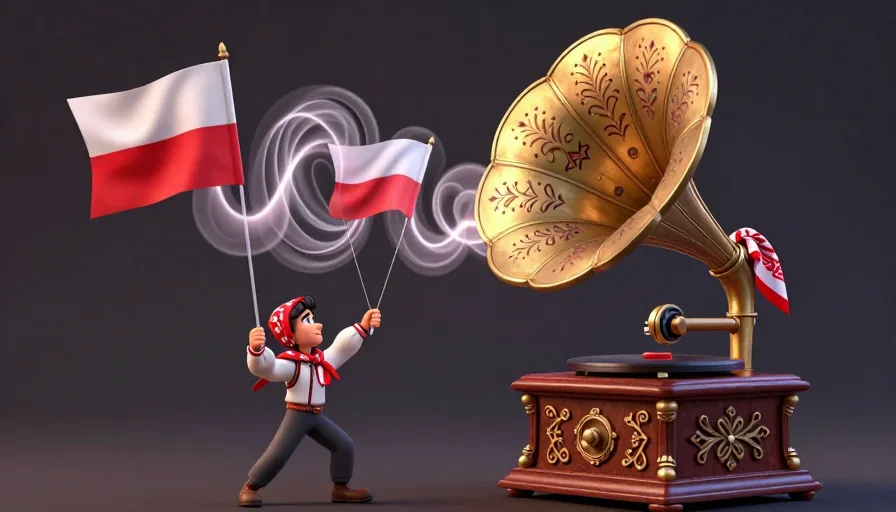
Polish greetings are more than just words; they reflect the cultural nuances and social hierarchies of Polish society. Whether you're learning Polish greetings for travel, work, or personal enrichment, understanding the differences between formal and informal greetings is crucial. This guide will help you navigate the complexities of Polish greetings, providing you with the tools to sound natural and respectful in any situation.
The Polish Greeting Spectrum: Formal vs. Informal
Polish greetings can be broadly categorized into formal and informal. The choice between the two depends on the social context, the relationship between the speakers, and the level of formality required. Here’s a breakdown:
Formal Greetings
Formal greetings are used in professional settings, with elders, or with people you have not met before. They convey respect and distance. Key formal greetings include:
- Dzień dobry (JEN doh-brih): Good morning/good afternoon
- Dobry wieczór (DOH-brih vyech-or): Good evening
- Witajcie (vee-TYEH): Welcome (plural)
- Witaj (vee-TYEH): Welcome (singular)
Informal Greetings
Informal greetings are used with friends, family, and people you are familiar with. They are more casual and convey a sense of closeness. Key informal greetings include:
- Cześć (CHESH-ch): Hi/Hello
- Siema (SEE-eh-mah): Hi/Hello (very casual)
- Hej (HAY): Hey
- Ahoj (ah-HOY): Hi/Hello (more common in the south of Poland)
Mastering the Essentials: Essential Greetings for Every Situation
Pronunciation Tips
Pronunciation is key to sounding natural. Here are some tips for key greetings:
- Cześć (CHESH-ch): The 'cz' sound is similar to the 'ch' in 'chat.' The 'ść' at the end is pronounced softly.
- Dzień dobry (JEN doh-brih): The 'dzień' sounds like 'jen,' and 'dobry' is pronounced with a soft 'r' sound.
Common Mistakes to Avoid
- Overusing informal greetings: Using 'Cześć' with someone you've just met or in a formal setting can be seen as disrespectful.
- Mispronouncing greetings: Incorrect pronunciation can lead to misunderstandings or awkward situations.
Mini Drill: Greeting Scenarios
- Greeting a Professor: Use 'Dzień dobry' or 'Dobry wieczór' depending on the time of day.
- Greeting a Friend: Use 'Cześć' or 'Siema' for a casual greeting.
- Greeting a Stranger: Use 'Dzień dobry' or 'Dobry wieczór' to show respect.

Learn Languages with YouTube
Watch videos in your target language, auto-capture words into flashcards, and track your progress — all in one place.
See How It Works →Beyond 'Cześć': Contextual Polish Greetings
Polish greetings go beyond the basics. Here are some situational greetings that will help you sound more natural:
Greeting in Different Times of Day
- Dzień dobry (JEN doh-brih): Good morning/good afternoon (used until late afternoon)
- Dobry wieczór (DOH-brih vyech-or): Good evening (used from late afternoon until bedtime)
Greeting in Different Situations
- Witajcie (vee-TYEH): Welcome (used when greeting a group of people)
- Witaj (vee-TYEH): Welcome (used when greeting one person)
- Cześć (CHESH-ch): Hi/Hello (used with friends and family)
- Siema (SEE-eh-mah): Hi/Hello (very casual, used with close friends)
Cultural Deep Dive: Social Hierarchy in Greetings
Polish society values respect and hierarchy. Using the correct greeting shows that you understand and respect these social norms. For example, addressing a superior with an informal greeting can be seen as disrespectful, while using a formal greeting with a friend can create an unnecessary barrier.
Interactive Scenario: Greeting in Warsaw
Imagine you are in Warsaw. How would you greet the following people?
- A Professor at the University: Use 'Dzień dobry' or 'Dobry wieczór' depending on the time of day.
- A Friend on the Street: Use 'Cześć' or 'Siema' for a casual greeting.
- A Stranger at a Shop: Use 'Dzień dobry' or 'Dobry wieczór' to show respect.
Practical Checklist for Polish Greetings
- Learn the basics: Start with 'Dzień dobry,' 'Dobry wieczór,' and 'Cześć.'
- Practice pronunciation: Use audio examples to perfect your pronunciation.
- Understand the context: Know when to use formal vs. informal greetings.
- Expand your vocabulary: Learn situational greetings like 'Witajcie' and 'Witaj.'
- Interact with native speakers: Practice your greetings in real-life situations.
Audio Examples
To help you master the pronunciation, here are some audio examples of key greetings:
- Dzień dobry: [Audio Link]
- Dobry wieczór: [Audio Link]
- Cześć: [Audio Link]
- Siema: [Audio Link]
Conclusion
Mastering Polish greetings is about more than just learning words; it's about understanding the cultural nuances and social contexts. By following this guide, you'll be well on your way to sounding natural and respectful in any situation. Happy learning!
FAQ
What is the difference between 'Cześć' and 'Dzień dobry'?
'Cześć' is an informal greeting used with friends and family, while 'Dzień dobry' is a formal greeting used in professional settings or with people you've just met.
Can I use 'Siema' with anyone?
No, 'Siema' is a very casual greeting and should only be used with close friends. Using it with strangers or in formal settings can be seen as disrespectful.
How do I greet someone in the evening?
In the evening, you should use 'Dobry wieczór' (good evening). This greeting is appropriate from late afternoon until bedtime.
Related phrases
Start with Metheus
Watch videos in your target language, auto-capture words into flashcards, and track your progress — all in one place.
Get Started →

