The word 'quinqué' is a fascinating term in the Spanish language, often misunderstood by learners. This guide will delve into the definition, contextual usage, and grammatical nuances of 'quinqué', providing practical examples and a pronunciation guide to help you master this word.
What is 'Quinqué'? A Comprehensive Definition
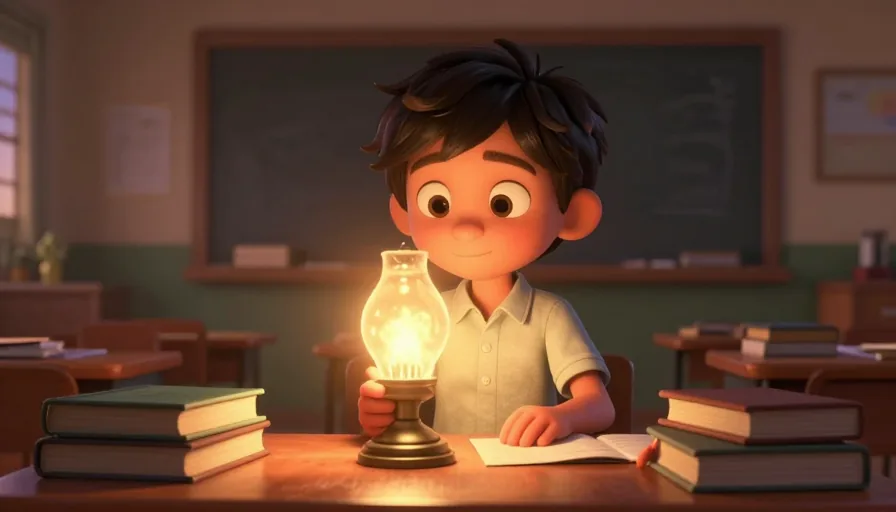
'Quinqué' is a masculine noun in Spanish that refers to an oil lamp or lantern. It is derived from the French word 'quinquet', which also means a type of oil lamp. The term is not commonly used in modern Spanish but has historical significance, particularly in contexts related to pre-electricity lighting.
Understanding the Context: Where is 'Quinqué' Used?
Historical Context
In historical contexts, 'quinqué' was used to describe the primary source of lighting before the advent of electricity. For example, in rural areas or during the early 20th century, people relied on quinqués to illuminate their homes and streets.
Technical Context
Technically, a 'quinqué' is a type of oil lamp that uses a wick to burn oil, producing light. This type of lamp was often used in lighthouses and other places where a steady, reliable light source was needed.
Common Usage
While 'quinqué' is not commonly used in everyday language, it can still be found in historical texts, literature, and discussions about pre-electricity lighting. For example, you might encounter it in a museum exhibit or a historical novel.
Common Mistakes Learners Make When Using 'Quinqué'
Confusion with Similar-Sounding Words
One common mistake learners make is confusing 'quinqué' with other similar-sounding words like 'quincena' (fortnight) or 'quinientos' (five hundred). To avoid this, remember that 'quinqué' specifically refers to an oil lamp.
Incorrect Gender Usage
Another mistake is using the wrong gender. 'Quinqué' is a masculine noun, so it should be used with masculine articles and adjectives. For example, you would say 'el quinqué' (the oil lamp) and 'un quinqué antiguo' (an old oil lamp).
Incorrect Pronunciation
The pronunciation of 'quinqué' can also be tricky. It is pronounced as 'keen-keh', with the stress on the second syllable. To practice, try saying the word aloud and focusing on the correct stress and vowel sounds.

Learn Languages with YouTube
Watch videos in your target language, auto-capture words into flashcards, and track your progress — all in one place.
See How It Works →Examples in Context: Putting 'Quinqué' into Sentences
Interactive Examples
-
Historical Context: 'Antiguamente, cuando no había luz eléctrica, se usaban quinqués y velas para iluminar las casas.' (In former times, when there was no electricity, oil lamps and candles were used to illuminate houses.)
-
Technical Context: 'El faro utilizaba un quinqué para guiar a los barcos en la noche.' (The lighthouse used an oil lamp to guide ships at night.)
-
Common Usage: 'En el museo, había una exposición sobre los quinqués antiguos y su importancia en la historia.' (In the museum, there was an exhibition about old oil lamps and their historical significance.)
Mini Drill
Try creating your own sentences using 'quinqué' in different contexts. For example:
-
'¿Sabías que los quinqués eran la principal fuente de luz antes de la electricidad?' (Did you know that oil lamps were the main source of light before electricity?)
-
'El quinqué en el rincón de la habitación emitía una luz suave y cálida.' (The oil lamp in the corner of the room emitted a soft, warm light.)
Pronunciation Guide
To pronounce 'quinqué' correctly, follow these steps:
- Break the word into syllables: quin-qué.
- Pronounce each syllable: 'keen' and 'keh'.
- Stress the second syllable: quin-QUÉ.
- Practice saying the word aloud several times to get the rhythm and stress correct.
Comparison Chart: 'Quinqué' vs. Similar Words
| Word | Meaning | Gender | Example Sentence |
|---|---|---|---|
| quinqué | Oil lamp | Masc. | El quinqué iluminaba la habitación. (The oil lamp lit the room.) |
| quincena | Fortnight | Fem. | La quincena termina el viernes. (The fortnight ends on Friday.) |
| quinientos | Five hundred | Masc. | Quinientos años han pasado desde entonces. (Five hundred years have passed since then.) |
Checklist for Mastering 'Quinqué'
- Understand the definition and historical context of 'quinqué'.
- Practice using 'quinqué' in different sentence structures.
- Learn the correct pronunciation and gender usage.
- Avoid common mistakes by comparing 'quinqué' with similar-sounding words.
- Create your own sentences and practice using 'quinqué' in conversation.
By following this checklist, you'll be well on your way to mastering the word 'quinqué' and expanding your Spanish vocabulary.
FAQ
Is 'quinqué' still used in modern Spanish?
'Quinqué' is not commonly used in modern Spanish but can still be found in historical texts, literature, and discussions about pre-electricity lighting. It is more of a historical term.
What is the correct pronunciation of 'quinqué'?
The correct pronunciation of 'quinqué' is 'keen-keh', with the stress on the second syllable. Practice saying the word aloud to get the rhythm and stress correct.
What are some common mistakes learners make when using 'quinqué'?
Common mistakes include confusing 'quinqué' with similar-sounding words like 'quincena' or 'quinientos', using the wrong gender, and incorrect pronunciation. Remember that 'quinqué' is a masculine noun and should be used with masculine articles and adjectives.
Related phrases
Start with Metheus
Watch videos in your target language, auto-capture words into flashcards, and track your progress — all in one place.
Get Started →

