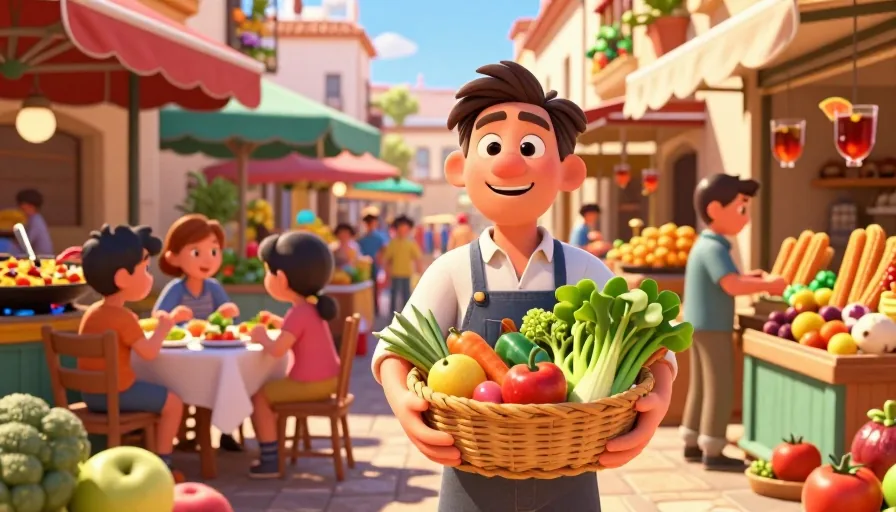
Learning Spanish for food is an essential skill for anyone traveling to Spanish-speaking countries or interested in Spanish cuisine. This guide will help you navigate menus, order dishes, and discuss food with confidence. We'll cover essential vocabulary, key phrases, cultural nuances, and pronunciation tips to enhance your culinary Spanish experience.
Essential Spanish Vocabulary for Groceries and Meals
Before diving into restaurants, let's build a strong foundation of Spanish vocabulary for common food items. Here's a checklist to get you started:
Meat and Proteins
- Pollo (chicken)
- Res (beef)
- Cerdo (pork)
- Pescado (fish)
- Mariscos (seafood)
- Huevos (eggs)
- Tofu (tofu)
Vegetables and Fruits
- Tomate (tomato)
- Lechuga (lettuce)
- Pepino (cucumber)
- Zanahoria (carrot)
- Manzana (apple)
- Plátano (banana)
- Uva (grape)
Dairy and Bread
- Leche (milk)
- Queso (cheese)
- Pan (bread)
- Mantequilla (butter)
- Yogur (yogurt)
Drinks
- Agua (water)
- Vino (wine)
- Cerveza (beer)
- Café (coffee)
- Té (tea)
- Jugo (juice)
Mini Drill: Food Vocabulary
Try to match the Spanish words with their English translations:
- Pollo
- Tomate
- Leche
- Pan
- Vino
a. Bread b. Milk c. Wine d. Tomato e. Chicken
Ordering Food in a Restaurant: Essential Phrases
Knowing how to order food is crucial. Here are some essential phrases to help you navigate any restaurant:
Greetings and Basic Phrases
- Buenos días (Good morning)
- Buenas tardes (Good afternoon)
- Buenas noches (Good evening)
- Por favor (Please)
- Gracias (Thank you)
- De nada (You're welcome)
Ordering Food
- Me gustaría... (I would like...)
- Quisiera... (I would like...)
- Para llevar, por favor (To go, please)
- La cuenta, por favor (The bill, please)
- ¿Qué me recomienda? (What do you recommend?)
Allergies and Preferences
- Soy alérgico a... (I am allergic to...)
- No como... (I don't eat...)
- Soy vegetariano/vegano (I am vegetarian/vegan)
Mini Drill: Ordering Food
Practice ordering a meal:
- Greet the waiter: __________
- Ask for a recommendation: __________
- Order a dish: __________
- Ask for the bill: __________

Learn Languages with YouTube
Watch videos in your target language, auto-capture words into flashcards, and track your progress — all in one place.
See How It Works →Understanding Spanish Food Culture: Common Dishes and Terms
Spanish cuisine is diverse and delicious. Here are some common dishes and culinary terms to help you understand the local food culture:
Common Dishes
- Paella (a rice dish with various ingredients)
- Tortilla española (Spanish omelette)
- Gazpacho (cold soup made from raw, blended vegetables)
- Churros (fried dough pastries)
- Tapas (small dishes or appetizers)
Regional Specialties
- Jamón ibérico (Iberian ham, popular in Spain)
- Churros con chocolate (churros with hot chocolate, a popular breakfast in Spain)
- Cocido madrileño (a hearty stew from Madrid)
- Pulpo a la gallega (Galician-style octopus)
Culinary Terms
- A la plancha (grilled)
- Al horno (baked)
- Frito (fried)
- Cocido (stewed)
- Asado (roasted)
Cultural Nuances
- Tapas culture: In Spain, tapas are a social experience. Ordering tapas is a great way to try a variety of dishes and enjoy a meal with friends.
- Meal times: Lunch is typically between 2:00 PM and 4:00 PM, and dinner is late, often after 9:00 PM.
- Siesta: Some restaurants may close during the early afternoon for siesta, so plan accordingly.
Pronunciation Tips for Key Food-Related Vocabulary
Proper pronunciation is key to effective communication. Here are some tips for pronouncing key food-related vocabulary:
- Pollo (PO-yo)
- Tomate (to-MA-te)
- Lechuga (le-CHOO-ga)
- Cerveza (ser-VE-sa)
- Paella (pa-EH-ya)
Common Mistakes
- Confusing 'b' and 'v': In Spanish, 'b' and 'v' are pronounced similarly. Practice words like burro (donkey) and vino (wine) to get the sound right.
- Silent 'h': The 'h' is silent in Spanish, so huevo (egg) is pronounced 'we-vo'.
- Rolling 'r': Practice rolling your 'r's for words like carne (meat) and perro (dog).
Mini Drill: Pronunciation
Practice pronouncing the following words:
- Pollo
- Tomate
- Lechuga
- Cerveza
- Paella
Contextual Examples of Food Vocabulary in Daily Conversation
To truly master Spanish for food, practice using the vocabulary in context. Here are some examples of how food vocabulary is used in daily conversation:
At the Market
- ¿Cuánto cuesta el kilo de manzanas? (How much is a kilo of apples?)
- Me gustaría medio kilo de queso, por favor. (I would like half a kilo of cheese, please.)
With Friends
- Vamos a comer tapas esta noche. (Let's eat tapas tonight.)
- ¿Te gustaría compartir una paella? (Would you like to share a paella?)
At a Restaurant
- Me gustaría probar el cocido madrileño. (I would like to try the cocido madrileño.)
- ¿Podría traerme la carta de vinos, por favor? (Could you bring me the wine list, please?)
Checklist: Building Your Food Vocabulary
- Learn the basics: meat, vegetables, fruits, dairy, and drinks.
- Practice ordering food in a restaurant.
- Explore regional specialties and culinary terms.
- Master pronunciation with practice and drills.
- Use food vocabulary in daily conversations.
Interactive Quizzes and Dialogue Simulations
To reinforce your learning, try these interactive quizzes and dialogue simulations:
Quiz: Food Vocabulary
-
What is the Spanish word for 'chicken'? a. Pollo b. Res c. Cerdo d. Pescado
-
How do you say 'I would like...' in Spanish? a. Me gustaría... b. Quisiera... c. La cuenta, por favor d. ¿Qué me recomienda?
Dialogue Simulation: Ordering Food
Waiter: Buenos días. ¿Qué le gustaría ordenar? You: Buenos días. Me gustaría una paella, por favor. Waiter: ¿Algo más? You: Sí, una cerveza, por favor. Waiter: Perfecto. Enseguida.
Conclusion
Mastering Spanish for food opens up a world of culinary adventures. By learning essential vocabulary, key phrases, and cultural nuances, you'll be able to order and discuss food with confidence. Practice regularly, and don't be afraid to make mistakes. ¡Buen provecho!
FAQ
What if I struggle with pronunciation?
Practice regularly and use online resources for pronunciation guides. Focus on common mistakes and drill the sounds that are challenging for you.
How can I remember all the new vocabulary?
Use flashcards, practice in context, and try to incorporate new words into your daily conversations. Repetition and context are key to memorization.
What if I don't understand the menu?
Ask the waiter for recommendations or translations. Use phrases like '¿Qué me recomienda?' (What do you recommend?) and '¿Podría traducir esto, por favor?' (Could you translate this, please?).
Related phrases
Start with Metheus
Watch videos in your target language, auto-capture words into flashcards, and track your progress — all in one place.
Get Started →

