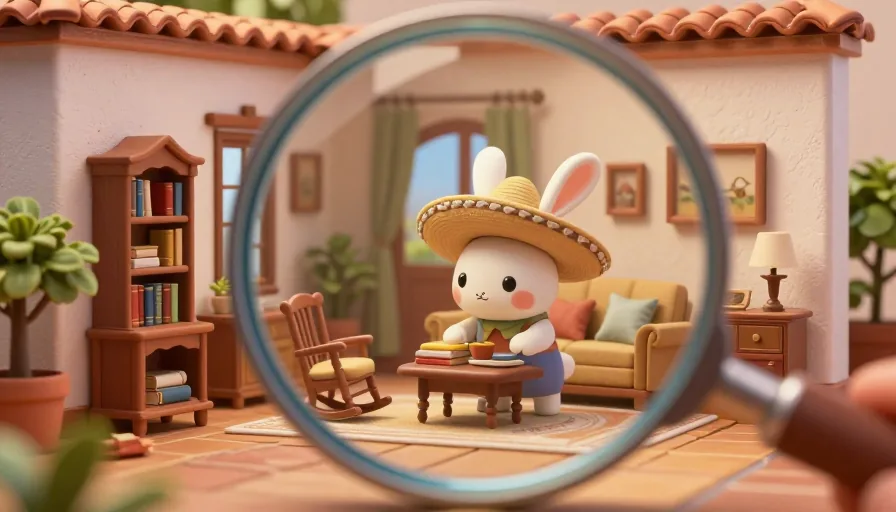
Learning house vocabulary Spanish is crucial for describing your living space and understanding others. This guide covers essential rooms, furniture, and descriptive adjectives, providing practical examples and checklists to enhance your language skills.
Essential Rooms in Spanish: A Complete Guide
Understanding the names of different rooms in a house is fundamental. Here’s a list of essential rooms and their Spanish translations:
- Living Room: Sala de estar or Salón
- Kitchen: Cocina
- Bedroom: Dormitorio
- Bathroom: Baño
- Dining Room: Comedor
- Study: Estudio or Despacho
- Garage: Garaje
- Balcony: Balcón
- Garden: Jardín
Mini Drill: Room Identification
Try to match the following descriptions with the correct room:
- Where you cook and prepare meals.
- Where you sleep.
- Where you eat with your family.
- Where you relax and watch TV.
- Where you park your car.
Answers: 1. Cocina, 2. Dormitorio, 3. Comedor, 4. Sala de estar, 5. Garaje
Describing Your Home: Adjectives and Descriptions
Describing the quality and location of your home involves using specific adjectives. Here are some useful ones:
-
Quality Adjectives:
- Pequeño (Small)
- Grande (Big)
- Moderno (Modern)
- Antiguo (Old)
- Limpio (Clean)
- Sucio (Dirty)
- Cómodo (Comfortable)
- Incómodo (Uncomfortable)
-
Location Adjectives:
- Céntrico (Central)
- Periférico (Peripheral)
- Rural (Rural)
- Urbano (Urban)
- Cerca (Near)
- Lejos (Far)
Practical Examples
- Mi casa es pequeña pero cómoda. (My house is small but comfortable.)
- El apartamento es moderno y está cerca del centro. (The apartment is modern and is near the center.)
- La casa antigua está lejos de la ciudad. (The old house is far from the city.)
Furniture Vocabulary: What's in the Kitchen, Bedroom, and Living Room
Knowing the names of furniture items is essential for describing your home. Here are some common pieces of furniture for different rooms:
Kitchen Furniture
- Mesa (Table)
- Silla (Chair)
- Cocina (Stove)
- Refrigerador (Refrigerator)
- Microondas (Microwave)
- Lavavajillas (Dishwasher)
- Armario (Cupboard)
- Cuchillo (Knife)
- Tenedor (Fork)
- Cuchara (Spoon)
Bedroom Furniture
- Cama (Bed)
- Mesita de noche (Nightstand)
- Armario (Wardrobe)
- Espejo (Mirror)
- Lámpara (Lamp)
- Almohada (Pillow)
- Sábanas (Sheets)
- Manta (Blanket)
Living Room Furniture
- Sofá (Sofa)
- Silla (Chair)
- Mesa de centro (Coffee table)
- Televisor (Television)
- Estantería (Bookshelf)
- Lámpara (Lamp)
- Alfombra (Rug)
- Cortina (Curtain)
Mini Drill: Furniture Placement
Try to place the following furniture items in the correct room:
- Cama
- Cocina
- Sofá
- Mesa de centro
- Refrigerador
Answers: 1. Dormitorio, 2. Cocina, 3. Sala de estar, 4. Sala de estar, 5. Cocina

Learn Languages with YouTube
Watch videos in your target language, auto-capture words into flashcards, and track your progress — all in one place.
See How It Works →Practical Conversations: Using House Vocabulary in Sentences
Learning to use vocabulary in context is crucial. Here are some practical conversations:
At a Real Estate Office
- Agent: ¿Qué tipo de casa está buscando? (What type of house are you looking for?)
- You: Estoy buscando una casa grande y moderna cerca del centro. (I am looking for a big and modern house near the center.)
With a Friend
- Friend: ¿Cómo es tu casa? (What is your house like?)
- You: Mi casa es pequeña pero cómoda. Tiene dos dormitorios, un baño y una cocina moderna. (My house is small but comfortable. It has two bedrooms, one bathroom, and a modern kitchen.)
At a Furniture Store
- Salesperson: ¿Qué tipo de muebles necesita? (What type of furniture do you need?)
- You: Necesito una cama nueva, una mesa de noche y una lámpara. (I need a new bed, a nightstand, and a lamp.)
Differentiating Between 'House' and 'Home'
In Spanish, the words casa and hogar are often used interchangeably, but they have subtle differences. Casa refers to the physical structure, while hogar refers to the emotional and familial aspects of a home.
Practical Examples
- Mi casa es grande y cómoda. (My house is big and comfortable.)
- Mi hogar es donde está mi familia. (My home is where my family is.)
Common Mistakes
- Avoid using casa when referring to the emotional aspect of a home. For example, saying Mi casa es donde está mi familia is incorrect. Use hogar instead.
Checklist for Mastering House Vocabulary
- Learn the names of essential rooms.
- Practice describing the quality and location of your home.
- Memorize common furniture items for different rooms.
- Use vocabulary in practical conversations.
- Understand the difference between casa and hogar.
By following this guide, you’ll be well on your way to mastering house vocabulary Spanish and enhancing your language skills.
FAQ
Why is it important to learn house vocabulary in Spanish?
Learning house vocabulary in Spanish is essential for describing your living space, understanding others, and engaging in practical conversations. It helps you navigate real-life situations, such as visiting a real estate office, shopping for furniture, or describing your home to friends.
What is the difference between 'casa' and 'hogar' in Spanish?
While 'casa' refers to the physical structure of a house, 'hogar' refers to the emotional and familial aspects of a home. Understanding this difference helps you express your feelings and experiences more accurately.
How can I practice using house vocabulary in Spanish?
Practice using house vocabulary by engaging in practical conversations, such as describing your home to a friend, visiting a real estate office, or shopping for furniture. Use the vocabulary in context to reinforce your learning.
Related phrases
Start with Metheus
Watch videos in your target language, auto-capture words into flashcards, and track your progress — all in one place.
Get Started →

