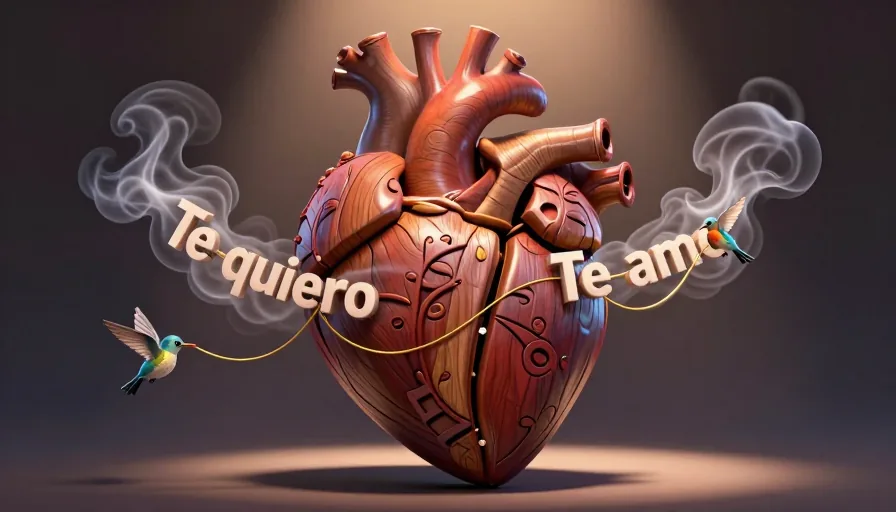
Spanish I Love You Translation: A Comprehensive Guide to Romantic Expressions
Expressing your love in Spanish can be a beautiful and meaningful experience. Whether you're learning the Spanish I love you translation for a romantic partner or simply want to expand your vocabulary, understanding the nuances of romantic expressions in Spanish is essential. This guide will cover multiple ways to say 'I love you' in Spanish, cultural contexts, and practical examples to help you communicate your feelings effectively.
The Core: How to Say 'I Love You' in Spanish
The most direct and commonly used Spanish I love you translation is 'Te amo.' This phrase is used in both formal and informal contexts, but it carries a deep emotional weight. Here's a breakdown of its usage:
- Te amo: This is the most straightforward way to say 'I love you' in Spanish. It is used in both formal and informal contexts, but it is generally reserved for romantic or deeply emotional situations.
Pronunciation Guide
- Te amo: Pronounced as /te ˈa.mo/.
Example Sentences
- Formal: 'Te amo más que a nada en este mundo.' (I love you more than anything in this world.)
- Informal: 'Te amo, mi vida.' (I love you, my life.)
Beyond 'Te Amo': Expressing Love with Different Intensity Levels
While 'Te amo' is the most direct translation, there are other ways to express love in Spanish that convey different levels of intensity and emotion.
Less Intense Expressions
- Me gustas: This phrase means 'I like you' and is often used in the early stages of a relationship or friendship. It's less intense than 'Te amo' but can still convey affection.
Example Sentences
- Me gustas mucho: (I like you a lot.)
- Me encantas: (I adore you.)
More Intense Expressions
- Estoy enamorado/a de ti: This phrase means 'I am in love with you' and is used to express a deeper emotional connection. It is more intense than 'Te amo' and is often reserved for serious romantic declarations.
Example Sentences
- Estoy enamorado/a de ti desde el primer momento que te vi. (I have been in love with you since the first moment I saw you.)

Learn Languages with YouTube
Watch videos in your target language, auto-capture words into flashcards, and track your progress — all in one place.
See How It Works →Terms of Endearment: Sweet Ways to Address Your Partner
In addition to direct expressions of love, using terms of endearment can add a layer of intimacy and affection to your communication. Here are some common terms of endearment in Spanish:
- Mi amor: My love
- Mi vida: My life
- Mi cielo: My sky (a term of endearment meaning 'my darling')
- Mi corazón: My heart
- Mi tesoro: My treasure
Example Sentences
- Mi amor, te extraño mucho. (My love, I miss you so much.)
- Mi vida, eres todo para mí. (My life, you are everything to me.)
Cultural Context: Romantic Communication in Spanish-Speaking Cultures
Understanding the cultural nuances of expressing affection in Spanish-speaking cultures can help you communicate more effectively and avoid misunderstandings. Here are some key points to consider:
Direct vs. Indirect Communication
Spanish-speaking cultures often value direct communication, especially when it comes to expressing love and affection. However, the level of directness can vary depending on the region and personal preferences. In some cultures, such as in Latin America, people may be more open and expressive with their emotions, while in others, like Spain, they might be more reserved.
Public Displays of Affection
Public displays of affection (PDAs) are generally accepted in many Spanish-speaking cultures, but the extent to which they are tolerated can vary. In some regions, PDAs are common and expected, while in others, they may be seen as inappropriate or excessive.
Gender Roles and Expectations
Traditional gender roles and expectations can also influence romantic communication in Spanish-speaking cultures. For example, in some cultures, men are expected to be the initiators of romantic advances, while women are expected to be more reserved. However, these roles are evolving, and modern relationships often challenge these traditional norms.
Practical Checklist for Expressing Love in Spanish
- Learn the Basic Phrases: Start with the basic phrases like 'Te amo' and 'Me gustas' to build a foundation.
- Practice Pronunciation: Use online resources or language learning apps to practice the pronunciation of key phrases.
- Use Terms of Endearment: Incorporate terms of endearment into your conversations to add a layer of intimacy.
- Understand Cultural Nuances: Research the cultural norms and expectations of the specific Spanish-speaking culture you are interacting with.
- Be Genuine and Respectful: Always be genuine in your expressions of love and respect the boundaries and preferences of your partner.
Mini Drills for Practice
- Translation Drill: Translate the following English phrases into Spanish:
- I love you more than words can express.
- You are the love of my life.
- I adore you.
- Role-Playing: Practice a romantic conversation with a friend or language exchange partner, using the phrases and terms of endearment you've learned.
- Cultural Research: Research the cultural norms and expectations of a specific Spanish-speaking country and write a short paragraph on how they influence romantic communication.
By following this comprehensive guide, you'll be well-equipped to express your love in Spanish with confidence and cultural sensitivity. Whether you're just starting to learn the language or looking to deepen your understanding, these tips and examples will help you communicate your feelings effectively and meaningfully.
FAQ
Is 'Te amo' the only way to say 'I love you' in Spanish?
No, 'Te amo' is the most direct and commonly used phrase, but there are other ways to express love in Spanish, such as 'Me gustas' for less intense affection and 'Estoy enamorado/a de ti' for more intense declarations.
Are public displays of affection acceptable in all Spanish-speaking cultures?
The acceptance of public displays of affection can vary widely depending on the region and personal preferences. In some cultures, PDAs are common and expected, while in others, they may be seen as inappropriate or excessive.
How can I incorporate terms of endearment into my romantic communication in Spanish?
You can use terms of endearment like 'Mi amor,' 'Mi vida,' 'Mi cielo,' 'Mi corazón,' and 'Mi tesoro' to add a layer of intimacy and affection to your conversations. These terms can be used in various contexts to express your love and affection.
Related phrases
Start with Metheus
Watch videos in your target language, auto-capture words into flashcards, and track your progress — all in one place.
Get Started →

