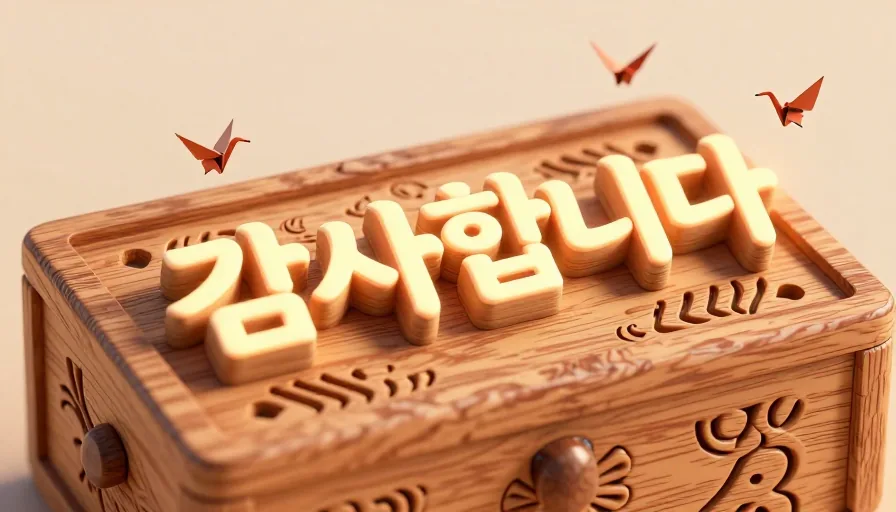
Learning to express gratitude is a fundamental aspect of language learning, and mastering thank you in korea is no exception. In Korean culture, showing appreciation is deeply rooted in social etiquette and hierarchy. This guide will walk you through the essential phrases, cultural context, and practical usage of 'thank you' in Korean.
The Essential Korean 'Thank You': Formal vs. Informal
In Korean, the way you express gratitude can vary greatly depending on the formality of the situation. Here are the basic phrases:
- Formal: 감사합니다 (gamsahamnida)
- Informal: 고마워 (gomawo)
Formal vs. Informal Speech Levels
Korean has several speech levels, and choosing the right one is crucial. Here’s a quick checklist to help you decide:
- Formal (존댓말 - jondaemal): Use with elders, superiors, or strangers.
- Informal (반말 - banmal): Use with friends, family, or younger individuals.
Mini Drill: Identify the Correct Speech Level
- You are thanking your boss for a promotion.
- Formal or Informal?
- You are thanking a friend for lending you a book.
- Formal or Informal?
Mastering Context: When to Use Which Korean Gratitude Phrase
Understanding when to use different forms of 'thank you' is essential. Here are some common scenarios:
- To Elders: Always use the formal phrase 감사합니다 (gamsahamnida).
- To Strangers: Use 감사합니다 (gamsahamnida) to show respect.
- To Colleagues: Depending on the relationship, you might use either 감사합니다 (gamsahamnida) or 고마워 (gomawo).
- To Friends: Use 고마워 (gomawo) or the even more casual 고마 (goma).
Practical Examples
- Thanking a Teacher: 감사합니다, 선생님 (gamsahamnida, seonsaengnim).
- Thanking a Friend: 고마워 (gomawo).
- Thanking a Stranger for Directions: 감사합니다 (gamsahamnida).
Pronunciation Tips for Korean Thank You Phrases
Pronunciation is key to sounding natural. Here are some tips:
- 감사합니다 (gamsahamnida): Pronounce 'gam' as in 'gum,' 'sa' as in 'sah,' 'ham' as in 'ham,' and 'ni' as in 'nee.'
- 고마워 (gomawo): Pronounce 'go' as in 'go,' 'ma' as in 'mah,' and 'wo' as in 'woe.'
Common Mistakes to Avoid
- Mispronouncing Vowels: Korean vowels are distinct and can change the meaning of a word.
- Ignoring Tones: Korean is a tonal language, and incorrect tones can alter the meaning.

Learn Languages with YouTube
Watch videos in your target language, auto-capture words into flashcards, and track your progress — all in one place.
See How It Works →Beyond 'Kamsahamnida': Essential Korean Etiquette for Showing Gratitude
Expressing gratitude in Korean goes beyond just saying 'thank you.' Here are some additional phrases and gestures:
- 감사합니다 (gamsahamnida): Formal thank you.
- 고마워 (gomawo): Informal thank you.
- 고마 (goma): Very informal thank you.
- 감사 (gamsa): Short for 감사합니다, used in casual settings.
Cultural Nuances
- Bowing: A slight bow is often accompanied by saying 감사합니다 (gamsahamnida).
- Gift-Giving: Gifts are a common way to show gratitude in Korean culture.
Commonly Used Polite Expressions Beyond Just 'Thank You'
- 죄송합니다 (joesonghamnida): I'm sorry.
- 부탁합니다 (butakhamnida): Please.
- 천만에요 (cheonmaneyo): You're welcome.
Practical Usage
- Apologizing: 죄송합니다, 선생님 (joesonghamnida, seonsaengnim).
- Asking for a Favor: 부탁합니다 (butakhamnida).
- Responding to Thanks: 천만에요 (cheonmaneyo).
Cultural Nuances: Etiquette Surrounding Gratitude in Korean Culture
In Korean culture, gratitude is deeply ingrained in social interactions. Here are some key points to remember:
- Hierarchy: Always show more respect to those higher in the social hierarchy.
- Gift-Giving: Gifts are often exchanged as a sign of gratitude and respect.
- Bowing: A slight bow is a common gesture of respect and gratitude.
Etiquette Checklist
- Always use the formal phrase with elders and superiors.
- Bow slightly when expressing gratitude.
- Consider gift-giving as a way to show appreciation.
Conclusion
Mastering 'thank you' in Korean involves understanding the cultural context, choosing the right speech level, and practicing proper pronunciation. By following this guide, you'll be well on your way to expressing gratitude like a native Korean speaker.
Mini Drill: Practice Your Gratitude
- Imagine you are thanking your Korean teacher for extra help. What would you say?
- Imagine you are thanking a friend for a small favor. What would you say?
- Imagine you are thanking a stranger for holding the door open. What would you say?
FAQ
What is the difference between 감사합니다 (gamsahamnida) and 고마워 (gomawo)?
감사합니다 (gamsahamnida) is a formal way to say 'thank you' and is used with elders, superiors, or strangers. 고마워 (gomawo) is an informal way to say 'thank you' and is used with friends, family, or younger individuals.
Is it necessary to bow when saying 'thank you' in Korean?
While not always necessary, a slight bow is a common gesture of respect and gratitude in Korean culture. It is often accompanied by saying 감사합니다 (gamsahamnida).
What are some common mistakes to avoid when pronouncing 'thank you' in Korean?
Common mistakes include mispronouncing vowels and ignoring tones. Korean vowels are distinct and can change the meaning of a word, and incorrect tones can alter the meaning.
Related phrases
Start with Metheus
Watch videos in your target language, auto-capture words into flashcards, and track your progress — all in one place.
Get Started →

