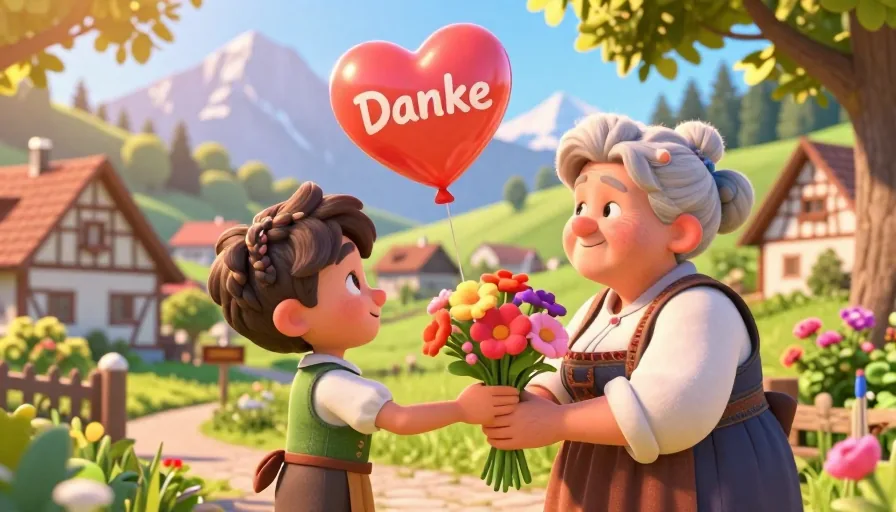
Thank You Very Much in German: A Comprehensive Guide to Expressing Gratitude
Expressing gratitude is a fundamental aspect of communication, and knowing how to say 'thank you very much in German' can greatly enhance your interactions in German-speaking countries. This guide will cover essential phrases, formal and informal usage, contextual expressions, and cultural nuances to help you master the art of saying thank you in German.
The Basics: Essential Ways to Say Thank You
- Danke: This is the most basic and commonly used way to say 'thank you' in German. It is versatile and can be used in both formal and informal settings.
- Pronunciation: /ˈdaŋkə/
- Example: Danke für das Geschenk. (Thank you for the gift.)
- Vielen Dank: This phrase translates to 'thank you very much' and is used to express a deeper level of gratitude.
- Pronunciation: /ˈfiːlən ˈdaŋk/
- Example: Vielen Dank für Ihre Hilfe. (Thank you very much for your help.)
- Herzlichen Dank: This is a more formal and heartfelt way to say 'thank you very much.'
- Pronunciation: /ˈhɛʁt͡slɪçən ˈdaŋk/
- Example: Herzlichen Dank für Ihre Unterstützung. (Thank you very much for your support.)
Expressing Gratitude Formally (The 'Sie' Form)
When addressing someone formally, you use the 'Sie' form. This is common in professional settings, with elders, or when you don't know the person well.
-
Danke: Can be used formally but is less emphatic.
-
Example: Danke für Ihre Zeit. (Thank you for your time.)
-
Vielen Dank: Appropriate for formal settings and shows a higher level of gratitude.
-
Example: Vielen Dank für Ihre Unterstützung. (Thank you very much for your support.)
-
Herzlichen Dank: The most formal and heartfelt way to express gratitude.
-
Example: Herzlichen Dank für Ihre Hilfe. (Thank you very much for your help.)
Expressing Gratitude Informally (The 'Du' Form)
When addressing friends, family, or people you are on a first-name basis with, you use the 'du' form. This is more casual and friendly.
-
Danke: Suitable for everyday use.
-
Example: Danke für den Kaffee. (Thank you for the coffee.)
-
Vielen Dank: Can be used but is less common in very informal settings.
-
Example: Vielen Dank für das Essen. (Thank you very much for the meal.)
-
Herzlichen Dank: Rarely used in very informal settings but can be used for deeper appreciation.
-
Example: Herzlichen Dank für deine Hilfe. (Thank you very much for your help.)

Learn Languages with YouTube
Watch videos in your target language, auto-capture words into flashcards, and track your progress — all in one place.
See How It Works →Beyond 'Danke': Advanced Expressions for Deeper Appreciation
For situations where you want to express more than just basic gratitude, consider these advanced phrases:
-
Tausend Dank: Literally 'a thousand thanks,' used to express immense gratitude.
-
Pronunciation: /ˈtaʊ̯znt ˈdaŋk/
- Example: Tausend Dank für alles. (A thousand thanks for everything.)
-
Ich danke Ihnen/Ihnen herzlich: A more formal way to say 'I thank you very much.'
-
Pronunciation: /ɪç ˈdaŋkə iːnən/ /ˈhɛʁt͡slɪç/
- Example: Ich danke Ihnen herzlich für Ihre Unterstützung. (I thank you very much for your support.)
-
Ich stehe tief in Ihrer/Ihrer Schuld: A very formal way to express deep gratitude, literally 'I am deeply in your debt.'
-
Pronunciation: /ɪç ˈʃteːə ˈtiːf ɪn iːnən/ /ˈʃʊld/
- Example: Ich stehe tief in Ihrer Schuld für Ihre Hilfe. (I am deeply in your debt for your help.)
Cultural Context: How German Speakers Express Thanks
In German-speaking countries, expressing gratitude is an important part of social interactions. Here are some cultural nuances to keep in mind:
-
Punctuality and Efficiency: Germans value punctuality and efficiency. Expressing gratitude promptly and sincerely is appreciated.
-
Directness: Germans are known for their directness. Be straightforward and sincere in your expressions of thanks.
-
Formality: In professional settings, formal expressions of gratitude are expected. Use the 'Sie' form and more formal phrases.
-
Informality: With friends and family, informality is the norm. Use the 'du' form and more casual phrases.
Comparison Chart: When to Use 'Danke' vs. 'Vielen Dank' vs. 'Herzlichen Dank'
| Phrase | Formality | Context | Example |
|---|---|---|---|
| Danke | Neutral | Everyday use, casual settings | Danke für den Kaffee. |
| Vielen Dank | Formal | Professional settings, deeper gratitude | Vielen Dank für Ihre Unterstützung. |
| Herzlichen Dank | Very Formal | Formal settings, deepest gratitude | Herzlichen Dank für Ihre Hilfe. |
Role-Playing Scenarios for Practical Application
- At a Restaurant:
- Waiter: Hier ist Ihr Essen. (Here is your food.)
- You: Danke. (Thank you.)
- Waiter: Gern geschehen. (You're welcome.)
- You: Vielen Dank. (Thank you very much.)
- After Receiving a Gift:
- Friend: Hier ist ein Geschenk für dich. (Here is a gift for you.)
- You: Danke, das ist sehr nett von dir. (Thank you, that is very kind of you.)
- Friend: Gern geschehen. (You're welcome.)
- You: Herzlichen Dank. (Thank you very much.)
- At Work:
- Colleague: Ich habe den Bericht für dich fertig. (I have the report ready for you.)
- You: Vielen Dank für Ihre Hilfe. (Thank you very much for your help.)
- Colleague: Kein Problem. (No problem.)
- You: Herzlichen Dank. (Thank you very much.)
Mini Drill: Practice Your German Thank Yous
- Translate the following sentences into German:
- Thank you for the invitation.
- Thank you very much for your help.
- Thank you for the beautiful gift.
- Role-play the following scenarios with a friend or language partner:
- You receive a compliment from a colleague.
- You receive a small favor from a neighbor.
- You receive a large favor from a friend.
- Listen to native speakers saying 'thank you' in various contexts and try to mimic their pronunciation and intonation.
Checklist: Mastering 'Thank You' in German
- Learn the basic phrases: Danke, Vielen Dank, Herzlichen Dank.
- Understand the difference between formal and informal usage.
- Practice using these phrases in different contexts.
- Learn advanced expressions for deeper appreciation.
- Be aware of cultural nuances and adapt your expressions accordingly.
- Practice with native speakers or language partners.
- Use these phrases in real-life situations to build confidence.
By following this guide, you'll be well-equipped to express gratitude in German, whether in formal or informal settings. Happy learning!
FAQ
What is the difference between 'Danke' and 'Vielen Dank'?
'Danke' is a basic and versatile way to say 'thank you' in German, suitable for both formal and informal settings. 'Vielen Dank,' on the other hand, translates to 'thank you very much' and is used to express a deeper level of gratitude, often in more formal or appreciative contexts.
When should I use the 'Sie' form vs. the 'du' form?
Use the 'Sie' form when addressing someone formally, such as in professional settings, with elders, or when you don't know the person well. Use the 'du' form with friends, family, or people you are on a first-name basis with, as it is more casual and friendly.
Are there any cultural nuances I should be aware of when expressing gratitude in German?
Yes, Germans value punctuality, efficiency, and directness. Expressing gratitude promptly and sincerely is appreciated. In professional settings, formal expressions of gratitude are expected, while informality is the norm with friends and family.
Related phrases
Start with Metheus
Watch videos in your target language, auto-capture words into flashcards, and track your progress — all in one place.
Get Started →

