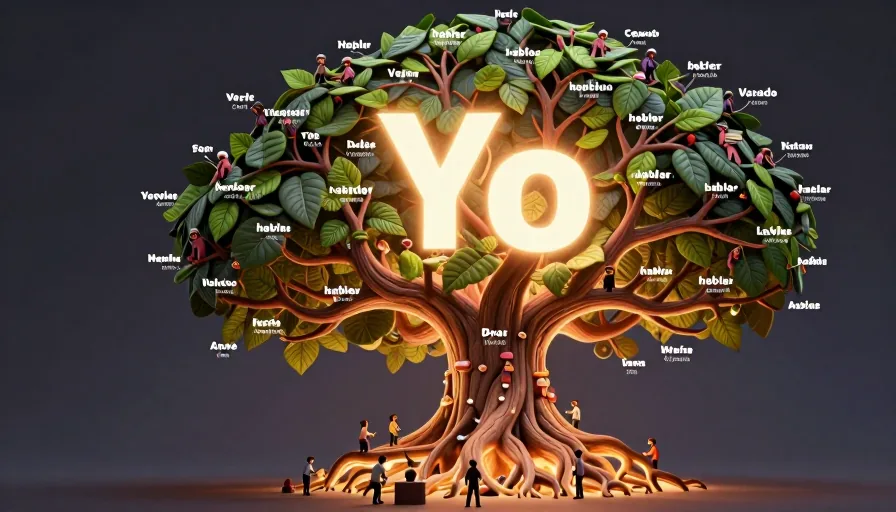
yo verbs spanish: guía práctica y clara para dominar este tema en contexto real.
Mastering Yo Verbs in Spanish: A Comprehensive Guide
Understanding and mastering yo verbs in Spanish is crucial for effective communication in the language. This guide will walk you through the definition, categorization, and conjugation of 'yo' verbs, with a focus on common irregular patterns and practical application.
What are 'Yo' Verbs in Spanish?
'Yo' verbs in Spanish refer to the first-person singular form of verbs, which are essential for expressing actions or states performed by the speaker. These verbs can be regular or irregular, and understanding their conjugation is key to fluent Spanish.
Regular vs. Irregular 'Yo' Verbs
Regular 'Yo' verbs follow predictable patterns based on their infinitive endings: -AR, -ER, and -IR. For example:
- Hablar (to speak): Yo hablo (I speak)
- Comer (to eat): Yo como (I eat)
- Vivir (to live): Yo vivo (I live)
Irregular 'Yo' verbs, on the other hand, do not follow these patterns and require memorization. Examples include:
- Ser/Estar (to be): Yo soy/estoy (I am)
- Tener (to have): Yo tengo (I have)
- Hacer (to do/make): Yo hago (I do/make)
The Three Main Categories of 'Yo' Verb Irregularity
Irregular 'yo' verbs in Spanish can be categorized into three main groups based on their conjugation patterns.
1. Stem-Changing Verbs
These verbs change their stem vowel in the 'yo' form. Common patterns include:
- e > ie: Pedir (to ask): Yo pido (I ask)
- o > ue: Poder (to be able to): Yo puedo (I can)
- e > i: Querer (to want): Yo quiero (I want)
2. Spelling-Changing Verbs
These verbs change a letter or add an accent to maintain the correct pronunciation. Examples include:
- Z > C: Pezcar (to fish): Yo pesco (I fish)
- G > J: Tragar (to swallow): Yo trago (I swallow)
3. Radical-Changing Verbs
These verbs change their root vowel completely. Examples include:
- Ir (to go): Yo voy (I go)
- Ser/Estar (to be): Yo soy/estoy (I am)

Learn Languages with YouTube
Watch videos in your target language, auto-capture words into flashcards, and track your progress — all in one place.
See How It Works →Mastering the Top 10 Irregular 'Yo' Verbs
To help you master irregular 'yo' verbs, here are the top 10 most common ones with their conjugations:
| Verb (Infinitive) | Yo Form | English Translation |
|---|---|---|
| Ser/Estar | soy/estoy | I am |
| Tener | tengo | I have |
| Hacer | hago | I do/make |
| Ir | voy | I go |
| Decir | digo | I say |
| Saber | sé | I know |
| Poder | puedo | I can |
| Querer | quiero | I want |
| Poner | pongo | I put |
| Dar | doy | I give |
Interactive Practice
To reinforce your learning, try conjugating the following verbs in the 'yo' form:
- Comer
- Vivir
- Leer
- Dormir
- Escuchar
Check your answers below:
- Como
- Vivo
- Leo
- Duermo
- Escucho
Tips for Memorizing Irregular Conjugations
Memorizing irregular 'yo' verbs can be challenging, but here are some tips to help you:
- Create flashcards: Write the infinitive on one side and the 'yo' form on the other.
- Use mnemonics: Create memorable phrases or images to associate with each verb.
- Practice daily: Consistency is key. Spend a few minutes each day practicing irregular verbs.
- Use context: Learn verbs in sentences to understand their meaning and usage better.
- Engage in conversation: Practice speaking with language exchange partners or tutors.
Common Learner Errors
When conjugating 'yo' verbs, learners often make the following mistakes:
- Confusing regular and irregular patterns: Ensure you know which verbs are irregular and memorize their forms.
- Incorrect spelling: Pay attention to spelling changes, such as 'z' to 'c' or 'g' to 'j'.
- Incorrect pronunciation: Practice the pronunciation of irregular forms to avoid miscommunication.
- Overgeneralization: Don't assume all verbs follow the same pattern; learn the exceptions.
Checklist for Mastering 'Yo' Verbs
- Understand the difference between regular and irregular 'yo' verbs.
- Memorize the top 10 irregular 'yo' verbs.
- Practice conjugating verbs in sentences.
- Use flashcards and mnemonics for memorization.
- Engage in daily practice and conversation.
Contextual Usage Examples
Here are some examples of 'yo' verbs in context:
- Yo como una manzana todos los días. (I eat an apple every day.)
- Yo vivo en Madrid. (I live in Madrid.)
- Yo quiero aprender español. (I want to learn Spanish.)
- Yo hago ejercicio todas las mañanas. (I do exercise every morning.)
- Yo voy al cine esta noche. (I go to the cinema tonight.)
Mini Drill: Fill in the Blanks
Complete the following sentences with the correct 'yo' form of the verb:
- Yo _____ (comer) una ensalada para el almuerzo.
- Yo _____ (vivir) en Barcelona.
- Yo _____ (querer) aprender a tocar la guitarra.
- Yo _____ (hacer) la tarea todos los días.
- Yo _____ (ir) al parque con mis amigos.
Answers:
- como
- vivo
- quiero
- hago
- voy
Comparison Chart: Regular vs. Irregular 'Yo' Verb Structures
| Regular Verbs | Irregular Verbs |
|---|---|
| Follow predictable patterns | Do not follow predictable patterns |
| Easy to conjugate | Require memorization |
| Examples: hablar, comer, vivir | Examples: ser/estar, tener, hacer |
By understanding the differences and practicing regularly, you'll be well on your way to mastering 'yo' verbs in Spanish.
Conclusion
Mastering 'yo' verbs in Spanish is essential for effective communication. By understanding the different categories of irregular verbs, practicing regularly, and using context, you'll improve your Spanish skills significantly. Keep practicing, and soon you'll be conjugating 'yo' verbs with ease.
FAQ
How many irregular 'yo' verbs are there in Spanish?
There are numerous irregular 'yo' verbs in Spanish, but focusing on the top 10 most common ones will significantly improve your communication skills. These include verbs like ser/estar, tener, hacer, ir, decir, saber, poder, querer, poner, and dar.
What is the best way to memorize irregular 'yo' verbs?
The best way to memorize irregular 'yo' verbs is through consistent practice. Use flashcards, mnemonics, and engage in daily practice. Learning verbs in context and using them in sentences will also help reinforce your memory.
Why are 'yo' verbs important in Spanish grammar?
'Yo' verbs are important because they are used to express actions or states performed by the speaker. Mastering 'yo' verbs is crucial for effective communication and understanding in Spanish.
Related phrases
Start with Metheus
Watch videos in your target language, auto-capture words into flashcards, and track your progress — all in one place.
Get Started →

