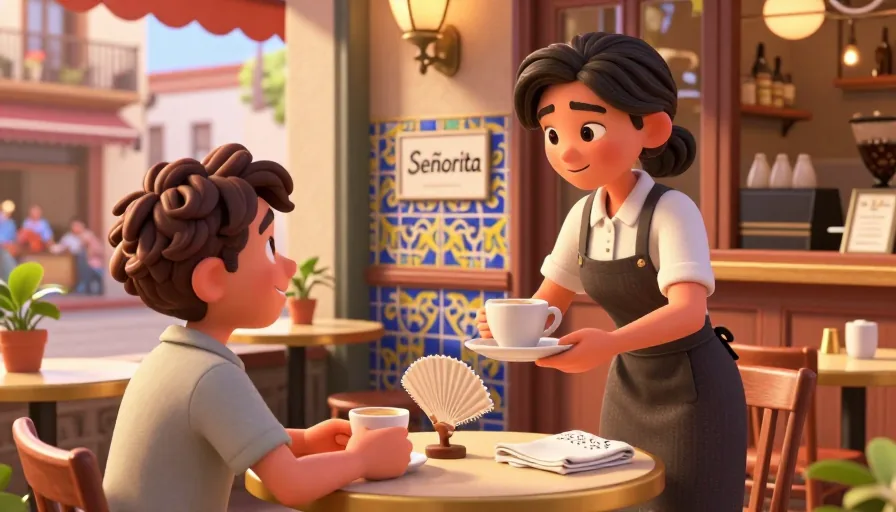
senora vs senorita: guía práctica y clara para dominar este tema en contexto real.
Señora vs. Señorita: A Comprehensive Guide to Understanding and Using Spanish Titles
When learning Spanish, understanding the difference between Señora vs. Señorita is crucial for effective communication and cultural sensitivity. These titles, though seemingly similar, carry distinct connotations and are used in different contexts. This guide will help you navigate the intricacies of these titles, providing practical examples and checklists to ensure you use them correctly.
Señora vs. Señorita: The Core Difference
The primary difference between 'Señora' and 'Señorita' lies in their formality and the context in which they are used. 'Señora' is a respectful term used to address or refer to married women or women of a certain age, typically over 30. It is equivalent to 'Mrs.' in English. On the other hand, 'Señorita' is used to address or refer to unmarried women or younger women, similar to 'Miss.' However, the use of 'Señorita' can be perceived as disrespectful or patronizing in some contexts, so it's essential to understand the nuances.
Mini Drill: Identify the Correct Title
- A woman who is 25 and unmarried: Señorita
- A woman who is 40 and married: Señora
- A woman whose marital status is unknown but is over 30: Señora
Navigating Cultural Nuances: When to Use Which Title
Age and Marital Status
In Spanish-speaking cultures, age and marital status play a significant role in determining which title to use. Generally, women over 30 or those who are married are addressed as 'Señora.' However, this can vary depending on the region and personal preferences. It's always a good idea to err on the side of caution and use 'Señora' if you're unsure.
Relationship and Context
The context in which you use these titles is also crucial. In formal settings, such as business meetings or professional environments, 'Señora' is generally the safer choice. In casual settings, such as among friends or family, you might use 'Señorita' for younger, unmarried women, but be mindful of the potential implications.
Checklist: Choosing the Right Title
- Determine the woman's age and marital status.
- Consider the context and formality of the situation.
- If unsure, use 'Señora' to avoid potential offense.
- Be mindful of regional variations and personal preferences.

Learn Languages with YouTube
Watch videos in your target language, auto-capture words into flashcards, and track your progress — all in one place.
See How It Works →The Social Implications: Avoiding Insults
Using the wrong title can sometimes be perceived as an insult. For example, calling a married woman 'Señorita' might imply that she is unmarried or too young, which can be seen as disrespectful. Similarly, using 'Señora' for a young, unmarried woman might imply that she is older or married, which can also be offensive.
Practical Examples
- Formal Setting: You are introducing a 35-year-old woman at a business conference. Use 'Señora' to maintain professionalism and respect.
- Casual Setting: You are chatting with a group of friends, and one of them introduces her 22-year-old sister. Use 'Señorita' to acknowledge her youth and unmarried status, but be mindful of the context and her comfort level.
- Uncertainty: You are meeting a woman for the first time, and you're unsure of her age or marital status. Use 'Señora' to be respectful and avoid potential offense.
Beyond the Basics: Understanding Related Titles (e.g., Doña)
In addition to 'Señora' and 'Señorita,' there are other titles in Spanish that are used to address women with respect. One such title is 'Doña,' which is a more formal and respectful term used to address older women or women of high social status. It is equivalent to 'Lady' in English.
When to Use 'Doña'
- Age: 'Doña' is typically used for women who are significantly older, often over 50 or 60.
- Social Status: It can also be used for women of high social status, regardless of age.
- Formality: 'Doña' is more formal than 'Señora' and is often used in very respectful or ceremonial contexts.
Mini Drill: Identify the Correct Title
- A woman who is 65 and has a high social status: Doña
- A woman who is 45 and married: Señora
- A woman who is 28 and unmarried: Señorita
Practical Application: Scenario-Based Usage
Scenario 1: Meeting a New Colleague
You are starting a new job, and you meet a female colleague. You're unsure of her age or marital status. Use 'Señora' to be respectful and professional.
Scenario 2: Introducing Friends
You are introducing your friend to your family. Your friend is 25 and unmarried. Use 'Señorita' to acknowledge her youth and unmarried status, but be mindful of the context and her comfort level.
Scenario 3: Addressing a Customer
You are working in a customer service role, and a woman walks into the store. You're unsure of her age or marital status. Use 'Señora' to be respectful and avoid potential offense.
Conclusion
Understanding the difference between 'Señora' and 'Señorita' is essential for effective communication and cultural sensitivity in Spanish. By following the guidelines and practical examples provided in this guide, you can use these titles confidently and appropriately. Remember to consider the context, age, marital status, and social implications when choosing the right title.
FAQ
What if I'm unsure of a woman's age or marital status?
If you're unsure, it's always best to use 'Señora' to avoid potential offense. This title is respectful and appropriate for women of all ages and marital statuses.
Can I use 'Señorita' for a young woman in a formal setting?
While 'Señorita' is appropriate for young, unmarried women, it's generally best to use 'Señora' in formal settings to maintain professionalism and respect. Be mindful of the context and the woman's comfort level.
What if I accidentally use the wrong title?
If you realize you've used the wrong title, apologize sincerely and correct yourself. Most people will understand that you're learning and will appreciate your effort to use the correct title.
Related phrases
Start with Metheus
Watch videos in your target language, auto-capture words into flashcards, and track your progress — all in one place.
Get Started →