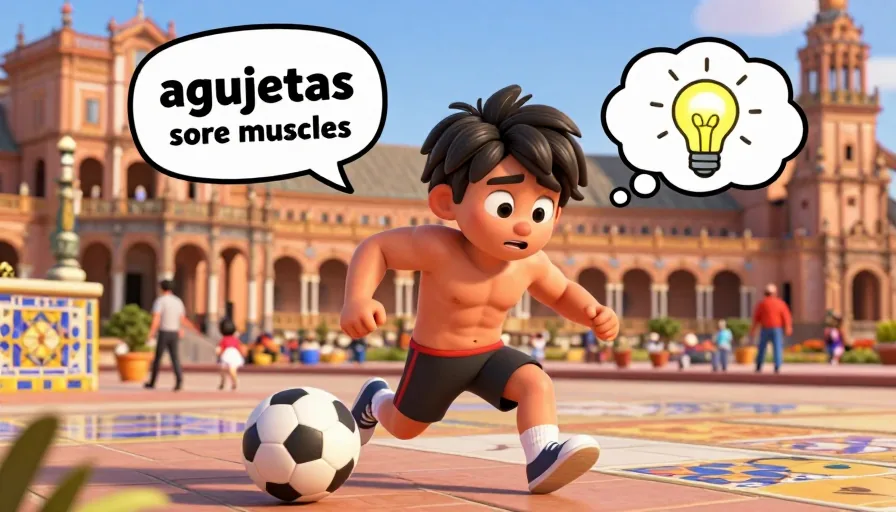
Agujetas en Ingles: Translation, Usage, and Cultural Context
Understanding the translation and usage of 'agujetas' in English is crucial for Spanish language learners. 'Agujetas' refers to the muscle soreness or stiffness that occurs after physical exertion. This guide will cover the definition, common phrases, pronunciation, and cultural context of 'agujetas' to help you master this term and improve your language skills.
What are 'Agujetas'?
'Agujetas' is a Spanish term that translates to 'muscle soreness' or 'muscle stiffness' in English. It is commonly experienced after intense physical activity, such as exercise or sports. The term is used to describe the discomfort and tightness felt in the muscles. For example:
- Spanish: Después de correr una maratón, sentí unas agujetas terribles en las piernas.
- English: After running a marathon, I felt terrible muscle soreness in my legs.
Common Phrases and Idioms
'Agujetas' is often used in various phrases and idioms in Spanish. Here are some common examples:
-
Tener agujetas: To have muscle soreness.
- Example: Después de la clase de yoga, tengo agujetas en los brazos.
- Translation: After the yoga class, I have muscle soreness in my arms.
-
Agujetas musculares: Muscle soreness.
- Example: Las agujetas musculares son comunes después de un entrenamiento intenso.
- Translation: Muscle soreness is common after intense training.
-
Agujetas en las piernas: Sore legs.
- Example: Las agujetas en las piernas me impidieron caminar cómodamente.
- Translation: The sore legs prevented me from walking comfortably.
Examples in Sentences
Here are some practical examples of how to use 'agujetas' in sentences:
-
Spanish: Al día siguiente de mi sesión de ejercicio, sentí unas agujetas intensas en los músculos.
-
English: The day after my workout, I felt intense muscle soreness in my muscles.
-
Spanish: Las agujetas en los brazos me recordaron que necesito estirar más después del entrenamiento.
-
English: The muscle soreness in my arms reminded me that I need to stretch more after the workout.
-
Spanish: Después de la clase de spinning, mis piernas estaban llenas de agujetas.
-
English: After the spinning class, my legs were full of muscle soreness.
Pronunciation Guide
Pronunciation is key to mastering any language. Here's a guide to pronouncing 'agujetas' correctly:
- Phonetic Spelling: /aˈɣe.tas/
- Audio Pronunciation: [Insert Audio Link Here]
Tips for Pronunciation:
- Break it down: Pronounce each syllable clearly: a-gu-je-tas.
- Focus on the 'j' sound: The 'j' in 'agujetas' is pronounced like the English 'h' in 'hat'.
- Practice with a native speaker: Listen to native speakers and mimic their pronunciation.

Aprendé Idiomas con YouTube
Mirá videos en tu idioma objetivo, capturá palabras nuevas como flashcards automáticamente, y seguí tu progreso — todo en un solo lugar.
Ver Cómo Funciona →Cultural Context and Usage
The usage of 'agujetas' can vary slightly depending on the region. In Spain, 'agujetas' is commonly used to describe muscle soreness after exercise. In Latin America, the term is also used, but sometimes other regional terms like 'dolor muscular' (muscle pain) or 'rigidez muscular' (muscle stiffness) might be preferred.
Cultural Notes:
- Spain: 'Agujetas' is widely used and understood.
- Mexico: 'Dolor muscular' is also commonly used.
- Argentina: 'Rigidez muscular' is a popular term.
Mini Drill:
Translate the following sentences from Spanish to English and vice versa:
- Spanish to English: Después de la clase de gimnasia, sentí unas agujetas en las piernas.
- English to Spanish: I have muscle soreness in my arms after the workout.
Interactive Quizzes and Exercises
To reinforce your learning, try these interactive quizzes and exercises:
-
Fill in the Blanks: Complete the sentences with the correct form of 'agujetas'.
- Example: Después de correr, sentí unas __________ en las piernas.
- Answer: agujetas
-
True or False: Determine if the following statements are true or false.
- Example: 'Agujetas' is only used in Spain.
- Answer: False
-
Multiple Choice: Choose the correct translation for 'agujetas'.
- Example: What is the English translation of 'agujetas'?
- A) Muscle pain
- B) Muscle soreness
- C) Muscle stiffness
- D) Both B and C
- Answer: D
- Example: What is the English translation of 'agujetas'?
Checklist for Mastering 'Agujetas'
- Understand the Definition: Know that 'agujetas' means muscle soreness or stiffness.
- Learn Common Phrases: Memorize phrases like 'tener agujetas' and 'agujetas musculares'.
- Practice Pronunciation: Use the pronunciation guide and audio links to master the correct pronunciation.
- Use in Sentences: Create your own sentences using 'agujetas' in different contexts.
- Cultural Awareness: Understand regional variations and usage.
- Interactive Practice: Complete quizzes and exercises to reinforce your learning.
By following this checklist, you'll be well on your way to mastering 'agujetas' and improving your Spanish language skills.
Conclusion
Mastering 'agujetas' and understanding its usage in different contexts is essential for Spanish language learners. By following this guide, you'll gain a comprehensive understanding of the term, its pronunciation, and cultural context. Practice regularly and engage with interactive exercises to enhance your language skills.
Preguntas frecuentes
What is the difference between 'agujetas' and 'dolor muscular'?
'Agujetas' specifically refers to muscle soreness or stiffness, often experienced after physical exertion. 'Dolor muscular,' on the other hand, is a broader term that can refer to any type of muscle pain, not just the soreness that comes from exercise.
Is 'agujetas' used differently in Spain and Latin America?
Yes, while 'agujetas' is commonly used in Spain, in Latin America, terms like 'dolor muscular' (muscle pain) or 'rigidez muscular' (muscle stiffness) might be preferred. However, 'agujetas' is still understood and used in many Latin American countries.
How can I practice the pronunciation of 'agujetas'?
To practice the pronunciation of 'agujetas,' break down the word into syllables (a-gu-je-tas) and focus on the 'j' sound, which is pronounced like the English 'h' in 'hat.' Listen to native speakers and use audio pronunciation guides to improve your pronunciation.
Frases relacionadas
Empezá con Metheus
Mirá videos en tu idioma objetivo, capturá palabras nuevas como flashcards automáticamente, y seguí tu progreso — todo en un solo lugar.
Comenzar →

