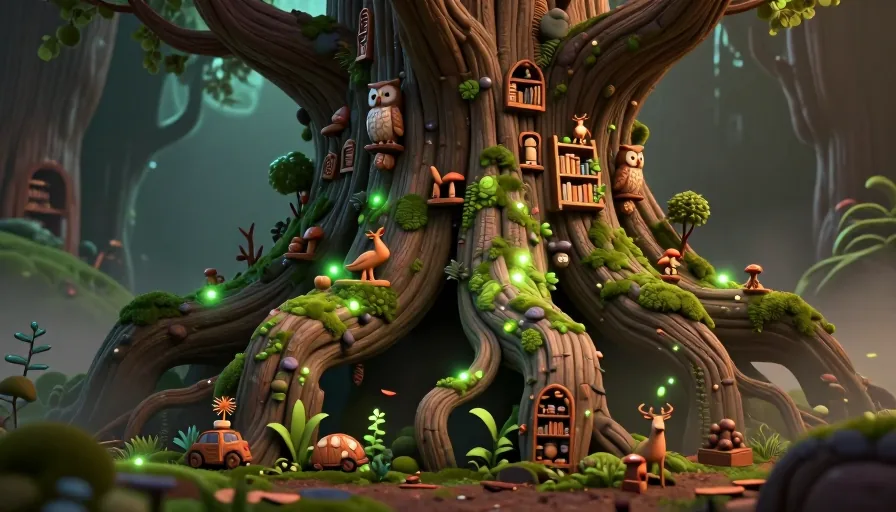
In Spanish, the term 'bosques' translates to 'forests' or 'woods' in English. Understanding this word and its related vocabulary is crucial for anyone looking to enhance their Spanish language skills, especially when discussing nature and landscapes. This guide will delve into the direct translation of 'bosque,' provide contextual usage examples, explore related vocabulary, and offer practical exercises to help you master this essential term.
What is 'Bosque' in English? (Translation & Context)
The word 'bosque' is a masculine noun in Spanish, which means 'forest' or 'woods' in English. It is used with masculine articles and adjectives. For example, you would say 'el bosque verde' (the green forest) or 'un bosque denso' (a dense forest). Understanding the gender and article usage is fundamental for correct grammatical context.
Checklist for Basic Understanding
- Gender: Masculine
- Articles: El, un
- Adjectives: Verde (green), denso (dense), oscuro (dark)
Using 'Bosque' in Spanish Sentences: Contextual Examples
To truly master 'bosque,' it's essential to see it in action within sentences. Here are some examples that illustrate its usage in different contexts:
- Literary Context: En el cuento, el personaje se perdió en el bosque oscuro. (In the story, the character got lost in the dark forest.)
- Nature Description: El bosque de secuoyas es impresionante. (The redwood forest is impressive.)
- Everyday Conversation: Vamos a caminar por el bosque este fin de semana. (We are going to walk through the forest this weekend.)
Mini Drill: Fill in the Blanks
Complete the following sentences with the correct form of 'bosque':
- El _______ está lleno de árboles altos.
- Vamos a acampar en el _______ este verano.
- El _______ de pinos es muy tranquilo.
Related Vocabulary: Exploring Different Types of Forests
Spanish has a rich vocabulary for different types of forests and related terms. Here are some key words to expand your knowledge:
- Bosque tropical: Tropical forest
- Bosque de coníferas: Coniferous forest
- Bosque de hoja caduca: Deciduous forest
- Bosque de manglares: Mangrove forest
- Bosque de sequoias: Redwood forest
- Bosque de robles: Oak forest
Checklist for Related Vocabulary
- Bosque tropical: Common in Central and South America
- Bosque de coníferas: Found in mountainous regions
- Bosque de hoja caduca: Characterized by trees that lose their leaves annually
- Bosque de manglares: Found in coastal areas
- Bosque de sequoias: Iconic for their massive trees
- Bosque de robles: Known for their sturdy and broad-leaved trees
Grammatical Context: Gender and Article Usage
As mentioned, 'bosque' is a masculine noun. This means it will always be used with masculine articles and adjectives. Here are some examples to illustrate this:
- El bosque: The forest
- Un bosque: A forest
- El bosque verde: The green forest
- Un bosque denso: A dense forest
Common Mistakes to Avoid
- Incorrect Gender: Using feminine articles (la, una) with 'bosque'
- Incorrect Adjectives: Using adjectives that do not agree in gender and number

Aprendé Idiomas con YouTube
Mirá videos en tu idioma objetivo, capturá palabras nuevas como flashcards automáticamente, y seguí tu progreso — todo en un solo lugar.
Ver Cómo Funciona →Cultural Context: Famous Forests in Spanish-Speaking Regions
Understanding the cultural context can greatly enhance your language learning experience. Here are some famous forests in Spanish-speaking regions:
- El Yunque: Located in Puerto Rico, El Yunque is a lush tropical rainforest known for its biodiversity and hiking trails.
- Bosque de Chapultepec: Located in Mexico City, this urban forest is a popular recreational area with museums, a zoo, and lakes.
- Bosque de la Primavera: Located in Jalisco, Mexico, this forest is known for its unique ecosystem and beautiful landscapes.
Mini Drill: Cultural Context
Match the forest with its location:
- El Yunque
- Bosque de Chapultepec
- Bosque de la Primavera
A. Puerto Rico B. Mexico City C. Jalisco, Mexico
How to Use 'Bosque' in Conversational Spanish
Incorporating 'bosque' into your conversations can be both practical and enjoyable. Here are some tips and examples:
- Asking for Directions: ¿Cómo llego al bosque más cercano? (How do I get to the nearest forest?)
- Planning Activities: Vamos a hacer una excursión al bosque este fin de semana. (We are going to go on a hike in the forest this weekend.)
- Describing Experiences: El bosque estaba lleno de vida y sonidos naturales. (The forest was full of life and natural sounds.)
Checklist for Conversational Use
- Asking Questions: Use 'bosque' in questions to seek information
- Planning Activities: Incorporate 'bosque' into your plans and activities
- Describing Experiences: Use 'bosque' to describe your experiences and observations
Interactive Exercises Based on Sentences Using 'Bosque'
To reinforce your learning, try these interactive exercises:
-
Sentence Completion: Complete the following sentences with the correct form of 'bosque':
- El _______ está lleno de árboles altos.
- Vamos a acampar en el _______ este verano.
- El _______ de pinos es muy tranquilo.
-
True or False: Determine if the following statements are true or false:
- 'Bosque' is a feminine noun.
- 'Bosque' can be used with masculine articles and adjectives.
- 'Bosque' is commonly used in urban settings.
-
Cultural Context Quiz: Match the forest with its location:
- El Yunque
- Bosque de Chapultepec
- Bosque de la Primavera
- A. Puerto Rico
- B. Mexico City
- C. Jalisco, Mexico
By mastering 'bosque' and its related vocabulary, you'll be well on your way to enhancing your Spanish language skills and understanding the rich cultural context of Spanish-speaking regions.
Preguntas frecuentes
Why is it important to understand the gender of 'bosque'?
Understanding the gender of 'bosque' is crucial because it determines the articles and adjectives that must agree with it. 'Bosque' is a masculine noun, so it will always be used with masculine articles (el, un) and adjectives (e.g., el bosque verde, un bosque denso).
What are some common mistakes to avoid when using 'bosque'?
Common mistakes include using feminine articles (la, una) with 'bosque' and using adjectives that do not agree in gender and number. Always remember that 'bosque' is masculine and requires masculine articles and adjectives.
How can I practice using 'bosque' in conversational Spanish?
You can practice using 'bosque' in conversational Spanish by asking questions about forests, planning activities that involve forests, and describing your experiences in forests. For example, you can ask '¿Cómo llego al bosque más cercano?' (How do I get to the nearest forest?) or say 'Vamos a hacer una excursión al bosque este fin de semana.' (We are going to go on a hike in the forest this weekend.)
Frases relacionadas
Empezá con Metheus
Mirá videos en tu idioma objetivo, capturá palabras nuevas como flashcards automáticamente, y seguí tu progreso — todo en un solo lugar.
Comenzar →

