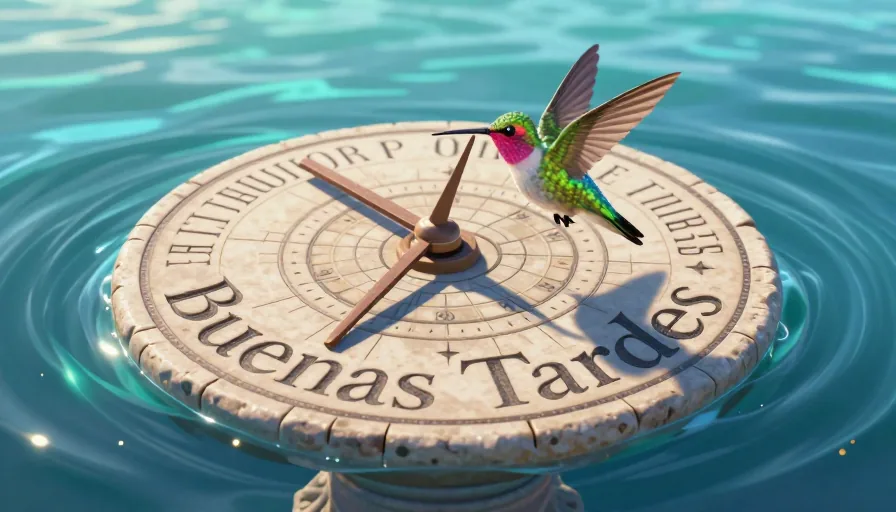
Buenas tardes in English translates to 'good afternoon.' This phrase is a fundamental part of Spanish greetings and is used extensively in daily conversations. Understanding when and how to use 'buenas tardes' can significantly enhance your communication skills in Spanish. This guide will cover the meaning, cultural context, common phrases, pronunciation, and examples to help you master this greeting.
What Does 'Buenas Tardes' Mean?
'Buenas tardes' literally translates to 'good afternoon' in English. It is used to greet someone during the late morning or early evening, typically from around 12 PM to 8 PM. The phrase is composed of two words: 'buenas,' which means 'good,' and 'tardes,' which means 'afternoons.'
When to Use 'Buenas Tardes'
The appropriate time to use 'buenas tardes' can vary slightly depending on the region and cultural norms. Generally, it is used from midday until early evening. Here are some guidelines:
- Morning to Early Afternoon (12 PM to 2 PM): In some regions, 'buenas tardes' might be used as early as noon, especially in warmer climates where the afternoon starts earlier.
- Late Afternoon (2 PM to 8 PM): This is the most common time to use 'buenas tardes.'
- Evening (After 8 PM): After 8 PM, it is more appropriate to use 'buenas noches,' which means 'good evening' or 'good night.'
Checklist for Using 'Buenas Tardes'
- Understand the time of day (12 PM to 8 PM)
- Greet with '¡Buenas tardes!'
- Follow up with a question like '¿Cómo estás?' (How are you?)
- Use in both formal and informal settings
Common Phrases and Responses
'Buenas tardes' is often followed by additional phrases to make the greeting more conversational. Here are some common phrases and responses:
-
¡Buenas tardes! ¿Cómo estás? (Good afternoon! How are you?)
- Response: ¡Muy bien, gracias! ¿Y tú? (Very well, thank you! And you?)
-
¡Buenas tardes! ¿Cómo has estado? (Good afternoon! How have you been?)
- Response: Bien, gracias. ¿Y tú? (Good, thank you. And you?)
-
¡Buenas tardes! ¿Qué tal? (Good afternoon! What's up?)
- Response: Bien, gracias. ¿Y tú? (Good, thank you. And you?)
Pronunciation Guide
Pronunciation is key to sounding natural in any language. Here’s a step-by-step guide to pronouncing 'buenas tardes' correctly:
- Buenas: Pronounced as 'BWE-nahs'
- Tardes: Pronounced as 'TAR-dehs'
Interactive Pronunciation Guide
Listen to the audio examples below to practice your pronunciation:
Mini Drill: Pronunciation Practice
- Listen to the audio examples.
- Repeat the phrase aloud.
- Record yourself and compare.
- Practice with a language partner.

Aprendé Idiomas con YouTube
Mirá videos en tu idioma objetivo, capturá palabras nuevas como flashcards automáticamente, y seguí tu progreso — todo en un solo lugar.
Ver Cómo Funciona →Examples in Sentences
Using 'buenas tardes' in various contexts can help you understand its versatility. Here are some examples:
-
Formal Setting:
- Buenas tardes, señor. ¿Cómo puedo ayudarle hoy? (Good afternoon, sir. How can I help you today?)
- Response: Buenas tardes. Necesito información sobre sus servicios. (Good afternoon. I need information about your services.)
-
Informal Setting:
- ¡Buenas tardes, amigos! ¿Qué tal el fin de semana? (Good afternoon, friends! How was the weekend?)
- Response: ¡Buenas tardes! Fue genial, gracias. ¿Y el tuyo? (Good afternoon! It was great, thank you. And yours?)
-
Workplace:
- Buenas tardes, equipo. Vamos a revisar el progreso del proyecto. (Good afternoon, team. Let's review the project's progress.)
- Response: Buenas tardes, jefe. Estamos listos para la reunión. (Good afternoon, boss. We are ready for the meeting.)
Cultural Context and Usage Tips
Understanding the cultural context of 'buenas tardes' can help you use it more effectively. Here are some tips:
- Greeting in Public: In Spain and Latin America, it is common to greet people with 'buenas tardes' when entering a store, restaurant, or other public places.
- Formal vs. Informal: 'Buenas tardes' can be used in both formal and informal settings, but the tone and follow-up questions may vary.
- Regional Variations: In some regions, people might use 'buenas tardes' earlier in the day, while in others, it might be used later.
Cultural Insights
- Spain: In Spain, 'buenas tardes' is often used from around 2 PM onwards, especially in warmer regions where the afternoon starts earlier.
- Mexico: In Mexico, 'buenas tardes' is commonly used from 12 PM to 8 PM, with a slight variation depending on the region.
- Argentina: In Argentina, 'buenas tardes' is used from around 1 PM to 8 PM, with a more relaxed approach to time.
Quiz: Cultural Context
-
In which country might you use 'buenas tardes' as early as 12 PM?
- a) Spain
- b) Mexico
- c) Argentina
- d) All of the above
-
What is a common follow-up question after 'buenas tardes'?
- a) ¿Cómo estás?
- b) ¿Qué tal?
- c) ¿Cómo has estado?
- d) All of the above
Comparison with Similar Greetings in Other Languages
Understanding how 'buenas tardes' compares to similar greetings in other languages can enhance your linguistic skills. Here are some examples:
- French: 'Bon après-midi' (Good afternoon)
- Italian: 'Buon pomeriggio' (Good afternoon)
- German: 'Guten Nachmittag' (Good afternoon)
- Portuguese: 'Boa tarde' (Good afternoon)
Contrast and Compare
- Spanish vs. French: Both use a similar structure, but the pronunciation and cultural context differ.
- Spanish vs. Italian: Both use a similar structure, but the pronunciation and cultural context differ.
- Spanish vs. German: Both use a similar structure, but the pronunciation and cultural context differ.
- Spanish vs. Portuguese: Both use a similar structure, but the pronunciation and cultural context differ.
Mini Drill: Comparison Practice
- Listen to the audio examples of 'buenas tardes' and the equivalent greetings in other languages.
- Repeat the phrases aloud.
- Record yourself and compare.
- Practice with a language partner.
Conclusion
Mastering 'buenas tardes' in English involves understanding its meaning, cultural context, and proper usage. By following the guidelines and practicing with the examples provided, you can confidently use this greeting in various settings. Remember to pay attention to the time of day and the cultural norms of the region you are in. With practice, you'll be able to greet like a native speaker.
Final Checklist
- Understand the meaning of 'buenas tardes'
- Know the appropriate times to use it
- Practice common phrases and responses
- Master the pronunciation
- Use it in various contexts
- Compare with similar greetings in other languages
Preguntas frecuentes
What is the exact time to start using 'buenas tardes'?
The exact time to start using 'buenas tardes' can vary by region, but generally, it is used from around 12 PM to 8 PM. In some warmer climates, it might be used as early as noon, while in others, it might be used later in the afternoon.
Can 'buenas tardes' be used in both formal and informal settings?
Yes, 'buenas tardes' can be used in both formal and informal settings. The tone and follow-up questions may vary depending on the context. For example, in a formal setting, you might follow up with '¿Cómo puedo ayudarle hoy?' (How can I help you today?), while in an informal setting, you might ask '¿Qué tal el fin de semana?' (How was the weekend?).
How does 'buenas tardes' compare to similar greetings in other languages?
'Buenas tardes' is similar to greetings in other languages like 'Bon après-midi' in French, 'Buon pomeriggio' in Italian, 'Guten Nachmittag' in German, and 'Boa tarde' in Portuguese. While the structure is similar, the pronunciation and cultural context can differ.
Frases relacionadas
Empezá con Metheus
Mirá videos en tu idioma objetivo, capturá palabras nuevas como flashcards automáticamente, y seguí tu progreso — todo en un solo lugar.
Comenzar →

