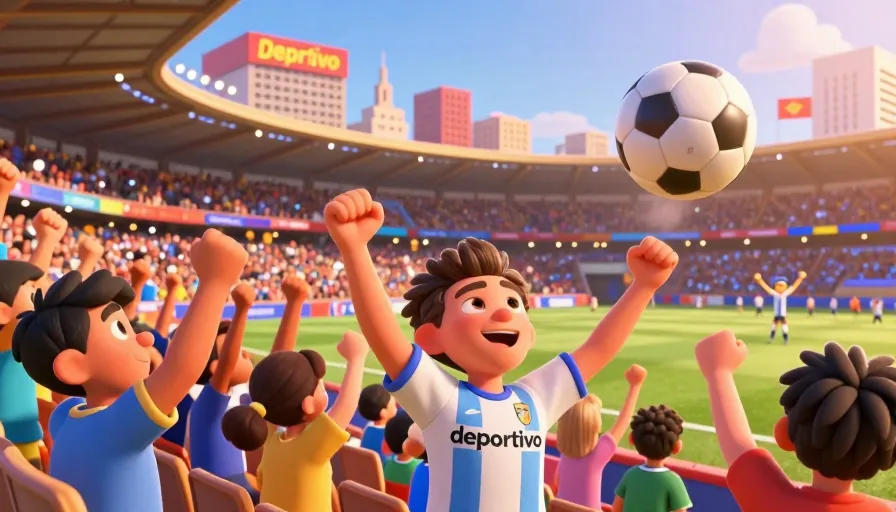
Understanding the translation and usage of 'deportivo' en ingles is essential for anyone learning Spanish or English. 'Deportivo' is a versatile word that can mean 'sporting,' 'athletic,' or 'casual' depending on the context. This guide will help you grasp the nuances of 'deportivo' through detailed explanations, examples, and interactive quizzes.
What Does 'Deportivo' Mean in English?
The word 'deportivo' is an adjective in Spanish that translates to 'sporting,' 'athletic,' or 'casual' in English. It is derived from the noun 'deporte,' which means 'sport.' The term is commonly used to describe anything related to sports or athletic activities. For example, 'un club deportivo' translates to 'a sports club.'
Using 'Deportivo' in Sports Context
In a sports context, 'deportivo' is often used to describe teams, clubs, or events related to sports. For instance, 'un equipo deportivo' refers to a 'sports team,' and 'un evento deportivo' means a 'sports event.' Here are some practical examples:
- Equipo Deportivo: This translates to 'sports team.' For example, 'El equipo deportivo de la escuela ganó el campeonato' means 'The school's sports team won the championship.'
- Evento Deportivo: This translates to 'sports event.' For example, 'El evento deportivo atrajo a miles de espectadores' means 'The sports event attracted thousands of spectators.'
Mini Drill: Sports Context
Translate the following sentences from Spanish to English:
- El club deportivo organiza una carrera de 10 km.
- Los atletas deportivos participaron en los Juegos Olímpicos.
- El uniforme deportivo es muy cómodo.
Deportivo in Fashion: Casual vs. Athletic Wear
In the fashion context, 'deportivo' can refer to casual or athletic wear. It is often used to describe clothing that is comfortable and suitable for physical activities. For example, 'ropa deportiva' translates to 'sportswear' or 'athletic wear.' Here are some examples:
- Ropa Deportiva: This translates to 'sportswear' or 'athletic wear.' For example, 'La ropa deportiva es ideal para hacer ejercicio' means 'Sportswear is ideal for exercising.'
- Zapatos Deportivos: This translates to 'sports shoes' or 'athletic shoes.' For example, 'Los zapatos deportivos son cómodos para correr' means 'Sports shoes are comfortable for running.'
Checklist: Fashion Context
- Understand the difference between 'ropa deportiva' and 'ropa casual.'
- Know how to use 'deportivo' in sentences related to fashion.
- Practice translating sentences that include 'deportivo' in a fashion context.
Example Sentences and Phrases
Here are some example sentences and phrases that use 'deportivo' in different contexts:
- Sports Context: 'El equipo deportivo de la universidad ganó el torneo de fútbol.' (The university's sports team won the football tournament.)
- Fashion Context: 'La ropa deportiva es perfecta para el gimnasio.' (Sportswear is perfect for the gym.)
- Everyday Language: 'El centro deportivo ofrece clases de yoga y pilates.' (The sports center offers yoga and pilates classes.)
Interactive Quiz: Example Sentences
Translate the following sentences from English to Spanish:
- The athletic wear is very comfortable.
- The sports event was a great success.
- The sports team is training hard for the championship.

Aprendé Idiomas con YouTube
Mirá videos en tu idioma objetivo, capturá palabras nuevas como flashcards automáticamente, y seguí tu progreso — todo en un solo lugar.
Ver Cómo Funciona →Audio Pronunciations and Tips
Listening to the correct pronunciation of 'deportivo' can help you improve your speaking skills. Here are some tips and audio resources:
- Pronunciation: 'Deportivo' is pronounced as /deˈpoɾtivo/ in Spanish. Listen to native speakers to get the correct intonation and stress.
- Audio Resources: Use language learning apps like Metheus.app to listen to audio pronunciations and practice speaking.
Mini Drill: Pronunciation
Listen to the audio pronunciation of 'deportivo' and repeat it aloud. Try to mimic the intonation and stress of native speakers.
Common Mistakes to Avoid
Here are some common mistakes to avoid when using 'deportivo' en ingles:
- Confusing 'Deportivo' with 'Deportista': 'Deportivo' refers to something related to sports, while 'deportista' refers to a sportsman or athlete.
- Incorrect Translation: Avoid translating 'deportivo' as 'sporty' in all contexts. Use 'sporting,' 'athletic,' or 'casual' depending on the context.
- Overuse: Be mindful of overusing 'deportivo' in sentences. Use synonyms like 'sporting,' 'athletic,' or 'casual' to vary your language.
Checklist: Common Mistakes
- Avoid confusing 'deportivo' with 'deportista.'
- Use the correct translation based on the context.
- Vary your language by using synonyms.
Cultural Context and Usage
Understanding the cultural context of 'deportivo' can help you use it more effectively. In Spanish-speaking countries, 'deportivo' is often associated with sports clubs, athletic wear, and sports events. For example, 'un centro deportivo' refers to a sports center or gym, and 'un uniforme deportivo' means a sports uniform.
Real-Life Examples
- Sports Club: 'El club deportivo de la comunidad organiza torneos de fútbol y baloncesto.' (The community sports club organizes football and basketball tournaments.)
- Athletic Wear: 'La tienda de ropa deportiva ofrece una amplia variedad de prendas para hacer ejercicio.' (The sportswear store offers a wide variety of clothing for exercising.)
Comparison with Similar Words
- Deportivo vs. Deportista: 'Deportivo' refers to something related to sports, while 'deportista' refers to a sportsman or athlete. For example, 'un deportista' means 'an athlete,' and 'un equipo deportivo' means 'a sports team.'
- Deportivo vs. Casual: 'Deportivo' can mean 'casual' in the context of clothing. For example, 'ropa deportiva' can translate to 'casual wear' or 'sportswear.'
Interactive Quiz: Cultural Context
Answer the following questions based on the cultural context of 'deportivo':
- What does 'un centro deportivo' refer to?
- How is 'deportivo' used in the context of fashion?
- What is the difference between 'deportivo' and 'deportista'?
By following this guide, you will gain a comprehensive understanding of 'deportivo' en ingles, its usage in different contexts, and how to use it effectively in your language learning journey.
Preguntas frecuentes
What is the difference between 'deportivo' and 'deportista'?
'Deportivo' refers to something related to sports, such as a sports team or athletic wear, while 'deportista' refers to a sportsman or athlete. For example, 'un deportista' means 'an athlete,' and 'un equipo deportivo' means 'a sports team.'
Can 'deportivo' be used to describe casual wear?
Yes, 'deportivo' can be used to describe casual wear, especially in the context of athletic or sportswear. For example, 'ropa deportiva' can translate to 'casual wear' or 'sportswear.'
How do I pronounce 'deportivo' correctly?
'Deportivo' is pronounced as /deˈpoɾtivo/ in Spanish. Listen to native speakers and use language learning apps like Metheus.app to practice the correct pronunciation.
Frases relacionadas
Empezá con Metheus
Mirá videos en tu idioma objetivo, capturá palabras nuevas como flashcards automáticamente, y seguí tu progreso — todo en un solo lugar.
Comenzar →

