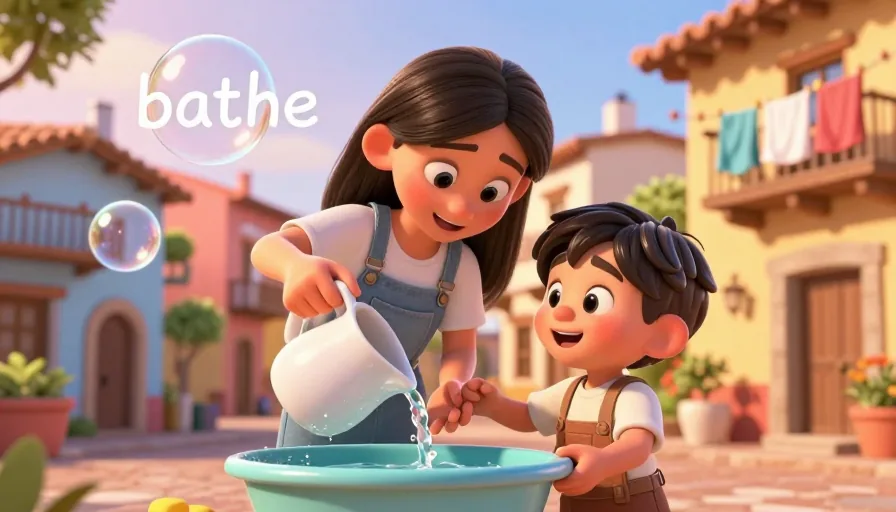
Learning how to translate and use the verb 'bañar' in English is essential for Spanish language learners. This guide provides a comprehensive overview, including conjugations, example sentences, audio pronunciations, and interactive exercises to help you master 'bañar' in various contexts.
What Does 'Bañar' Mean in English?
The verb 'bañar' in Spanish translates to 'to bathe' or 'to wash' in English. It is a transitive verb, meaning it requires a direct object. For example, 'La enfermera bañó al paciente' translates to 'The nurse bathed the patient.' Understanding this basic translation is the first step in mastering 'bañar.'
Conjugations of 'Bañar' in Spanish
Conjugating 'bañar' correctly is crucial for effective communication. Here are the conjugations in different tenses:
Present Tense
- Yo baño
- Tú bañas
- Él/Ella/Usted baña
- Nosotros/as bañamos
- Vosotros/as bañáis
- Ellos/as/Ustedes bañan
Preterite Tense
- Yo bañé
- Tú bañaste
- Él/Ella/Usted bañó
- Nosotros/as bañamos
- Vosotros/as bañasteis
- Ellos/as/Ustedes bañaron
Imperfect Tense
- Yo bañaba
- Tú bañabas
- Él/Ella/Usted bañaba
- Nosotros/as bañábamos
- Vosotros/as bañabais
- Ellos/as/Ustedes bañaban
Future Tense
- Yo bañaré
- Tú bañarás
- Él/Ella/Usted bañará
- Nosotros/as bañaremos
- Vosotros/as bañaréis
- Ellos/as/Ustedes bañarán
Conditional Tense
- Yo bañaría
- Tú bañarías
- Él/Ella/Usted bañaría
- Nosotros/as bañaríamos
- Vosotros/as bañaríais
- Ellos/as/Ustedes bañarían
Subjunctive Tense (Present)
- Yo bañe
- Tú bañes
- Él/Ella/Usted bañe
- Nosotros/as bañemos
- Vosotros/as bañéis
- Ellos/as/Ustedes bañen
Subjunctive Tense (Imperfect)
- Yo bañara o bañase
- Tú bañaras o bañases
- Él/Ella/Usted bañara o bañase
- Nosotros/as bañáramos o bañásemos
- Vosotros/as bañarais o bañaseis
- Ellos/as/Ustedes bañaran o bañasen
Example Sentences Using 'Bañar'
Practical examples help reinforce your understanding of 'bañar.' Here are some sentences with translations:
- La madre baña al bebé todas las noches.
- The mother bathes the baby every night.
- El perro necesita que lo bañen.
- The dog needs to be bathed.
- Bañaré a los niños antes de la cena.
- I will bathe the children before dinner.
- ¿Puedes bañar al gato mientras yo cocino?
- Can you bathe the cat while I cook?
- El médico recomendó bañar al paciente con agua tibia.
- The doctor recommended bathing the patient with warm water.

Aprendé Idiomas con YouTube
Mirá videos en tu idioma objetivo, capturá palabras nuevas como flashcards automáticamente, y seguí tu progreso — todo en un solo lugar.
Ver Cómo Funciona →Audio Pronunciations and Tips
Listening to native speakers can significantly improve your pronunciation. Here are some tips and audio resources:
- Listen to native speakers: Use language learning apps or YouTube videos to hear 'bañar' pronounced in context.
- Practice aloud: Repeat the word and sentences aloud to improve your pronunciation.
- Use audio tools: Websites like Forvo offer audio pronunciations by native speakers.
Common Phrases and Idioms with 'Bañar'
'Bañar' is used in various idiomatic expressions. Here are a few examples:
- Bañar en oro - To bathe in gold (to be very rich)
- Bañar en sangre - To bathe in blood (to cause a lot of violence)
- Bañar en lágrimas - To bathe in tears (to cry a lot)
- Bañar en sudor - To bathe in sweat (to work very hard)
Interactive Exercises for Practice
Practice makes perfect. Here are some interactive exercises to help you master 'bañar':
Conjugation Drill
Conjugate 'bañar' in the following tenses and share your answers with a language partner:
- Present
- Preterite
- Imperfect
- Future
- Conditional
- Subjunctive (Present and Imperfect)
Translation Exercise
Translate the following sentences from English to Spanish using 'bañar':
- The nurse will bathe the patient.
- I bathed the dog yesterday.
- They are bathing the children.
- She bathes the baby every morning.
- We need to bathe the cat.
Cultural Context and Regional Usage
Understanding the cultural context can enhance your language skills. 'Bañar' is used in various regions with slight differences:
- Spain: In Spain, 'bañar' is commonly used in everyday language.
- Latin America: In some Latin American countries, 'bañar' might be replaced with 'lavar' in certain contexts.
Comparisons with Similar Verbs in English
Comparing 'bañar' with similar verbs in English can help clarify its usage:
- Bañar vs. Lavar: While 'bañar' specifically means 'to bathe,' 'lavar' means 'to wash.' For example, 'Lavar los platos' means 'to wash the dishes,' not 'to bathe the dishes.'
Checklist for Mastering 'Bañar'
Use this checklist to ensure you've covered all aspects of 'bañar':
- Understand the basic translation and meaning.
- Practice conjugations in different tenses.
- Create and translate example sentences.
- Listen to audio pronunciations and practice aloud.
- Learn common phrases and idioms.
- Complete interactive exercises and drills.
- Explore cultural context and regional usage.
- Compare with similar verbs in English.
By following this comprehensive guide, you'll be well on your way to mastering 'bañar' in English. Happy learning!
Preguntas frecuentes
Why is it important to learn the conjugations of 'bañar'?
Learning the conjugations of 'bañar' is crucial because it allows you to use the verb correctly in different tenses and contexts. This helps in effective communication and understanding of Spanish grammar.
Are there any regional differences in the use of 'bañar'?
Yes, there are slight regional differences. In Spain, 'bañar' is commonly used, while in some Latin American countries, 'lavar' might be used in certain contexts instead of 'bañar.'
How can I improve my pronunciation of 'bañar'?
To improve your pronunciation, listen to native speakers, practice aloud, and use audio tools like Forvo. Repeating the word and sentences aloud will also help.
What are some common mistakes to avoid when using 'bañar'?
Common mistakes include confusing 'bañar' with 'lavar' and not conjugating the verb correctly. Make sure to practice conjugations and use the verb in context to avoid these errors.
Frases relacionadas
Empezá con Metheus
Mirá videos en tu idioma objetivo, capturá palabras nuevas como flashcards automáticamente, y seguí tu progreso — todo en un solo lugar.
Comenzar →

