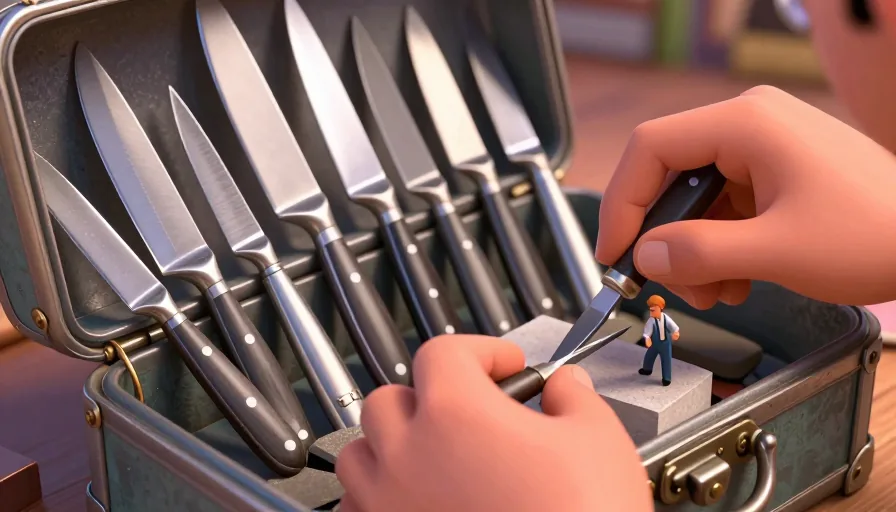
Cuchillo en Ingles: Translation, Usage, and Cultural Context
Understanding the translation and usage of 'cuchillo' in English is essential for anyone learning Spanish. 'Cuchillo' is a masculine noun that translates to 'knife' in English. This article will provide a comprehensive guide on how to use 'cuchillo' in various contexts, including idiomatic expressions and cultural nuances.
What is 'cuchillo' in English?
The word 'cuchillo' is a masculine noun in Spanish, which means 'knife' in English. It is used to refer to a tool with a blade used for cutting, slicing, or stabbing. For example:
- Spanish: El cuchillo está en la mesa.
- English: The knife is on the table.
How to Use 'cuchillo' in Sentences
Using 'cuchillo' in sentences requires an understanding of its grammatical role and context. Here are some examples:
-
Spanish: Necesito un cuchillo para cortar el pan.
-
English: I need a knife to cut the bread.
-
Spanish: Los cuchillos de cocina deben estar afilados.
-
English: Kitchen knives should be sharp.
-
Spanish: El cuchillo de carne es más grande que el cuchillo de mantequilla.
-
English: The carving knife is larger than the butter knife.
Common Phrases with 'cuchillo'
'Cuchillo' is also used in various idiomatic expressions and phrases. Here are a few examples:
-
Spanish: Cortar por lo sano
-
English: To cut to the chase
-
Spanish: Ser un cuchillo de dos filos
-
English: To be a double-edged sword
-
Spanish: Tener un cuchillo en la espalda
-
English: To have a knife in the back
Cultural Context and Usage
In Spanish-speaking cultures, 'cuchillo' has both literal and metaphorical uses. For example, in some regions, 'cuchillo' can refer to a specific type of knife used in traditional dishes. Understanding these cultural nuances can enhance your language skills and appreciation for the culture.
Pronunciation Guide
Pronunciation is crucial for effective communication. Here is a guide to pronouncing 'cuchillo' correctly:
- Phonetic Spelling: /kuˈʧiʎo/
- Audio Pronunciation: [Insert Audio Link]
Mini Drill: Pronunciation Practice
- Listen to the audio pronunciation.
- Repeat the word aloud.
- Record yourself and compare with the audio.

Aprendé Idiomas con YouTube
Mirá videos en tu idioma objetivo, capturá palabras nuevas como flashcards automáticamente, y seguí tu progreso — todo en un solo lugar.
Ver Cómo Funciona →Grammar Rules for Using 'cuchillo'
'Cuchillo' is a masculine noun, so it must be used with masculine articles and adjectives. Here are some grammar rules to keep in mind:
- Article: El cuchillo (the knife), un cuchillo (a knife)
- Plural: Los cuchillos (the knives)
- Adjective Agreement: Un cuchillo afilado (a sharp knife), los cuchillos afilados (the sharp knives)
Checklist: Grammar Rules
- Use 'el' or 'un' before 'cuchillo' for singular forms.
- Use 'los' before 'cuchillos' for plural forms.
- Ensure adjectives agree in gender and number with 'cuchillo' or 'cuchillos'.
Interactive Quizzes and Exercises
To reinforce your learning, try these interactive quizzes and exercises:
Quiz: Fill in the Blanks
- Necesito un para cortar el pan.
- Los de cocina deben estar afilados.
- El de carne es más grande que el de mantequilla.
Exercise: Sentence Translation
Translate the following sentences from Spanish to English:
- El cuchillo está en la mesa.
- Los cuchillos del jabalí estaban muy afilados.
- Ser un cuchillo de dos filos.
Comparative Analysis with Similar Words
To deepen your understanding, compare 'cuchillo' with similar words in English:
- Cuchillo vs. Daga: 'Cuchillo' is a general term for a knife, while 'daga' specifically refers to a dagger.
- Cuchillo vs. Navaja: 'Navaja' refers to a folding knife or pocket knife, while 'cuchillo' is a general term for any knife.
Mini Drill: Comparative Analysis
- Identify the differences between 'cuchillo' and 'daga'.
- Identify the differences between 'cuchillo' and 'navaja'.
- Write a sentence using each word correctly.
Conclusion
Mastering the translation and usage of 'cuchillo' in English involves understanding its grammatical role, cultural context, and idiomatic expressions. By practicing with example sentences, pronunciation guides, and interactive quizzes, you can enhance your language skills and communicate more effectively in Spanish.
Final Checklist
- Understand the definition and translation of 'cuchillo'.
- Practice using 'cuchillo' in sentences.
- Learn common phrases and idiomatic expressions.
- Master the pronunciation and grammar rules.
- Engage in interactive quizzes and exercises.
Preguntas frecuentes
Is 'cuchillo' always translated as 'knife'?
Yes, 'cuchillo' is always translated as 'knife'. However, it can refer to different types of knives depending on the context, such as a kitchen knife, a carving knife, or a pocket knife.
Can 'cuchillo' be used in idiomatic expressions?
Yes, 'cuchillo' is used in several idiomatic expressions in Spanish. For example, 'cortar por lo sano' means 'to cut to the chase', and 'ser un cuchillo de dos filos' means 'to be a double-edged sword'.
What is the difference between 'cuchillo' and 'daga'?
'Cuchillo' is a general term for a knife, while 'daga' specifically refers to a dagger. 'Daga' is often used in historical or literary contexts to describe a weapon with a short blade and a hilt.
Frases relacionadas
Empezá con Metheus
Mirá videos en tu idioma objetivo, capturá palabras nuevas como flashcards automáticamente, y seguí tu progreso — todo en un solo lugar.
Comenzar →

