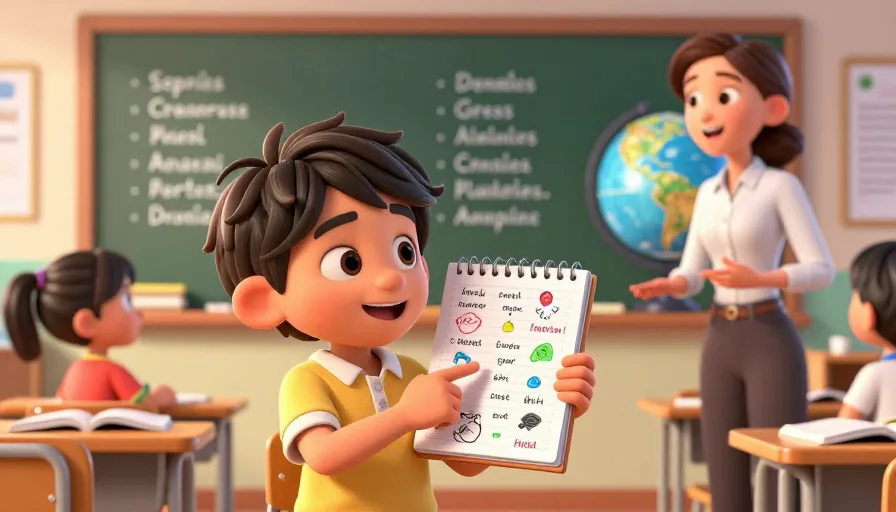
Understanding the meaning and usage of 'libreta' in Spanish is essential for anyone learning the language. 'Libreta' is a feminine noun that translates to 'notebook' or 'booklet' in English. This article will provide a comprehensive guide on how to use 'libreta' in various contexts, including common phrases, sentences, and cultural tips.
What is 'Libreta' in Spanish?
'Libreta' is a versatile word in Spanish that refers to a small notebook or booklet. It is often used to jot down notes, ideas, or important information. The word is feminine, so it is used with feminine articles and adjectives. For example, you would say 'la libreta' (the notebook) or 'una libreta nueva' (a new notebook).
Common Phrases Using 'Libreta'
Here are some common phrases and sentences using 'libreta' that will help you understand its usage better:
-
Voy a anotar tu número de teléfono en mi libreta.
- Translation: I am going to write down your phone number in my notebook.
- This phrase is useful when you need to jot down someone's contact information.
-
El empleado del banco me pidió la libreta.
- Translation: The bank employee asked for my booklet.
- In this context, 'libreta' refers to a small booklet often used for banking transactions.
-
Necesito una libreta para tomar notas en la clase.
- Translation: I need a notebook to take notes in class.
- This phrase is commonly used by students who need to take notes during lectures or classes.
Examples of 'Libreta' in Sentences
To further illustrate the usage of 'libreta,' here are some additional examples in different contexts:
-
En la tienda de papelería, compré una libreta para dibujar.
- Translation: At the stationery store, I bought a notebook for drawing.
- This sentence shows how 'libreta' can be used for artistic purposes.
-
Mi libreta de recetas está llena de ideas deliciosas.
- Translation: My recipe booklet is full of delicious ideas.
- Here, 'libreta' is used to refer to a small booklet containing recipes.
-
El profesor nos dio una libreta con todas las lecciones del curso.
- Translation: The teacher gave us a booklet with all the lessons of the course.
- In this context, 'libreta' refers to a booklet containing course materials.

Aprendé Idiomas con YouTube
Mirá videos en tu idioma objetivo, capturá palabras nuevas como flashcards automáticamente, y seguí tu progreso — todo en un solo lugar.
Ver Cómo Funciona →How to Pronounce 'Libreta'
Pronouncing 'libreta' correctly is important for effective communication. Here is a breakdown of the pronunciation:
- li as in 'lee' (as in the English word 'lee')
- bre as in 'bre' (as in the English word 'breast')
- ta as in 'ta' (as in the English word 'taxi')
You can listen to the audio pronunciation here.
Cultural Context and Usage Tips
Understanding the cultural context of 'libreta' can enhance your language learning experience. In Spanish-speaking countries, 'libreta' is commonly used in educational and professional settings. For example, students often use 'libretas' to take notes in class, and professionals may use them to jot down important information during meetings.
Mini Drill: Fill in the Blanks
Complete the following sentences with the correct form of 'libreta':
-
Necesito una _______ para escribir mis ideas.
- Answer: libreta
-
El profesor nos dio una _______ con todas las lecciones.
- Answer: libreta
-
Voy a anotar tu número de teléfono en mi _______.
- Answer: libreta
Checklist for Using 'Libreta'
- Ensure you use the correct feminine articles and adjectives with 'libreta'.
- Practice common phrases and sentences to build confidence.
- Listen to audio pronunciations to improve your speaking skills.
- Understand the cultural context to use 'libreta' appropriately in different settings.
Comparison with Similar Words in English
While 'libreta' translates to 'notebook' or 'booklet' in English, it's important to note the differences in usage. In English, 'notebook' is more commonly used for general note-taking, while 'booklet' is often used for small, bound publications. Understanding these nuances can help you choose the right word in different contexts.
Common Mistakes to Avoid
-
Mistake: Using 'libreta' with masculine articles or adjectives.
- Correction: Always use feminine articles and adjectives with 'libreta'.
-
Mistake: Confusing 'libreta' with 'libro' (book).
- Correction: 'Libreta' is smaller and more informal than 'libro'.
By following these guidelines and practicing with the provided examples, you'll be able to use 'libreta' confidently in various contexts.
Preguntas frecuentes
What is the difference between 'libreta' and 'libro'?
'Libreta' refers to a small notebook or booklet, often used for note-taking or jotting down ideas. 'Libro,' on the other hand, is a more general term for a book, which can be larger and more formal.
Can 'libreta' be used for artistic purposes?
Yes, 'libreta' can be used for artistic purposes, such as sketching or drawing. For example, you might say 'Compré una libreta para dibujar' (I bought a notebook for drawing).
How do I pronounce 'libreta' correctly?
To pronounce 'libreta' correctly, break it down into syllables: 'li' as in 'lee,' 'bre' as in 'breast,' and 'ta' as in 'taxi.' You can listen to the audio pronunciation [here](INSERT_AUDIO_LINK).
Frases relacionadas
Empezá con Metheus
Mirá videos en tu idioma objetivo, capturá palabras nuevas como flashcards automáticamente, y seguí tu progreso — todo en un solo lugar.
Comenzar →

