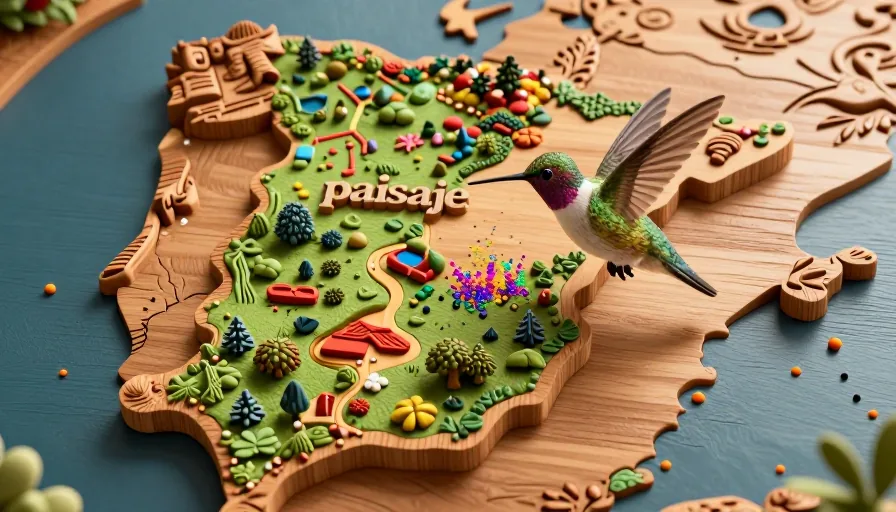
The word paisaje is a fundamental term in the Spanish language, translating to 'landscape' in English. Understanding how to use 'paisaje' effectively can greatly enhance your Spanish vocabulary and communication skills. This guide will provide a comprehensive overview of 'paisaje,' including its definition, common phrases, examples in sentences, cultural context, and pronunciation.
What is 'Paisaje' and How to Use It
Paisaje is a masculine noun that refers to the natural features of a particular area, such as mountains, rivers, and forests. It is often used to describe the visual aspects of a landscape, including its beauty and character. For example, you might say, 'El paisaje de la montaña es impresionante,' which translates to 'The mountain landscape is impressive.'
Checklist for Using 'Paisaje'
- Gender: Remember that 'paisaje' is a masculine noun, so it should be used with masculine articles and adjectives (e.g., el paisaje bonito, un paisaje hermoso).
- Context: Use 'paisaje' to describe natural features and the overall visual appearance of an area.
- Variations: Be aware of regional variations and cultural contexts where 'paisaje' might have slightly different connotations.
Common Phrases and Idioms with 'Paisaje'
'Paisaje' is used in various phrases and idioms that can add depth to your Spanish conversations. Here are some common examples:
- Cambiar el paisaje: This phrase means to change the scenery or landscape. For example, 'Decidimos cambiar el paisaje y fuimos a la playa,' which translates to 'We decided to change the scenery and went to the beach.'
- Paisaje urbano: This refers to the urban landscape, including buildings, streets, and other man-made structures. For example, 'El paisaje urbano de la ciudad es muy moderno,' which translates to 'The urban landscape of the city is very modern.'
- Paisaje rural: This refers to the rural landscape, including fields, farms, and natural features. For example, 'El paisaje rural es muy tranquilo y relajante,' which translates to 'The rural landscape is very peaceful and relaxing.'
Mini Drill: Fill in the Blanks
Complete the following sentences with the correct form of 'paisaje':
- El _______ de la montaña es impresionante.
- Decidimos cambiar el _______ y fuimos a la playa.
- El _______ urbano de la ciudad es muy moderno.
- El _______ rural es muy tranquilo y relajante.
Examples of 'Paisaje' in Sentences
Understanding how to use 'paisaje' in sentences is crucial for effective communication. Here are some examples:
- El paisaje de la montaña es impresionante.: The mountain landscape is impressive.
- Vi el paisaje extenderse por millas desde la cima de la montaña.: I saw the landscape stretch for miles from the top of the mountain.
- El paisaje se ve más bonito después de la lluvia.: The landscape looks more beautiful after the rain.
- El paisaje urbano de la ciudad es muy moderno.: The urban landscape of the city is very modern.
- El paisaje rural es muy tranquilo y relajante.: The rural landscape is very peaceful and relaxing.
Mini Drill: Translate the Sentences
Translate the following sentences into Spanish using 'paisaje':
- The countryside landscape is very beautiful.
- The city landscape is very busy.
- We decided to change the scenery and went to the beach.
- The landscape of the mountains is breathtaking.
- The landscape looks more beautiful after the rain.

Aprendé Idiomas con YouTube
Mirá videos en tu idioma objetivo, capturá palabras nuevas como flashcards automáticamente, y seguí tu progreso — todo en un solo lugar.
Ver Cómo Funciona →Cultural Context and Usage
The use of 'paisaje' can vary depending on the cultural context and region. In Spain, for example, 'paisaje' is often used to describe the natural beauty of the countryside, while in Latin America, it might refer to both natural and urban landscapes. Understanding these nuances can help you communicate more effectively in different Spanish-speaking regions.
Cultural Insights
- Spain: In Spain, 'paisaje' is often associated with the natural beauty of the countryside, including mountains, rivers, and forests. For example, 'El paisaje de la Sierra Nevada es impresionante,' which translates to 'The landscape of the Sierra Nevada is impressive.'
- Latin America: In Latin America, 'paisaje' can refer to both natural and urban landscapes. For example, 'El paisaje urbano de la ciudad es muy moderno,' which translates to 'The urban landscape of the city is very modern.'
- Regional Variations: Be aware of regional variations and cultural contexts where 'paisaje' might have slightly different connotations. For example, in some regions, 'paisaje' might be used to describe the overall visual appearance of an area, including buildings, streets, and other man-made structures.
Interactive Quiz: Cultural Context
Choose the correct sentence that best fits the cultural context:
-
Spain or Latin America
- El paisaje de la Sierra Nevada es impresionante.
- El paisaje urbano de la ciudad es muy moderno.
-
Spain or Latin America
- El paisaje rural es muy tranquilo y relajante.
- El paisaje urbano de la ciudad es muy moderno.
Pronunciation Guide
Proper pronunciation is essential for effective communication. Here is a guide to pronouncing 'paisaje' correctly:
- Phonetic Spelling: /paiˈsaxe/
- Syllable Breakdown: pai-sa-je
- Audio Pronunciation: [Include an audio clip of a native speaker pronouncing 'paisaje']
Pronunciation Tips
- Stress: The stress is on the second syllable, 'sa.'
- Vowels: The 'a' in 'paisaje' is pronounced like the 'a' in 'father,' and the 'e' at the end is silent.
- Consonants: The 'j' in 'paisaje' is pronounced like the 'h' in 'house.'
Interactive Exercise: Pronunciation Practice
Listen to the audio clip and repeat the pronunciation of 'paisaje' several times. Pay attention to the stress and vowel sounds.
Conclusion
Mastering the use of 'paisaje' in Spanish can greatly enhance your language skills and communication abilities. By understanding its definition, common phrases, examples in sentences, cultural context, and pronunciation, you can use 'paisaje' effectively in various contexts. Practice with interactive exercises and audio pronunciations to improve your proficiency.
Checklist for Mastering 'Paisaje'
- Understand the definition and translation of 'paisaje.'
- Learn common phrases and idioms using 'paisaje.'
- Practice using 'paisaje' in sentences.
- Understand the cultural context and regional variations.
- Master the pronunciation of 'paisaje.'
Final Thoughts
Learning a new language is a journey, and mastering words like 'paisaje' is an important step. With practice and dedication, you can improve your Spanish skills and communicate more effectively. Happy learning!
Preguntas frecuentes
Why is 'paisaje' a masculine noun?
'Paisaje' is a masculine noun in Spanish, which means it should be used with masculine articles and adjectives. For example, you would say 'el paisaje bonito' or 'un paisaje hermoso.' This is a fundamental aspect of Spanish grammar that helps you communicate effectively.
Can 'paisaje' be used to describe urban areas?
Yes, 'paisaje' can be used to describe both natural and urban landscapes. For example, 'paisaje urbano' refers to the urban landscape, including buildings, streets, and other man-made structures. Understanding this usage can help you communicate more effectively in different contexts.
Are there regional variations in the use of 'paisaje'?
Yes, the use of 'paisaje' can vary depending on the cultural context and region. In Spain, 'paisaje' is often associated with the natural beauty of the countryside, while in Latin America, it might refer to both natural and urban landscapes. Being aware of these nuances can help you communicate more effectively in different Spanish-speaking regions.
Frases relacionadas
Empezá con Metheus
Mirá videos en tu idioma objetivo, capturá palabras nuevas como flashcards automáticamente, y seguí tu progreso — todo en un solo lugar.
Comenzar →

