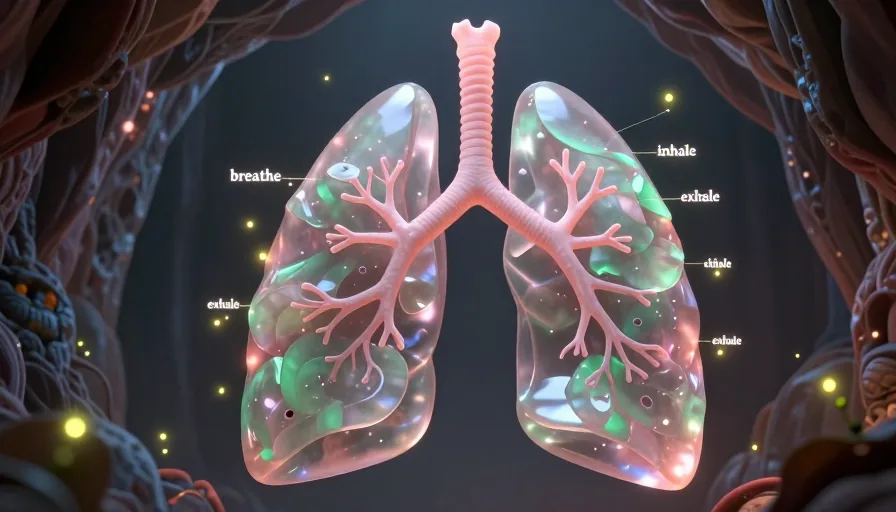
Understanding respiración en inglés is crucial for anyone looking to improve their English vocabulary, especially in the context of biology, medicine, and everyday conversations. This guide will cover the definition, pronunciation, common phrases, and cultural context of the term 'respiration' in English.
What is 'Respiration' in English?
'Respiration' in English refers to the process by which living organisms exchange gases with their environment. This process is essential for life as it involves the intake of oxygen and the release of carbon dioxide. In biological terms, respiration can be either aerobic (with oxygen) or anaerobic (without oxygen).
Key Points to Remember
- Definition: The process of exchanging gases between an organism and its environment.
- Types: Aerobic and anaerobic respiration.
- Importance: Essential for life and energy production.
How to Pronounce 'Respiration'
Pronouncing 'respiration' correctly is important for clear communication. Here’s a breakdown of the pronunciation:
- Phonetic Spelling: /ˌrɛspəˈreɪʃən/
- Syllable Breakdown: res-pi-ra-tion
- Audio Pronunciation: [Insert Audio Link Here]
Pronunciation Tips
- Break it down: Say each syllable clearly: res-pi-ra-tion.
- Practice with a native speaker: Listen to the audio pronunciation and mimic the sounds.
- Record yourself: Use a voice recorder to listen back and improve.
Common Phrases and Idioms
'Respiration' is used in various phrases and idioms in English. Here are some examples:
- Breathing heavily: Indicates exertion or stress.
- Hold your breath: To wait anxiously for something to happen.
- Catch your breath: To take a moment to relax and recover.
- Out of breath: Unable to breathe normally due to exertion.
Examples in Sentences
- Breathing heavily: After running a marathon, she was breathing heavily.
- Hold your breath: I had to hold my breath while waiting for the test results.
- Catch your breath: Let's catch our breath before we continue the hike.
- Out of breath: He was out of breath after climbing the stairs.

Aprendé Idiomas con YouTube
Mirá videos en tu idioma objetivo, capturá palabras nuevas como flashcards automáticamente, y seguí tu progreso — todo en un solo lugar.
Ver Cómo Funciona →Examples in Context
Understanding how 'respiration' is used in different contexts can enhance your vocabulary. Here are some examples:
- Biological Context: Cellular respiration is the process by which cells convert nutrients into energy.
- Medical Context: The doctor monitored his respiration rate to assess his condition.
- Everyday Conversation: She took a deep breath to calm herself before the presentation.
Mini Drill: Fill in the Blanks
Complete the following sentences with the correct form of 'respiration':
- The patient's __________ rate was normal.
- During exercise, your __________ becomes faster.
- The process of __________ involves the exchange of gases.
- She was __________ heavily after the workout.
Synonyms and Antonyms
Knowing synonyms and antonyms can help you use 'respiration' more effectively. Here are some examples:
Synonyms
- Breathing
- Ventilation
- Inhalation and exhalation
Antonyms
- Apnea (temporary cessation of breathing)
- Asphyxia (severe deficiency in the supply of oxygen)
Checklist for Mastering 'Respiration'
- Understand the definition: Know what respiration means in English.
- Practice pronunciation: Use audio tools and record yourself.
- Learn common phrases: Memorize and use phrases like 'breathing heavily' and 'hold your breath'.
- Use in context: Practice using 'respiration' in biological, medical, and everyday contexts.
- Expand your vocabulary: Learn synonyms and antonyms.
Interactive Quiz
Test your understanding with this interactive quiz:
-
What is the process of exchanging gases between an organism and its environment called?
- A) Respiration
- B) Digestion
- C) Photosynthesis
- D) Circulation
-
How do you pronounce 'respiration'?
- A) /ˌrɛspəˈreɪʃən/
- B) /ˌrɛspəˈreɪʃn/
- C) /ˌrɛspəˈreɪʃən/
- D) /ˌrɛspəˈreɪʃən/
-
Which phrase means to wait anxiously for something to happen?
- A) Breathing heavily
- B) Hold your breath
- C) Catch your breath
- D) Out of breath
-
What is the antonym of 'respiration'?
- A) Breathing
- B) Ventilation
- C) Apnea
- D) Inhalation
-
In which context is 'respiration' commonly used?
- A) Biological
- B) Medical
- C) Everyday conversation
- D) All of the above
Preguntas frecuentes
Is 'respiration' only used in biological contexts?
No, 'respiration' is used in various contexts including biology, medicine, and everyday conversations. It refers to the process of exchanging gases and can be used in phrases like 'breathing heavily' and 'hold your breath'.
How can I improve my pronunciation of 'respiration'?
To improve your pronunciation, break down the word into syllables (res-pi-ra-tion), practice with audio tools, and record yourself to listen back and make adjustments. Listening to native speakers can also be very helpful.
Frases relacionadas
Empezá con Metheus
Mirá videos en tu idioma objetivo, capturá palabras nuevas como flashcards automáticamente, y seguí tu progreso — todo en un solo lugar.
Comenzar →

