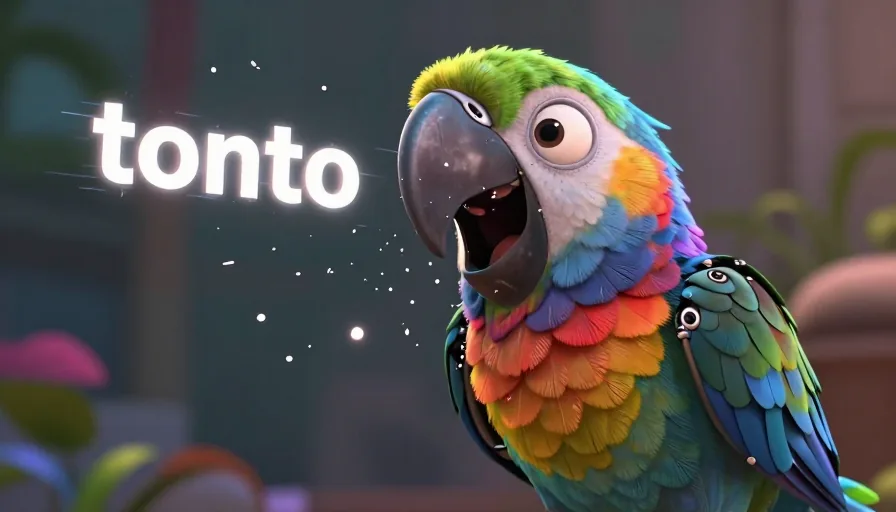
The word 'silly' is a common English adjective that can be tricky to translate into Spanish due to its various nuances. This guide will help you understand the silly traductor and how to use it effectively in different contexts. We'll cover the definition, common phrases, pronunciation, cultural context, and comparisons with similar words.
What Does 'Silly' Mean in Spanish?
The word 'silly' can be translated into Spanish in several ways, depending on the context. The most common translations are 'tonto,' 'bobo,' and 'absurdo.' Each of these words has slightly different connotations:
- Tonto: This is the most direct translation and is often used to describe someone who is not very intelligent or who has done something foolish.
- Bobo: This word is more informal and can be used to describe someone who is silly or foolish in a more playful or affectionate way.
- Absurdo: This word is used to describe something that is ridiculous or nonsensical.
Mini Drill: Choose the Correct Translation
-
If someone says, 'That's a silly idea,' you would translate it as:
- a) Tonto
- b) Bobo
- c) Absurdo
- d) None of the above
-
If someone says, 'Don't be silly,' you would translate it as:
- a) No seas tonto
- b) No seas bobo
- c) No seas absurdo
- d) None of the above
Common Phrases Using 'Silly'
Here are some common phrases using 'silly' and their Spanish translations:
- Don't be silly! - ¡No seas tonto! / ¡No seas bobo!
- That's a silly idea. - Esa es una idea tonta / absurda.
- You're being silly. - Estás siendo tonto / bobo.
- Silly me! - ¡Qué tonto soy! / ¡Qué bobo soy!
- Silly goose. - ¡Tonto/ta pavo real! / ¡Bobo/ta pavo real!
Checklist: Common Phrases
- Don't be silly! - ¡No seas tonto! / ¡No seas bobo!
- That's a silly idea. - Esa es una idea tonta / absurda.
- You're being silly. - Estás siendo tonto / bobo.
- Silly me! - ¡Qué tonto soy! / ¡Qué bobo soy!
- Silly goose. - ¡Tonto/ta pavo real! / ¡Bobo/ta pavo real!
Pronunciation Guide for 'Silly'
To pronounce 'silly' correctly in Spanish, you need to understand the phonetic differences. Here's a breakdown:
- Silly in English: /ˈsɪli/
- Tonto in Spanish: /ˈtonto/
- Bobo in Spanish: /ˈbobo/
- Absurdo in Spanish: /abˈsuɾðo/
Interactive Pronunciation Guide
- Tonto: Listen to the audio and repeat: [Audio Link]
- Bobo: Listen to the audio and repeat: [Audio Link]
- Absurdo: Listen to the audio and repeat: [Audio Link]

Aprendé Idiomas con YouTube
Mirá videos en tu idioma objetivo, capturá palabras nuevas como flashcards automáticamente, y seguí tu progreso — todo en un solo lugar.
Ver Cómo Funciona →Cultural Context and Usage
The usage of 'silly' in Spanish can vary depending on the cultural context. In some Latin American countries, 'bobo' is more commonly used, while in Spain, 'tonto' is more prevalent. Understanding these nuances can help you communicate more effectively.
Cultural Examples
- Mexico: In Mexico, 'bobo' is often used in a playful or affectionate way. For example, a parent might say to a child, 'No seas bobo, come y come la comida' (Don't be silly, come and eat your food).
- Spain: In Spain, 'tonto' is more commonly used. For example, someone might say, 'Esa idea es tonta' (That idea is silly).
Comparison with Similar Words
It's also important to compare 'silly' with similar words in Spanish to avoid misunderstandings. Here are some comparisons:
- Tonto vs. Bobo: While both words can mean 'silly,' 'tonto' is more formal and can be used in a wider range of contexts, while 'bobo' is more informal and playful.
- Absurdo vs. Tonto: 'Absurdo' is used to describe something that is ridiculous or nonsensical, while 'tonto' is used to describe someone who is not very intelligent or who has done something foolish.
Mini Drill: Choose the Correct Word
-
If someone says, 'That's an absurd idea,' you would translate it as:
- a) Tonto
- b) Bobo
- c) Absurdo
- d) None of the above
-
If someone says, 'You're being silly,' you would translate it as:
- a) Estás siendo tonto
- b) Estás siendo bobo
- c) Estás siendo absurdo
- d) None of the above
Conclusion
Understanding the silly traductor and how to use it effectively in Spanish can greatly enhance your language skills. By mastering the pronunciation, common phrases, and cultural context, you'll be able to communicate more effectively and avoid common mistakes.
Final Checklist
- Understand the different translations of 'silly' in Spanish.
- Practice common phrases using 'silly' in Spanish.
- Master the pronunciation of 'silly' in Spanish.
- Learn about the cultural context and usage of 'silly' in Spanish.
- Compare 'silly' with similar words in Spanish to avoid misunderstandings.
By following this guide, you'll be well on your way to mastering the silly traductor and improving your Spanish language skills.
Preguntas frecuentes
Why are there multiple translations for 'silly' in Spanish?
The word 'silly' can have different nuances depending on the context, so it is translated into Spanish in several ways. 'Tonto' is more formal and direct, 'bobo' is more informal and playful, and 'absurdo' is used to describe something that is ridiculous or nonsensical.
How do I know which translation to use?
The choice of translation depends on the context and the cultural nuances. For example, in Mexico, 'bobo' is more commonly used in a playful way, while in Spain, 'tonto' is more prevalent. Understanding these differences can help you choose the right translation.
Frases relacionadas
Empezá con Metheus
Mirá videos en tu idioma objetivo, capturá palabras nuevas como flashcards automáticamente, y seguí tu progreso — todo en un solo lugar.
Comenzar →

