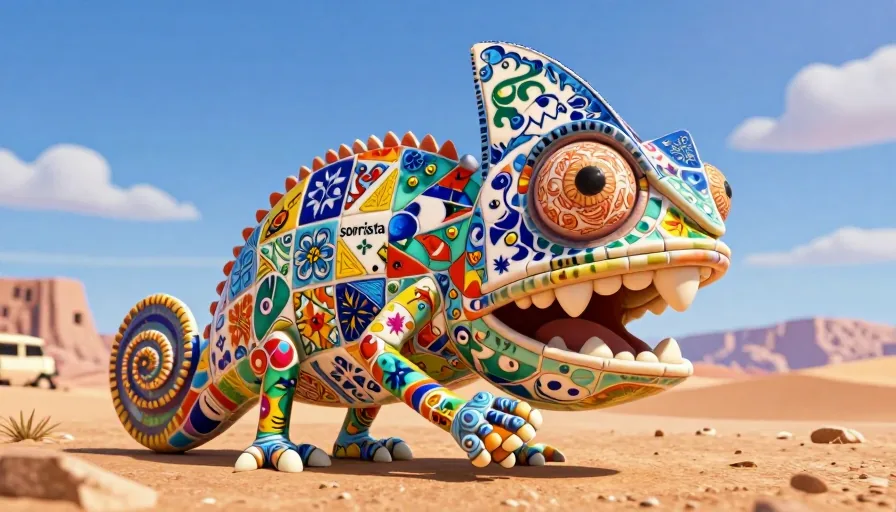
The word sonrisota is a colloquial term in Spanish that refers to a big, wide smile. It's often used to describe a smile that is particularly broad or exaggerated, conveying a sense of joy, happiness, or amusement. Understanding how to use 'sonrisota' can enhance your Spanish vocabulary and help you communicate more effectively in various social contexts.
What Does 'Sonrisota' Mean?
'Sonrisota' is derived from the word 'sonrisa,' which means 'smile' in Spanish. The suffix '-ota' is an augmentative, indicating something that is large or exaggerated. Therefore, 'sonrisota' literally translates to 'big smile.' This term is commonly used in informal settings to describe a smile that is particularly wide or expressive.
How to Pronounce 'Sonrisota'
Pronouncing 'sonrisota' correctly is essential for effective communication. Here's a breakdown of the pronunciation:
- so as in 'sofa'
- nri as in 'navy'
- so as in 'sofa'
- ta as in 'taxi'
Listen to the audio pronunciation below to get a better sense of how it sounds:
Examples of 'Sonrisota' in Sentences
To better understand how to use 'sonrisota' in context, let's look at some practical examples:
-
Cuando vi a mi amigo después de tanto tiempo, no pude evitar poner una sonrisota.
- When I saw my friend after so long, I couldn't help but put on a big smile.
-
La sonrisota de mi hija ilumina toda la habitación.
- My daughter's big smile lights up the entire room.
-
Con una sonrisota en la cara, aceptó el premio.
- With a big smile on his face, he accepted the award.
Word-by-Word Explanation
Let's break down the word 'sonrisota' into its components to understand its meaning better:
- sonri- : This is the root word, meaning 'smile.'
- -sota : This is an augmentative suffix, indicating something large or exaggerated.
So, 'sonrisota' means a big or exaggerated smile.
Common Phrases and Idioms
'Sonrisota' is often used in various phrases and idioms to convey different nuances of a big smile. Here are a few examples:
-
Poner una sonrisota - To put on a big smile.
- Example: Puso una sonrisota al ver a su novio.
- He put on a big smile when he saw his boyfriend.
-
Tener una sonrisota de oreja a oreja - To have a big smile from ear to ear.
- Example: Tenía una sonrisota de oreja a oreja después de recibir la buena noticia.
- He had a big smile from ear to ear after receiving the good news.
-
Sonrisota de felicidad - A big smile of happiness.
- Example: La sonrisota de felicidad en su rostro era contagiosa.
- The big smile of happiness on his face was contagious.

Aprendé Idiomas con YouTube
Mirá videos en tu idioma objetivo, capturá palabras nuevas como flashcards automáticamente, y seguí tu progreso — todo en un solo lugar.
Ver Cómo Funciona →Interactive Quiz
Test your understanding of 'sonrisota' with this interactive quiz:
-
What does 'sonrisota' mean?
- a) A small smile
- b) A big smile
- c) A frown
- d) A laugh
-
Which of the following is a correct usage of 'sonrisota'?
- a) Puso una sonrisota al ver a su perro.
- b) Puso una sonrisota al ver a su amigo.
- c) Puso una sonrisota al ver a su madre.
- d) Todas las anteriores.
-
What is the augmentative suffix in 'sonrisota'?
- a) -sota
- b) -ita
- c) -ote
- d) -ito
Cultural Context and Usage Examples
In Spanish-speaking cultures, 'sonrisota' is often used to describe a genuine and heartfelt smile. It's a term that conveys warmth and happiness, making it a popular choice in informal conversations. For example, you might hear someone say, '¡Qué sonrisota tienes hoy!' (What a big smile you have today!) as a compliment or to acknowledge someone's happiness.
Comparison with Similar Words or Phrases
To further enhance your understanding, let's compare 'sonrisota' with similar words or phrases:
-
Sonrisa - This is the basic term for 'smile.' It doesn't convey the same level of exaggeration as 'sonrisota.'
- Example: Me dio una sonrisa cálida.
- He gave me a warm smile.
-
Sonrisa de oreja a oreja - This phrase means 'smile from ear to ear' and is similar to 'sonrisota' but is more descriptive.
- Example: Tenía una sonrisa de oreja a oreja.
- He had a smile from ear to ear.
-
Sonrisa amplia - This means 'wide smile' and is another term that can be used interchangeably with 'sonrisota.'
- Example: Su sonrisa amplia iluminó la habitación.
- His wide smile lit up the room.
Checklist for Mastering 'Sonrisota'
To master the use of 'sonrisota,' follow this checklist:
- Understand the meaning of 'sonrisota' and its components.
- Practice the pronunciation using the audio guide.
- Create sentences using 'sonrisota' and share them with a language partner.
- Take the interactive quiz to test your understanding.
- Use 'sonrisota' in conversations to describe a big smile.
Mini Drills for Practice
-
Sentence Completion: Complete the following sentences with the correct form of 'sonrisota':
- Cuando vi a mi amigo después de tanto tiempo, no pude evitar poner una ___________.
- La ___________ de mi hija ilumina toda la habitación.
- Con una ___________ en la cara, aceptó el premio.
-
Word Association: Associate 'sonrisota' with other related words and phrases, such as 'sonrisa,' 'felicidad,' and 'amistad.'
-
Role-Play: Practice using 'sonrisota' in a role-play scenario. For example, imagine you are at a party and someone asks you why you are so happy. Use 'sonrisota' in your response.
By following these guidelines and practicing regularly, you'll be able to use 'sonrisota' confidently in your Spanish conversations. Happy learning!
Preguntas frecuentes
Is 'sonrisota' a formal or informal word?
'Sonrisota' is an informal word and is typically used in casual conversations. It's best to avoid using it in formal or professional settings.
Can 'sonrisota' be used to describe a fake smile?
No, 'sonrisota' is generally used to describe a genuine and heartfelt smile. If you want to describe a fake smile, you might use terms like 'sonrisa forzada' (forced smile) or 'sonrisa falsa' (fake smile).
Frases relacionadas
Empezá con Metheus
Mirá videos en tu idioma objetivo, capturá palabras nuevas como flashcards automáticamente, y seguí tu progreso — todo en un solo lugar.
Comenzar →

