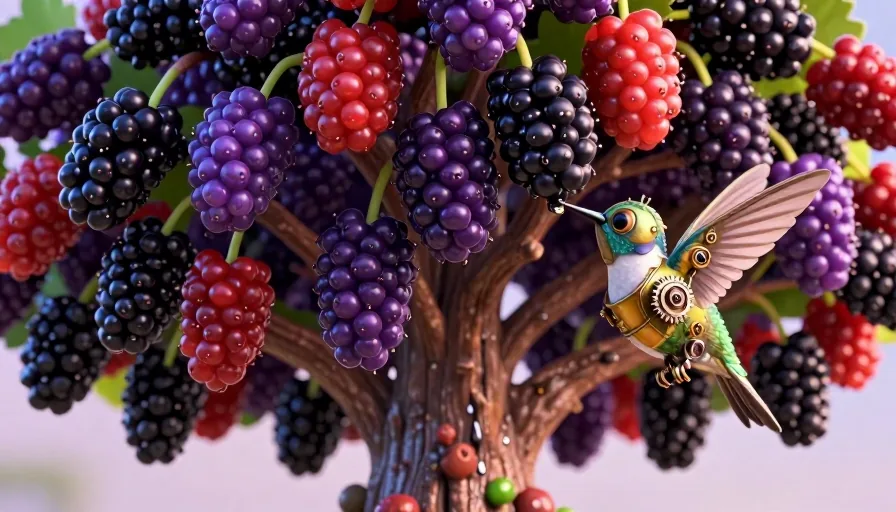
When learning Spanish, encountering the word 'mora' can be confusing due to its multiple moras en ingles translations. This guide will clarify the different meanings of 'mora' and provide practical examples to help you use the correct English translation in various contexts.
What is 'Mora' in Spanish?
The Spanish word 'mora' has several meanings depending on the context. It can refer to a type of fruit, a legal term, or a default in payments. Understanding these distinctions is crucial for accurate translation and effective communication.
Types of Mora
- Fruit: 'Mora' can refer to blackberries or mulberries, both of which are popular fruits in Spanish-speaking countries.
- Legal Term: In legal contexts, 'mora' can mean a delay or default, often used in financial or contractual agreements.
- Default: In financial contexts, 'mora' refers to a delay in payment, such as a default in salary payments.
English Translations for 'Mora': Blackberry, Mulberry, or Default?
Blackberry and Mulberry
When 'mora' refers to a fruit, it can be translated as either 'blackberry' or 'mulberry' in English. The choice between these two depends on the specific type of fruit being discussed.
- Blackberry: This is the most common translation for 'mora' when referring to the dark, edible fruit.
- Mulberry: This translation is less common but still accurate for certain types of 'mora' fruits.
Default
In legal or financial contexts, 'mora' translates to 'default' or 'delay.' This usage is common in contracts and financial agreements.
Contextual Usage: When to use which translation?
Fruit Context
When discussing fruits, use 'blackberry' or 'mulberry' depending on the specific type of fruit. For example:
- Blackberry: Las moras son deliciosas y nutritivas. (Blackberries are delicious and nutritious.)
- Mulberry: Las moras silvestres son difíciles de encontrar. (Wild mulberries are hard to find.)
Legal and Financial Context
In legal or financial contexts, use 'default' or 'delay.' For example:
- Default: Hubo una mora en los pagos salariales. (There was a default in the salary payments.)
- Delay: La mora en la entrega del proyecto causó problemas. (The delay in the project delivery caused problems.)

Aprendé Idiomas con YouTube
Mirá videos en tu idioma objetivo, capturá palabras nuevas como flashcards automáticamente, y seguí tu progreso — todo en un solo lugar.
Ver Cómo Funciona →Pronunciation Guidance for the English Equivalents
Blackberry
- Phonetic Spelling: /ˈblækˌberi/
- Pronunciation Tips: Emphasize the first syllable and ensure the 'r' sound is clear.
Mulberry
- Phonetic Spelling: /ˈmʌlˌberi/
- Pronunciation Tips: The stress is on the first syllable, and the 'r' sound should be pronounced clearly.
Default
- Phonetic Spelling: /ˈdɪˌfɔːlt/
- Pronunciation Tips: The stress is on the first syllable, and the 't' at the end should be pronounced clearly.
Common Spanish Phrases Using 'Mora'
Salary Payments
- Phrase: Hubo una mora en los pagos salariales. (There was a default in the salary payments.)
- Explanation: This phrase is used to indicate a delay or non-payment of salaries, which can have legal implications.
Fruit Picking
- Phrase: Vamos a recoger moras en el bosque. (We are going to pick blackberries/mulberries in the forest.)
- Explanation: This phrase is used when planning a trip to pick fruits, often in a natural setting.
Checklist for Accurate Translation of 'Mora'
- Identify the Context: Determine whether 'mora' is being used in a fruit, legal, or financial context.
- Choose the Correct Translation: Use 'blackberry' or 'mulberry' for fruits, and 'default' or 'delay' for legal/financial contexts.
- Practice Pronunciation: Ensure you can pronounce the English equivalents correctly.
- Use Contextual Examples: Practice using 'mora' in sentences to reinforce your understanding.
Mini Drills for Practice
- Translation Drill: Translate the following sentences from Spanish to English:
- Las moras son frutas deliciosas. (Blackberries/mulberries are delicious fruits.)
- Hubo una mora en el pago de la renta. (There was a default in the rent payment.)
- Pronunciation Drill: Practice pronouncing 'blackberry,' 'mulberry,' and 'default' correctly.
- Contextual Drill: Write a short paragraph using 'mora' in both a fruit and a financial context.
Common Mistakes to Avoid
- Confusing Fruit Types: Ensure you use the correct English word for the specific type of 'mora' fruit.
- Incorrect Legal/Financial Translation: Avoid using 'blackberry' or 'mulberry' in legal or financial contexts.
- Pronunciation Errors: Practice the pronunciation of the English equivalents to avoid misunderstandings.
By following this guide, you can accurately translate 'mora' in various contexts and improve your Spanish to English translation skills.
Preguntas frecuentes
Why does 'mora' have multiple translations in English?
'Mora' has multiple translations because it refers to different things in Spanish, including specific types of fruits and legal/financial terms. The correct translation depends on the context in which 'mora' is used.
How can I tell if 'mora' refers to a fruit or a legal term?
The context in which 'mora' is used will indicate its meaning. If it is part of a sentence discussing fruits or food, it likely refers to blackberries or mulberries. If it is in a legal or financial context, it refers to a default or delay.
What are some common phrases using 'mora' in Spanish?
Common phrases include 'Hubo una mora en los pagos salariales' (There was a default in the salary payments) and 'Vamos a recoger moras en el bosque' (We are going to pick blackberries/mulberries in the forest).
Frases relacionadas
Empezá con Metheus
Mirá videos en tu idioma objetivo, capturá palabras nuevas como flashcards automáticamente, y seguí tu progreso — todo en un solo lugar.
Comenzar →

