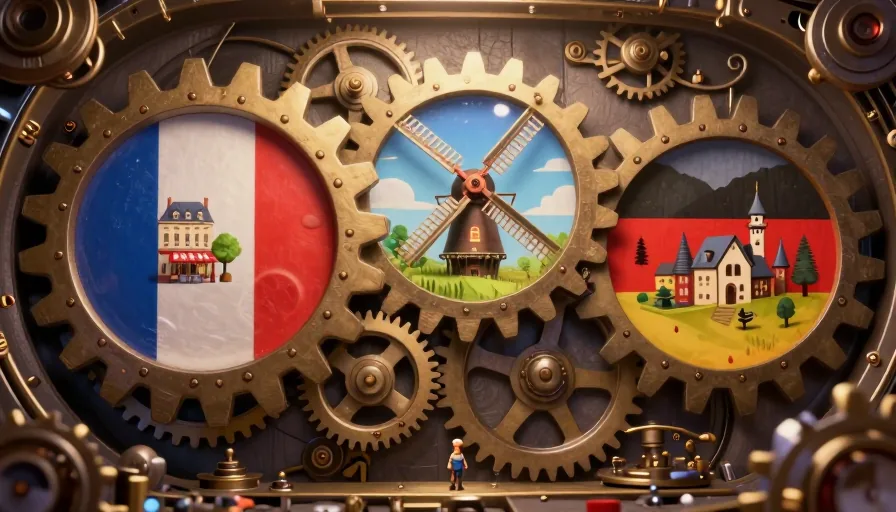
Belgium is a unique country with three idioma oficial belgica: French, Dutch, and German. This linguistic diversity is a result of Belgium's geographical location and historical influences. Understanding these languages and their regional distribution is crucial for anyone planning to visit or live in Belgium. This guide will provide an overview of the three official languages, their regional distribution, practical tips for language learners, common phrases, and resources for learning each language.
Overview of Official Languages in Belgium
Belgium's linguistic landscape is divided into three main regions, each with its own official language. French is predominantly spoken in the southern region of Wallonia, Dutch (specifically Flemish) is spoken in the northern region of Flanders, and German is spoken in a small eastern region near the German border. Brussels, the capital, is bilingual with both French and Dutch being official languages.
Interactive Map of Language Distribution
To better understand the distribution of these languages, refer to the interactive map below. This map provides a visual representation of where each language is predominantly spoken.
[Insert Interactive Map]
French in Belgium: Where and How It's Spoken
French is spoken by approximately 40% of the Belgian population and is the primary language in the Wallonia region. It is also widely spoken in Brussels. French in Belgium has some unique features and vocabulary that differ from standard French. For example, the use of the word 'chouffe' for 'beer' is common in Wallonia.
Common Phrases and Greetings in French
- Bonjour - Hello
- Comment ça va? - How are you?
- Merci - Thank you
- Au revoir - Goodbye
- S'il vous plaît - Please
- Excusez-moi - Excuse me
Mini Drill: French Greetings
Practice these greetings with a friend or language exchange partner. Try to use them in different contexts to build familiarity.
Dutch in Belgium: The Flemish Language
Dutch, specifically the Flemish dialect, is spoken by about 55% of the Belgian population and is the primary language in the Flanders region. Flemish has some distinct differences from standard Dutch, including pronunciation and vocabulary. For example, the word 'klaar' is used instead of 'klaar' for 'ready' in Flemish.
Common Phrases and Greetings in Dutch
- Goedendag - Good day
- Hoe gaat het? - How are you?
- Dank je - Thank you
- Dag - Goodbye
- Alsjeblieft - Please
- Pardon - Excuse me
Mini Drill: Dutch Greetings
Practice these greetings with a friend or language exchange partner. Try to use them in different contexts to build familiarity.

Aprendé Idiomas con YouTube
Mirá videos en tu idioma objetivo, capturá palabras nuevas como flashcards automáticamente, y seguí tu progreso — todo en un solo lugar.
Ver Cómo Funciona →German in Belgium: A Minority Language
German is spoken by a small minority in Belgium, primarily in the eastern region near the German border. It is the least spoken of the three official languages but is still an important part of Belgium's linguistic diversity. German in Belgium has some regional variations and unique vocabulary.
Common Phrases and Greetings in German
- Guten Tag - Good day
- Wie geht's? - How are you?
- Danke - Thank you
- Auf Wiedersehen - Goodbye
- Bitte - Please
- Entschuldigung - Excuse me
Mini Drill: German Greetings
Practice these greetings with a friend or language exchange partner. Try to use them in different contexts to build familiarity.
Language Learning Tips for Visitors
Learning a new language can be challenging, but with the right approach, it can be a rewarding experience. Here are some practical tips for language learners visiting Belgium:
Checklist for Language Learners
- Set Clear Goals: Determine what you want to achieve with your language learning. Is it to have basic conversations, read menus, or understand local culture?
- Use Language Learning Apps: Apps like Duolingo, Babbel, and Rosetta Stone can be very helpful.
- Practice with Locals: Engage with locals in conversations. This will help you improve your pronunciation and vocabulary.
- Watch Local Media: Watching TV shows, movies, and listening to local radio can help you get used to the language's rhythm and intonation.
- Join Language Exchange Groups: Websites like Tandem and HelloTalk can connect you with native speakers who want to learn your language.
Common Mistakes to Avoid
- Avoid Translating Literally: Direct translations can often lead to misunderstandings. Try to think in the language you are learning.
- Don't Be Afraid to Make Mistakes: Making mistakes is a natural part of the learning process. Embrace them and learn from them.
- Avoid Over-Reliance on Translation Tools: While useful, over-reliance can hinder your ability to think in the new language.
Resources for Learning Belgian Languages
There are numerous resources available for learning the official languages of Belgium. Here are some recommended resources:
French Resources
- Duolingo: A popular language learning app that offers French courses.
- Rosetta Stone: A comprehensive language learning program.
- TV5MONDE: A French-language TV channel with educational content.
Dutch Resources
- Babbel: A language learning app with Dutch courses.
- Memrise: A platform with user-generated content for learning Dutch.
- Nederlandse Taalunie: The official website for learning Dutch.
German Resources
- Duolingo: Offers German courses as well.
- Deutsche Welle: A German-language TV channel with educational content.
- Goethe-Institut: The official website for learning German.
User-Generated Content
Engage with user-generated content from language learners in Belgium. Websites like Reddit and language exchange forums can provide valuable insights and practical tips from people who have gone through the same learning process.
Audio Clips of Common Phrases
Listen to the audio clips below to hear the correct pronunciation of common phrases in each language.
[Insert Audio Clips]
By following this guide, you'll be well-prepared to navigate Belgium's linguistic landscape and make the most of your language learning journey.
Preguntas frecuentes
Why are there three official languages in Belgium?
Belgium's linguistic diversity is a result of its geographical location and historical influences. The country is situated between France, Germany, and the Netherlands, leading to the adoption of French, Dutch, and German as official languages.
Is it necessary to learn all three languages to visit Belgium?
No, it is not necessary to learn all three languages. However, knowing some basic phrases in the local language of the region you are visiting can enhance your experience and help you connect with locals.
What is the best way to learn a new language quickly?
The best way to learn a new language quickly is to set clear goals, use language learning apps, practice with locals, watch local media, and join language exchange groups. Consistency and immersion are key to rapid language acquisition.
Frases relacionadas
Empezá con Metheus
Mirá videos en tu idioma objetivo, capturá palabras nuevas como flashcards automáticamente, y seguí tu progreso — todo en un solo lugar.
Comenzar →

