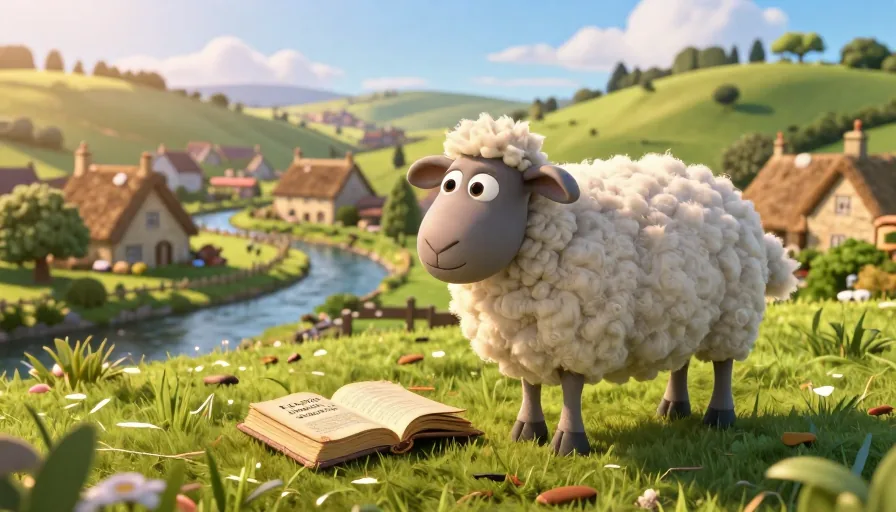
Ovejas Ingles refers to the English translation of the Spanish word 'oveja,' which means 'sheep.' This guide will help you understand the direct translation, gender and article usage, contextual usage, related vocabulary, and pronunciation. By the end, you'll be able to use 'oveja' confidently in English conversations.
What is 'Oveja' in English? (The Core Translation)
The core translation of 'oveja' in English is 'sheep.' This is a direct one-to-one translation, but understanding how to use it in context is crucial for effective communication. For example, if you see 'la oveja' in a sentence, you would translate it as 'the sheep.'
Direct Translation Examples
-
Spanish: La oveja está en el campo.
-
English: The sheep is in the field.
-
Spanish: Las ovejas son animales domésticos.
-
English: Sheep are domestic animals.
Mastering Plurals: Oveja vs. Ovejas
In Spanish, 'oveja' is a feminine noun, and its plural form is 'ovejas.' Understanding the difference between singular and plural forms is essential for accurate communication.
Singular vs. Plural Usage
-
Singular: La oveja está comiendo hierba.
-
English: The sheep is eating grass.
-
Plural: Las ovejas están comiendo hierba.
-
English: The sheep are eating grass.
Checklist for Mastering Plurals
- Understand that 'oveja' is singular and 'ovejas' is plural.
- Practice using both forms in sentences.
- Listen to audio pronunciations to differentiate between singular and plural forms.
Contextualizing 'Oveja' in English Sentences
Using 'oveja' in context is crucial for effective communication. Here are some examples of how to use 'oveja' in English sentences:
Contextual Usage Examples
-
Spanish: El pastor cuida de las ovejas.
-
English: The shepherd takes care of the sheep.
-
Spanish: Las ovejas pastan en el prado.
-
English: The sheep graze in the meadow.
Mini Drill: Fill in the Blanks
- El ______ (oveja) está comiendo hierba.
- Las ______ (ovejas) están pastando en el prado.
- El pastor cuida de las ______ (ovejas).

Aprendé Idiomas con YouTube
Mirá videos en tu idioma objetivo, capturá palabras nuevas como flashcards automáticamente, y seguí tu progreso — todo en un solo lugar.
Ver Cómo Funciona →Pronunciation Tips for Spanish Learners
Pronunciation is key to effective communication. Here are some tips for pronouncing 'oveja' and 'ovejas' correctly:
Pronunciation Guide
-
Oveja: /oˈβe.xa/
- Breakdown: o-ve-ja
- Listen to the audio pronunciation here
-
Ovejas: /oˈβe.xas/
- Breakdown: o-ve-jas
- Listen to the audio pronunciation here
Common Mistakes to Avoid
- Avoid pronouncing 'oveja' as 'oh-ve-ya.'
- Ensure the 'j' sound in 'oveja' is soft, similar to the 'h' in 'house.'
Related Vocabulary: Expanding Your Lexicon
Expanding your vocabulary around 'oveja' will help you communicate more effectively. Here are some related words and phrases:
Related Vocabulary
- Pastor: Shepherd
- Prado: Meadow
- Hierba: Grass
- Lana: Wool
- Corderos: Lambs
Example Sentences with Related Vocabulary
-
Spanish: El pastor lleva las ovejas al prado.
-
English: The shepherd takes the sheep to the meadow.
-
Spanish: Las ovejas producen lana.
-
English: The sheep produce wool.
-
Spanish: Los corderos son pequeños y tiernos.
-
English: The lambs are small and tender.
Practical Examples and Checklists
Checklist for Effective Communication
- Practice using 'oveja' and 'ovejas' in sentences.
- Listen to audio pronunciations to improve your pronunciation.
- Expand your vocabulary with related words and phrases.
- Use 'oveja' in different contexts to understand its usage better.
Mini Drill: True or False
- 'Oveja' is a masculine noun. (False)
- 'Ovejas' is the plural form of 'oveja.' (True)
- 'Oveja' can be translated as 'sheep' in English. (True)
- 'Oveja' is pronounced as 'oh-ve-ya.' (False)
By following this guide, you'll be able to understand and use 'oveja' in English confidently. Practice regularly and expand your vocabulary to improve your language skills.
Preguntas frecuentes
Is 'oveja' a masculine or feminine noun?
'Oveja' is a feminine noun. It is almost always used with feminine articles and adjectives, such as 'la oveja bonita' (the pretty sheep).
How do I pronounce 'oveja' correctly?
To pronounce 'oveja' correctly, follow these steps: Break it down into o-ve-ja. The 'j' sound is soft, similar to the 'h' in 'house.' Listen to the audio pronunciation [here](INSERT_AUDIO_LINK) for better understanding.
What is the plural form of 'oveja'?
The plural form of 'oveja' is 'ovejas.' It is used when referring to more than one sheep. For example, 'Las ovejas están pastando en el prado' translates to 'The sheep are grazing in the meadow.'
Frases relacionadas
Empezá con Metheus
Mirá videos en tu idioma objetivo, capturá palabras nuevas como flashcards automáticamente, y seguí tu progreso — todo en un solo lugar.
Comenzar →

