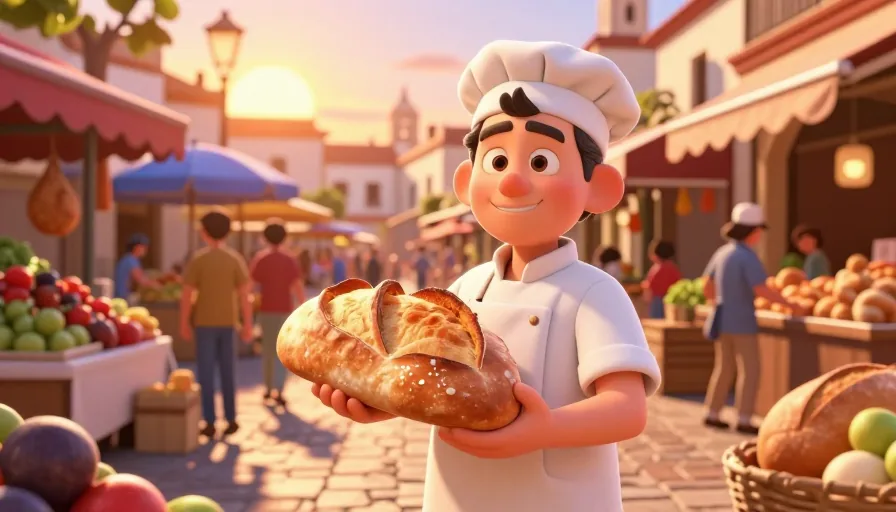
Understanding the term pan en inglés is crucial for Spanish speakers looking to expand their vocabulary, especially in culinary contexts. This guide will cover the primary translations, contextual usage, common phrases, and pronunciation tips to help you master 'pan' in both languages.
What is 'Pan' in Spanish? (Bread vs. Pan)
In Spanish, 'pan' can refer to both 'bread' and a 'pan' or 'tray.' The context in which the word is used determines its meaning. For example:
- Pan (bread): El pan es una parte esencial de la dieta mediterránea. (Bread is an essential part of the Mediterranean diet.)
- Pan (pan/tray): Necesito un pan para hornear el pastel. (I need a pan to bake the cake.)
Checklist for Understanding 'Pan' in Spanish
- Know the difference between 'pan' as bread and 'pan' as a pan/tray.
- Practice using 'pan' in sentences related to cooking and daily life.
- Learn common phrases and idiomatic expressions involving 'pan.'
English Translations for 'Pan' in Context
When translating 'pan' to English, the context is key. Here are some examples:
- Pan (bread): The bread is fresh and delicious. (El pan está fresco y delicioso.)
- Pan (pan/tray): I need a pan to cook the eggs. (Necesito un sartén para cocinar los huevos.)
Common Mistakes to Avoid
- Mistake: Using 'pan' to refer to a frying pan in Spanish. The correct term is 'sartén.'
- Mistake: Assuming 'pan' always means 'bread' in English. The context must be clear.
Common Phrases Using 'Pan' in Spanish
Here are some common phrases and idiomatic expressions involving 'pan' in Spanish:
- Pan de cada día: Daily bread. (El pan de cada día es esencial para nuestra supervivencia.)
- Pan comido: Piece of cake. (Este examen será pan comido.)
- Pan y circo: Bread and circuses. (El gobierno ofrece pan y circo para distraer a la población.)
Mini Drill: Fill in the Blanks
Complete the following sentences with the correct form of 'pan' or related terms:
- Necesito un ______ para hacer una tortilla. (sartén)
- El ______ que compré en la panadería está delicioso. (pan)
- Este problema será ______ para ti. (pan comido)

Aprendé Idiomas con YouTube
Mirá videos en tu idioma objetivo, capturá palabras nuevas como flashcards automáticamente, y seguí tu progreso — todo en un solo lugar.
Ver Cómo Funciona →Pronunciation Tips for Spanish Speakers Learning English
Pronunciation is key to mastering 'pan' in English. Here are some tips:
- Pan (bread): Pronounced as /pæn/ in English. Practice saying it slowly: /p/ as in 'pat,' /æ/ as in 'cat,' and /n/ as in 'no.'
- Pan (pan/tray): Pronounced as /pæn/ in English. The pronunciation is the same as 'pan' meaning bread.
Interactive Pronunciation Practice
- Listen to a native speaker pronounce 'pan' in both contexts.
- Repeat the word aloud, focusing on the correct sounds.
- Record yourself and compare your pronunciation to the native speaker's.
Comparison Chart: 'Pan' vs. Other Similar Nouns
| Spanish Word | English Translation | Contextual Usage | Example Sentence |
|---|---|---|---|
| pan | bread | Food | El pan está fresco y delicioso. (The bread is fresh and delicious.) |
| pan | pan/tray | Cooking | Necesito un pan para hornear el pastel. (I need a pan to bake the cake.) |
| sartén | frying pan | Cooking | Necesito un sartén para cocinar los huevos. (I need a frying pan to cook the eggs.) |
| bandeja | tray | Serving | Puse la bandeja en la mesa. (I put the tray on the table.) |
Examples of 'Pan' in Different Contexts
Culinary Contexts
- Baking: Necesito un pan para hornear el pastel. (I need a pan to bake the cake.)
- Cooking: Usé un sartén para freír los huevos. (I used a frying pan to fry the eggs.)
Daily Life Contexts
- Grocery Shopping: Compré un pan en la panadería. (I bought a loaf of bread at the bakery.)
- Meal Preparation: El pan de cada día es esencial para nuestra dieta. (Daily bread is essential for our diet.)
Bilingual Examples Focusing on Culinary Contexts
Spanish to English
- Spanish: Necesito un pan para hornear el pastel. (I need a pan to bake the cake.)
- English: I need a baking pan to bake the cake.
English to Spanish
- English: I need a frying pan to cook the eggs.
- Spanish: Necesito un sartén para cocinar los huevos.
Practical Checklist for Mastering 'Pan' in English and Spanish
- Understand the primary translations of 'pan' in English.
- Practice using 'pan' in different contexts (cooking, daily life).
- Learn common phrases and idiomatic expressions involving 'pan.'
- Master the pronunciation of 'pan' in both languages.
- Use the comparison chart to avoid common mistakes.
By following this comprehensive guide, you'll be able to master 'pan' in English and Spanish, enhancing your language skills and cultural understanding.
Preguntas frecuentes
What is the difference between 'pan' and 'sartén' in Spanish?
'Pan' in Spanish can mean 'bread' or a 'pan/tray,' while 'sartén' specifically means 'frying pan.' It's important to use the correct term based on the context to avoid confusion.
How do I pronounce 'pan' in English?
In English, 'pan' is pronounced as /pæn/. Focus on the sounds /p/ as in 'pat,' /æ/ as in 'cat,' and /n/ as in 'no.' Practice repeating the word slowly to get the correct pronunciation.
Can 'pan' always be translated as 'bread' in English?
No, 'pan' cannot always be translated as 'bread' in English. The context is key. For example, 'pan' can also mean 'pan' or 'tray' in cooking contexts. Always consider the context to choose the correct translation.
Frases relacionadas
Empezá con Metheus
Mirá videos en tu idioma objetivo, capturá palabras nuevas como flashcards automáticamente, y seguí tu progreso — todo en un solo lugar.
Comenzar →

