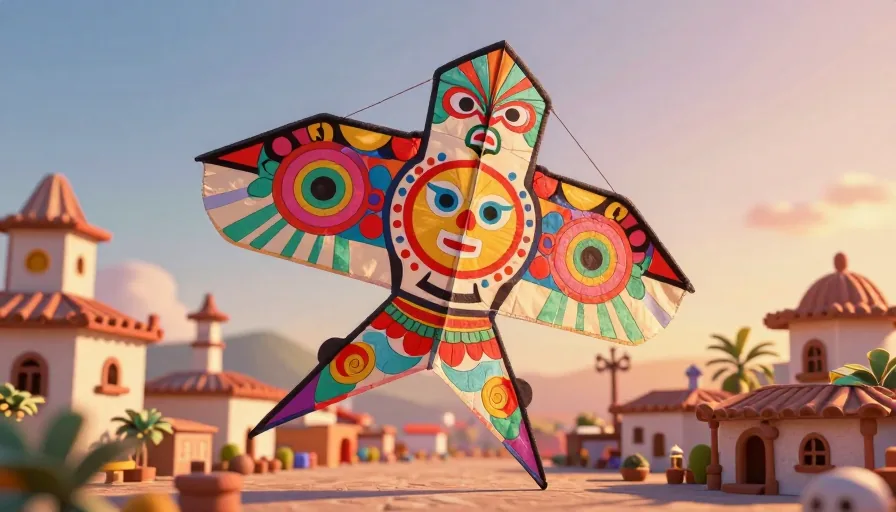
Papalote en ingles refers to the Spanish word 'papalote,' which translates to 'kite' in English. This guide will explore the definition, regional variations, example sentences, pronunciation, and cultural significance of 'papalote.'
What is a Papalote?
A papalote is a traditional Mexican kite, often made from colorful paper and a wooden frame. The term 'papalote' originates from the Nahuatl word 'papalōtl,' which means 'butterfly.' This etymology reflects the kite's delicate and graceful flight, resembling a butterfly in the sky. In Spanish, 'papalote' is a masculine noun, so it is used with masculine articles and adjectives (e.g., el papalote rojo).
Papalote in Different Regions
The usage of 'papalote' varies across different Spanish-speaking regions. In Mexico, 'papalote' is the most common term for a kite. However, in other regions, different terms are used:
- Caribbean (Cuba, Dominican Republic, Puerto Rico): 'cometa' is commonly used.
- Central America (Guatemala, El Salvador, Honduras, Nicaragua, Costa Rica, Panama): 'barrilete' is the preferred term.
- South America (Argentina, Chile, Uruguay): 'cometa' or 'barrilete' are used interchangeably.
Interactive Quiz: Regional Variations
Test your knowledge with this quick quiz:
-
What is a 'papalote' called in Puerto Rico? a) Cometa b) Barrilete c) Papalote d) None of the above
-
In Argentina, which term is commonly used for a kite? a) Papalote b) Cometa c) Barrilete d) Both b and c
Example Sentences
Spanish
- El niño voló su papalote en el parque.
- The boy flew his kite in the park.
- Los papalotes de colores adornaban el cielo.
- The colorful kites adorned the sky.
- Hicimos un papalote con papel y palitos.
- We made a kite with paper and sticks.
- El viento fuerte hizo que el papalote volara alto.
- The strong wind made the kite fly high.
- Los niños corrieron con sus papalotes en la playa.
- The children ran with their kites on the beach.
English
- The boy flew his kite in the park.
- El niño voló su papalote en el parque.
- The colorful kites adorned the sky.
- Los papalotes de colores adornaban el cielo.
- We made a kite with paper and sticks.
- Hicimos un papalote con papel y palitos.
- The strong wind made the kite fly high.
- El viento fuerte hizo que el papalote volara alto.
- The children ran with their kites on the beach.
- Los niños corrieron con sus papalotes en la playa.

Aprendé Idiomas con YouTube
Mirá videos en tu idioma objetivo, capturá palabras nuevas como flashcards automáticamente, y seguí tu progreso — todo en un solo lugar.
Ver Cómo Funciona →Pronunciation Guide
To pronounce 'papalote' correctly, follow these steps:
- Pa: Pronounced like the English word 'pa.'
- pa-lo-te: The stress is on the second syllable, 'lo.'
- Audio Pronunciation: Listen to the audio pronunciation here.
Cultural Significance
In Mexican culture, papalotes hold significant cultural and symbolic meaning. They are often used in celebrations and festivals, such as the Día de los Muertos (Day of the Dead), where they represent the spirits of the departed. Papalotes are also a popular craft activity for children, fostering creativity and outdoor play.
Mini Drill: Cultural Context
Match the cultural event with the corresponding use of papalotes:
- Día de los Muertos a) Representing the spirits of the departed
- Children's birthday parties a) Popular craft activity
- Outdoor festivals a) Decorating the sky with colorful designs
Checklist for Learning 'Papalote'
- Understand the definition and translation of 'papalote.'
- Learn the regional variations and their usage.
- Practice example sentences in both Spanish and English.
- Listen to the audio pronunciation and practice saying it aloud.
- Explore the cultural significance and regionalism of 'papalote.'
Integration with Metheus Language Learning Tools
Metheus offers interactive tools to enhance your language learning experience. Use our flashcard feature to memorize example sentences and regional variations. Engage with our pronunciation tool to perfect your accent. Join our community forums to discuss cultural contexts and share your learning journey.
Conclusion
Learning the translation and usage of 'papalote' in English provides a deeper understanding of Spanish language and culture. By exploring regional variations, example sentences, and cultural significance, you can enrich your language skills and appreciate the nuances of Spanish-speaking communities.
Preguntas frecuentes
Why is 'papalote' not commonly used in all Spanish-speaking regions?
'Papalote' is primarily used in Mexico. Other regions have their own terms for kites, such as 'cometa' in the Caribbean and 'barrilete' in Central America. This regional variation reflects the diverse linguistic and cultural landscape of the Spanish-speaking world.
How do I pronounce 'papalote' correctly?
To pronounce 'papalote,' follow these steps: 'Pa' is pronounced like the English word 'pa,' and the stress is on the second syllable, 'lo.' Listen to the audio pronunciation [here](INSERT_AUDIO_LINK) for guidance.
What is the cultural significance of papalotes in Mexico?
In Mexican culture, papalotes are often used in celebrations and festivals, such as the Día de los Muertos, where they represent the spirits of the departed. They are also a popular craft activity for children, fostering creativity and outdoor play.
Frases relacionadas
Empezá con Metheus
Mirá videos en tu idioma objetivo, capturá palabras nuevas como flashcards automáticamente, y seguí tu progreso — todo en un solo lugar.
Comenzar →

