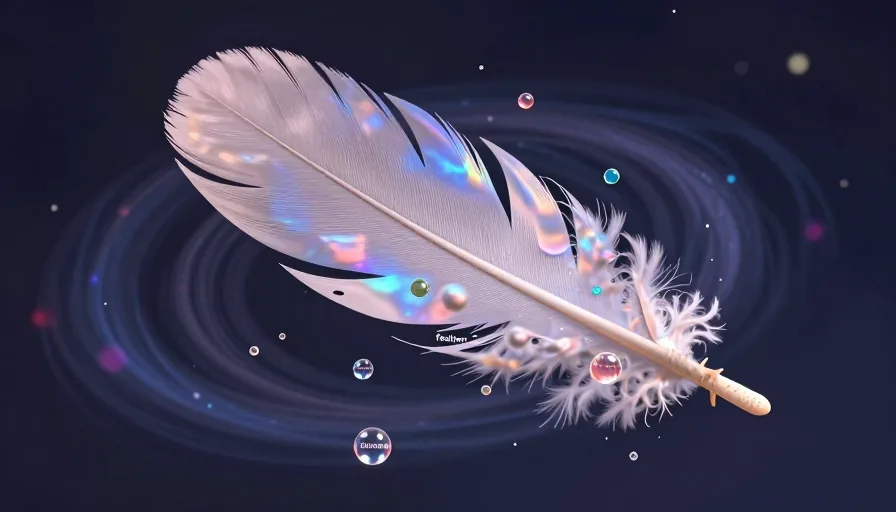
When learning Spanish, you might come across the word 'pluma' and wonder how to translate it into English. The word 'pluma' has several English translations, including 'feather', 'plume', and 'feathers'. Understanding the nuances between these translations is crucial for effective communication. This guide will help you master the different uses of 'pluma' in English, providing contextual examples and grammar tips to enhance your language skills.
Understanding the Nuances: Feather vs. Plume in English
The word 'pluma' can be translated as 'feather' or 'plume' in English, but the choice between these depends on the context. A 'feather' is a single, individual part of a bird's wing or body, while a 'plume' often refers to a group of feathers, especially when they are decorative or ornamental. For example:
- Feather: The bird's wing is covered in soft feathers.
- Plume: The dancer's headdress features a beautiful plume of feathers.
Contextual Examples: How to Use 'Pluma' in Conversation
To truly understand how to use 'pluma' in English, it's essential to see it in context. Here are some practical examples:
- Feather: I found a single feather on the ground after the bird flew away.
- Plume: The knight's helmet had a striking plume of red and gold feathers.
- Feathers: The pillow is filled with soft feathers for a comfortable night's sleep.
Mini Drill: Fill in the Blanks
Complete the following sentences with the correct English translation of 'pluma':
- The artist used a _______ to create a delicate sketch.
- The _______ on the hat was made of vibrant blue feathers.
- The bird's tail is adorned with a beautiful _______.
- The bed is covered with a blanket filled with soft _______.
Checklist: When to Use 'Feather', 'Plume', or 'Feathers'
- Use 'feather' for a single, individual part of a bird's wing or body.
- Use 'plume' for a group of feathers, especially when decorative or ornamental.
- Use 'feathers' for a collective noun referring to multiple feathers.
Grammar Spotlight: Gender and Agreement with 'Pluma'
In Spanish, 'pluma' is a feminine noun, which means it is almost always used with feminine articles and adjectives. For example:
- La pluma es bonita. (The feather is beautiful.)
- Las plumas son suaves. (The feathers are soft.)
When translating to English, remember that 'feather' and 'plume' do not have grammatical gender, so you don't need to worry about agreement. However, 'feathers' can be pluralized by adding an 's' to the end of the word.

Aprendé Idiomas con YouTube
Mirá videos en tu idioma objetivo, capturá palabras nuevas como flashcards automáticamente, y seguí tu progreso — todo en un solo lugar.
Ver Cómo Funciona →Idiomatic Usage: Beyond Literal Translation
The word 'pluma' can also be used in idiomatic expressions in Spanish. For example, 'echar pluma' means to show off or boast. In English, you might say 'to show off' or 'to boast'. Here are a few more idiomatic expressions involving 'pluma':
- Tener pluma: To have a talent for writing or expressing oneself.
- Pluma estilográfica: Fountain pen.
Mini Drill: Translate the Idioms
Translate the following Spanish idioms into English:
- Ella tiene una pluma muy elegante.
- Él siempre echa pluma cuando habla de sus logros.
- Usa una pluma estilográfica para escribir sus cartas.
Related Vocabulary and Common Phrases
To expand your vocabulary, here are some related words and common phrases involving 'pluma':
- Pájaro: Bird (the creature that has feathers)
- Aviario: Aviary (a place where birds are kept)
- Plumaje: Plumage (the feathers of a bird)
- Escritorio: Desk (a piece of furniture where you might use a pen, or 'pluma estilográfica')
Checklist: Expanding Your Vocabulary
- Learn the related vocabulary words and phrases.
- Practice using them in sentences.
- Try to incorporate them into your daily conversations.
Common Mistakes to Avoid
When translating 'pluma' into English, avoid the following common mistakes:
- Mistake: Using 'plume' when referring to a single feather.
- Mistake: Using 'feather' when referring to a group of decorative feathers.
- Mistake: Forgetting to pluralize 'feather' when referring to multiple feathers.
By understanding the nuances between 'feather', 'plume', and 'feathers', you can effectively communicate in English and avoid these common mistakes.
Practice Makes Perfect: Interactive Exercises
To solidify your understanding of 'pluma' in English, try these interactive exercises:
- Sentence Translation: Translate the following Spanish sentences into English, choosing the correct translation for 'pluma' based on the context.
- La pluma de mi sombrero es de color azul.
- El pájaro tiene una pluma en su cola.
- Las plumas de mi almohada son muy suaves.
- Fill in the Blanks: Complete the following sentences with the correct English translation of 'pluma'.
- The _______ on the hat was made of vibrant blue feathers.
- The bird's tail is adorned with a beautiful _______.
- The bed is covered with a blanket filled with soft _______.
- Idiomatic Expressions: Translate the following Spanish idioms into English and use them in a sentence.
- Ella tiene una pluma muy elegante.
- Él siempre echa pluma cuando habla de sus logros.
- Usa una pluma estilográfica para escribir sus cartas.
By practicing these exercises, you'll gain a deeper understanding of 'pluma' in English and be able to use it confidently in conversation.
Conclusion
Mastering the nuances of 'pluma' in English is essential for effective communication. By understanding the different translations and contextual uses, you can expand your vocabulary and improve your language skills. Remember to practice regularly and incorporate these new words into your daily conversations.
Preguntas frecuentes
What is the difference between 'feather' and 'plume' in English?
The word 'feather' refers to a single, individual part of a bird's wing or body, while 'plume' often refers to a group of feathers, especially when they are decorative or ornamental.
How do I know when to use 'feather' or 'feathers'?
Use 'feather' for a single, individual part of a bird's wing or body. Use 'feathers' for a collective noun referring to multiple feathers.
Do 'feather' and 'plume' have grammatical gender in English?
No, 'feather' and 'plume' do not have grammatical gender in English. However, 'feathers' can be pluralized by adding an 's' to the end of the word.
Frases relacionadas
Empezá con Metheus
Mirá videos en tu idioma objetivo, capturá palabras nuevas como flashcards automáticamente, y seguí tu progreso — todo en un solo lugar.
Comenzar →

