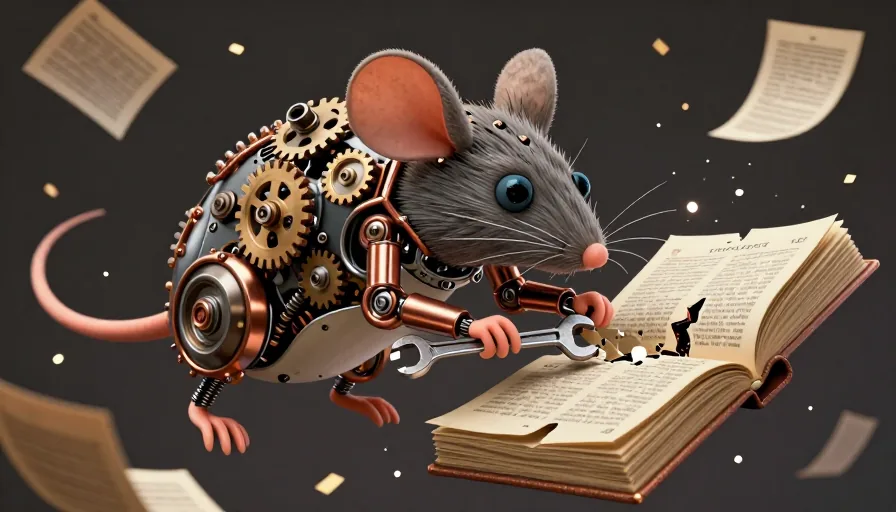
ratón inglés: guía práctica y clara para dominar este tema en contexto real.
Understanding 'Ratón' in English: A Comprehensive Guide to Translation and Usage
The word 'ratón' in Spanish translates to 'mouse' in English. This guide will help you understand the nuances of translating 'ratón' and related vocabulary, focusing on context and usage in English.
What is 'Ratón' in English?
The direct translation of 'ratón' to English is 'mouse.' This translation applies to both the literal meaning of a small rodent and the figurative meaning of a computer mouse. Understanding the context is crucial for accurate translation.
Practical Examples
- Literal Context: Un ratón se metió en la casa. (A mouse got into the house.)
- Figurative Context: Necesito un nuevo ratón para mi computadora. (I need a new mouse for my computer.)
Grammatical Notes: Masculine Nouns in Spanish
In Spanish, 'ratón' is a masculine noun. This means it is used with masculine articles and adjectives. For example:
- El ratón (The mouse)
- Un ratón pequeño (A small mouse)
Checklist for Masculine Nouns
- Ensure the article (el, un) matches the noun's gender.
- Use masculine adjectives (pequeño, grande) with masculine nouns.
- Practice with sentences to reinforce grammatical accuracy.
Example Sentences Using 'Ratón' in Context
Literal Usage
-
Sentence: Un ratón se metió en la casa y royó el cable de la televisión. Translation: A mouse got into the house and gnawed through the television cable. Analysis: This sentence uses 'ratón' in a literal context, referring to the small rodent.
-
Sentence: Vi un ratón en el jardín. Translation: I saw a mouse in the garden. Analysis: Another literal usage, describing a sighting of a mouse.
Figurative Usage
-
Sentence: Necesito un nuevo ratón para mi computadora. Translation: I need a new mouse for my computer. Analysis: Here, 'ratón' refers to the computer mouse, a figurative usage.
-
Sentence: El ratón de mi computadora no funciona bien. Translation: The mouse of my computer does not work well. Analysis: This sentence also uses 'ratón' in a figurative context, referring to a computer accessory.

Aprendé Idiomas con YouTube
Mirá videos en tu idioma objetivo, capturá palabras nuevas como flashcards automáticamente, y seguí tu progreso — todo en un solo lugar.
Ver Cómo Funciona →Common Mistakes and How to Avoid Them
Mistake 1: Confusing 'Ratón' with 'Rata'
- Mistake: Using 'rata' instead of 'ratón' for a small rodent.
- Correction: Remember that 'rata' refers to a larger rodent, similar to a rat in English.
Mistake 2: Incorrect Article Usage
- Mistake: Using 'la' instead of 'el' with 'ratón'.
- Correction: Always use 'el' or 'un' with 'ratón' because it is a masculine noun.
Mini Drill: Correct the Sentences
- La ratón se metió en la casa. Correction: El ratón se metió en la casa.
- Vi una ratón en el jardín. Correction: Vi un ratón en el jardín.
- Necesito una nuevo ratón para mi computadora. Correction: Necesito un nuevo ratón para mi computadora.
Different Contexts for 'Ratón'
Literal vs. Figurative
- Literal: Refers to the small rodent.
- Example: Un ratón se metió en la casa.
- Figurative: Refers to the computer mouse.
- Example: Necesito un nuevo ratón para mi computadora.
Checklist for Contextual Usage
- Identify the context (literal or figurative) before translating.
- Use appropriate articles and adjectives based on the context.
- Practice with varied sentences to enhance understanding.
Advanced Usage: Idiomatic Expressions
Idiomatic Phrases with 'Ratón'
-
Sentence: Estar como un ratón de iglesia. Translation: To be as quiet as a mouse. Analysis: This idiom means to be very quiet or silent.
-
Sentence: Ser un ratón de biblioteca. Translation: To be a bookworm. Analysis: This idiom refers to someone who loves reading and spends a lot of time with books.
Mini Drill: Translate the Idioms
- Estar como un ratón de iglesia. Translation: To be as quiet as a mouse.
- Ser un ratón de biblioteca. Translation: To be a bookworm.
Conclusion
Understanding the translation and usage of 'ratón' in English involves more than just knowing the direct translation. It requires an understanding of grammatical context, different usages, and idiomatic expressions. By practicing with example sentences and avoiding common mistakes, you can master the use of 'ratón' in various contexts.
Checklist for Mastering 'Ratón' in English
- Learn the direct translation and grammatical context.
- Practice with example sentences in both literal and figurative contexts.
- Avoid common mistakes related to article usage and word confusion.
- Familiarize yourself with idiomatic expressions involving 'ratón'.
By following this guide, you will be well-equipped to use 'ratón' correctly in English, enhancing your language learning journey.
Preguntas frecuentes
Is 'ratón' always translated as 'mouse' in English?
Yes, 'ratón' is always translated as 'mouse' in English. However, the context can vary between a literal rodent and a figurative computer mouse. Always consider the context to ensure accurate translation.
What are the common mistakes when translating 'ratón'?
Common mistakes include confusing 'ratón' with 'rata' and using incorrect articles. Remember that 'ratón' is a masculine noun and should be used with masculine articles and adjectives.
How can I practice using 'ratón' in different contexts?
Practice with varied sentences that include both literal and figurative usages of 'ratón'. Create your own sentences and translate them to reinforce your understanding.
Frases relacionadas
Empezá con Metheus
Mirá videos en tu idioma objetivo, capturá palabras nuevas como flashcards automáticamente, y seguí tu progreso — todo en un solo lugar.
Comenzar →

