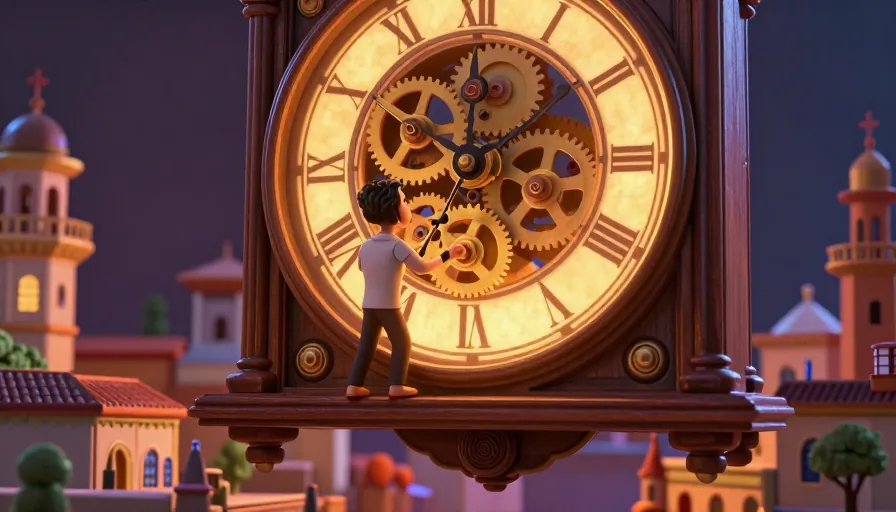
Learning the correct usage of 'reloj en inglés' is crucial for effective communication in English. This guide will help you understand the nuances between 'watch' and 'clock', provide essential phrases, and offer pronunciation tips to enhance your vocabulary.
How to Translate 'Reloj' into English: Watch vs. Clock
The Spanish word 'reloj' can be translated into English as either 'watch' or 'clock'. Understanding the difference between these two terms is essential for accurate communication.
Watch vs. Clock: Key Differences
-
Watch: A portable timepiece, typically worn on the wrist or carried in a pocket. It is personal and often used in casual contexts.
- Example: I wear a smartwatch to track my daily activities.
-
Clock: A timepiece designed to be placed on a wall, table, or other surfaces. It is often used in formal or public settings.
- Example: The clock in the classroom helps students keep track of time.
Common Mistakes to Avoid
-
Mistake: Using 'watch' when referring to a large, stationary timepiece.
- Correct: The clock in the train station is running slow.
- Incorrect: The watch in the train station is running slow.
-
Mistake: Using 'clock' when referring to a personal, portable timepiece.
- Correct: I always wear my watch to meetings.
- Incorrect: I always wear my clock to meetings.
Essential English Phrases Using 'Reloj' (Watch/Clock)
Formal Contexts
- What time does the meeting start according to your watch?
- Please check the clock to ensure we are on schedule.
- The clock in the conference room is malfunctioning.
Casual Contexts
- I need to set my watch to the correct time.
- Let's meet under the clock at the station.
- I love the design of your new watch.
Mini Drill: Fill in the Blanks
- I always check the before leaving the house.
- The in the library is very old.
- She wears a beautiful on her wrist.
- The in the classroom helps students stay on track.
- I need to adjust the on my phone.

Aprendé Idiomas con YouTube
Mirá videos en tu idioma objetivo, capturá palabras nuevas como flashcards automáticamente, y seguí tu progreso — todo en un solo lugar.
Ver Cómo Funciona →Mastering Time Vocabulary: Related Words and Idioms
Related Vocabulary
-
Alarm: A device that signals the time.
- Example: I set the alarm on my watch to wake me up early.
-
Dial: The face of a watch or clock.
- Example: The dial of the clock is hard to read in the dark.
-
Hands: The pointers on a clock or watch that indicate the time.
- Example: The hands of the clock are moving slowly.
Idioms and Expressions
-
Time flies when you're having fun: Time seems to pass quickly when you are enjoying yourself.
- Example: I can't believe it's already 5 PM; time flies when you're having fun.
-
Against the clock: Working under a tight deadline.
- Example: We are racing against the clock to finish the project.
Pronunciation Guide for English Terms Related to Timepieces
Audio Pronunciation
Listen to the pronunciation of key vocabulary to improve your speaking skills.
Pronunciation Tips
- Watch: /wɒtʃ/ (British English) or /wɑtʃ/ (American English)
- Clock: /klɒk/ (British English) or /klɑk/ (American English)
- Alarm: /əˈlɑːrm/ (British English) or /əˈlɑːrm/ (American English)
- Dial: /daɪəl/ (British English) or /daɪəl/ (American English)
- Hands: /hændz/ (British English) or /hændz/ (American English)
Comparison Chart: 'Reloj' vs. Related Time-Telling Vocabulary
| Spanish Word | English Translation | Example Sentence | Context |
|---|---|---|---|
| reloj | watch/clock | I wear a smartwatch. | Casual |
| reloj | watch/clock | The clock in the classroom is broken. | Formal |
| alarma | alarm | I set the alarm on my watch. | Casual |
| esfera | dial | The dial of the clock is hard to read. | Formal |
| manecillas | hands | The hands of the clock are moving slowly. | Formal |
Interactive Examples Showing Context-Specific Usage
Formal vs. Casual Contexts
- Formal: The clock in the conference room is malfunctioning. Please notify the maintenance team.
- Casual: I need to set my watch to the correct time before heading out.
Checklist for Mastering 'Reloj' in English
- Understand the difference between 'watch' and 'clock'.
- Practice using 'watch' and 'clock' in various contexts.
- Learn essential phrases using 'reloj'.
- Familiarize yourself with related vocabulary and idioms.
- Practice pronunciation using audio guides.
- Use the comparison chart to reinforce learning.
By following this comprehensive guide, you will be able to master the usage of 'reloj en inglés' and enhance your English vocabulary effectively.
Preguntas frecuentes
What is the difference between 'watch' and 'clock' in English?
The main difference is that a 'watch' is a portable timepiece, typically worn on the wrist or carried in a pocket, while a 'clock' is a timepiece designed to be placed on a wall, table, or other surfaces. 'Watch' is used in casual contexts, while 'clock' is often used in formal or public settings.
How do I pronounce 'watch' and 'clock' in English?
The pronunciation for 'watch' is /wɒtʃ/ (British English) or /wɑtʃ/ (American English), and for 'clock' it is /klɒk/ (British English) or /klɑk/ (American English). You can listen to the audio pronunciations for better understanding.
Can I use 'watch' and 'clock' interchangeably?
No, 'watch' and 'clock' are not interchangeable. Using them correctly depends on the context. For example, you would not say 'The watch in the train station is running slow' because 'watch' is typically used for personal, portable timepieces.
Frases relacionadas
Empezá con Metheus
Mirá videos en tu idioma objetivo, capturá palabras nuevas como flashcards automáticamente, y seguí tu progreso — todo en un solo lugar.
Comenzar →

